


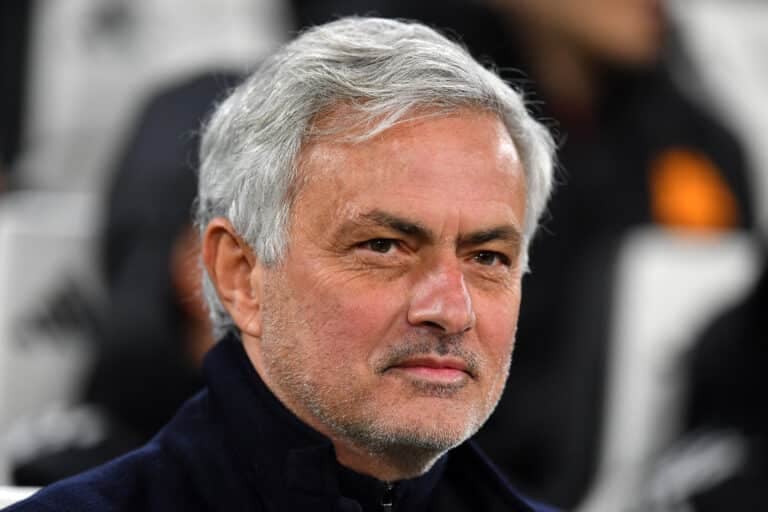
Mourinho’s Roman Reverie: A Paradox of Passion and Departure
POLICY WIRE — Rome, Italy — History, they say, is written by the victors. But sometimes, it’s etched in the wistful declarations of a departing legend, a man who — despite a trophy cabinet...

POLICY WIRE — Rome, Italy — History, they say, is written by the victors. But sometimes, it’s etched in the wistful declarations of a departing legend, a man who — despite a trophy cabinet groaning under the weight of Champions League silverware — found his purest joy not in the grand cathedrals of European football, but amidst the raucous, unyielding embrace of Rome. José Mourinho, the ‘Special One,’ whose career has often been a masterclass in calculated detachment, recently let slip a sentiment bordering on the poetic: for him, Rome wasn’t just another stop; it was, inexplicably, the zenith.
It’s a peculiar admission from a manager who’s conquered England, Spain, and Italy’s Serie A with multiple clubs, claiming European football’s most coveted prize twice. But speaking to Il Giornale, Mourinho didn’t mince words, portraying his tenure at AS Roma as an almost spiritual experience. “I don’t know: for me, Rome was the best place of my career,” he asserted, a declaration that surely raised an eyebrow or two in Milan, London, and Madrid. He spoke of an “incredible atmosphere,” a perpetual sell-out Olimpico, and the profound, almost familial connection between the team and its faithful. It wasn’t the trophies, plural, of his past that defined it, but the singular, raw passion of the Giallorossi.
And what passion it was. Mourinho’s lone major triumph with Roma, the inaugural UEFA Europa Conference League in 2022, triggered a city-wide delirium that, by his own account, eclipsed even his Champions League celebrations. “When we won the Conference, the celebration was incredible: not even in my Champions League triumphs have I seen scenes like that,” he recounted, hinting at a communion with fans that transcended mere sporting success. That raw, visceral connection, it seems, cemented Rome’s unparalleled status in his memory.
But his reflections weren’t without a barb for those who might scapegoat the supporters. Mourinho vehemently defended the Roma faithful, often maligned for their demanding nature. “No one should blame the Roma fans by saying it’s their fault if we don’t win. The Giallorossi fans are the ones who help the team, no one should touch them.” It’s a defiant statement, a final, protective gesture from a man who, despite his own recent ousting, still champions the very heart of the club: its people.
Still, the unvarnished economics of football often dictate that passion alone can’t sustain a managerial reign. Roma’s financial struggles and inconsistent league form ultimately sealed Mourinho’s fate, underscoring the harsh reality that even the most cherished emotional bonds often yield to spreadsheet metrics and short-term results. The club, for instance, reported a net loss of €102.9 million for the 2022/23 financial year, according to its official annual report, a stark reminder of the fiscal tightrope many European giants walk.
Such devotion to a manager, however brief, isn’t unique to Italy’s capital. One sees similar, fervent attachments across the globe, from the English Premier League’s colossal fan bases — particularly resonant in communities stretching from Manchester to Multan — to the passionate followings of clubs like Barcelona and Real Madrid, whose global appeal extends deeply into the Muslim world and South Asia. For millions, these clubs offer a sense of belonging, a surrogate identity that transcends national borders and economic disparities. It’s an almost tribal connection, which perhaps Mourinho, an itinerant leader, understood better than most.
📄 POLICY WIRE WHITEPAPER PUBLISHED: PAKISTAN'S NATIONAL SECURITY POLICY PRIORITIES
👉 READ BY CLICKING HERE“While his sentiments are understandable given the fervor he experienced, modern football’s a results business, not a poetry slam,” observed Stefano Capellini, a seasoned Italian football pundit known for his pragmatic views, in a recent sports broadcast. “The romantic narrative struggles against the brutal imperative of top-four finishes — and revenue streams. We can’t forget that.” Capellini’s words, though perhaps less emotionally charged, echo the broader sentiment within the industry, where even iconic figures like Mourinho find their shelf-life dictated by quarterly reports and league standings.
What This Means
Mourinho’s retrospective adoration for Rome isn’t merely a nostalgic trip; it’s a poignant commentary on the evolving soul of professional football. At its core, his declaration highlights the growing chasm between the purist’s ideal of fan-club symbiosis and the stark, globalized reality of the sport. While players and managers are increasingly transient commodities, navigating multi-million euro transfer scrambles and short-term contracts, fan loyalty remains fiercely immutable. This dichotomy — the fleeting nature of professional engagement versus the enduring passion of the supporters — presents a perpetual challenge for club governance.
Behind the headlines, Mourinho’s tenure also underscores the intense pressure managers face, often being the public face of success or failure. His insistence that fans aren’t to blame subtly critiques a system that frequently deflects accountability from boardrooms to supporters. This isn’t just about football; it’s a microcosm of human capital management in high-stakes environments, where individual performance is inextricably linked to collective sentiment, and where leaders often absorb the emotional output of entire communities. For clubs struggling with governance crises and financial imbalances, understanding and harnessing this fanatical devotion—without exploiting it—is paramount to long-term sustainability, even if it means sacrificing a beloved ‘Special One’ along the way.