


The Beautiful Bedlam: PSG’s Nine-Goal Thriller Redefines Victory, Reveals Global Stakes
POLICY WIRE — Paris, France — In an era obsessed with analytics and tactical precision, sometimes the beautiful game simply descends into glorious, unadulterated bedlam. Paris Saint-Germain’s recent...

POLICY WIRE — Paris, France — In an era obsessed with analytics and tactical precision, sometimes the beautiful game simply descends into glorious, unadulterated bedlam. Paris Saint-Germain’s recent 5-4 skirmish against Bayern Munich in a UEFA Champions League semi-final first leg wasn’t just a football match; it was a high-octane economic exhibition, a masterclass in controlled — or perhaps uncontrolled — chaos that left managers, fans, and market analysts alike reeling. The scoreline itself is a statistician’s nightmare, an anomaly that screams less about defensive solidity and more about the sheer, unbridled offensive firepower money can buy.
It was a maelstrom of goals at the Parc des Princes, an arena transformed into a theatrical stage for athletic titans. PSG, bankrolled by Qatari sovereign wealth, edged out their German adversaries by the narrowest of margins, setting a perilous, if exhilarating, tone for the return leg in Bavaria. Khvicha Kvaratskhelia, the Georgian dynamo, twice breached Bayern’s lines, matched in his scoring endeavors by the Ballon d’Or laureate Ousmane Dembele. Joao Neves, too, managed to carve out a moment of individual brilliance. Bayern, however, were hardly passive participants; Harry Kane, Dayot Upamecano, Luis Diaz, and the electrifying Michael Olise all found the net, ensuring the Parisian faithful’s jubilation was consistently tempered by palpable anxiety.
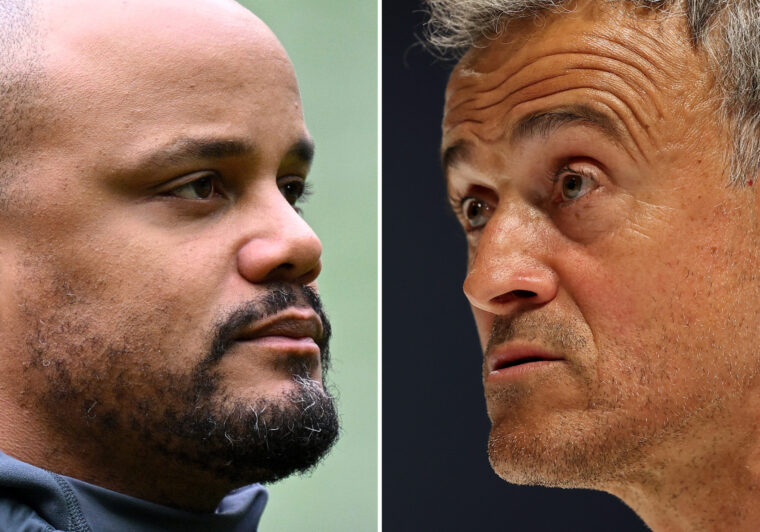
And so, after ninety minutes of frenetic back-and-forth, PSG manager Luis Enrique, a man whose career includes navigating the legendary ‘La Remontada,’ found himself articulating a sentiment that perfectly encapsulated the bewildering spectacle. “I’ve never seen such an intensity and physical level,” he posited, his typical steely resolve momentarily softened by the sheer improbability of it all. “We deserved to win, we deserved to draw, — and we deserved to lose today. It was a fantastic game.” A philosophical shrug, you might say, from a tactician who usually prefers order, yet acknowledges the unpredictable heart of elite competition. At its core, this wasn’t just a single contest; it was a microcosm of modern football’s opulent, often illogical, narrative.
Still, the stakes here transcend mere sporting glory. For PSG, European supremacy isn’t just about trophies; it’s a colossal projection of Qatari soft power, a calculated investment that links a Middle Eastern nation to the global cultural fabric. The club isn’t just a team; it’s a brand, a diplomatic asset, — and a magnet for global viewership. Indeed, when a Champions League semi-final plays out with such dramatic flair, it doesn’t merely captivate audiences across Europe; its ripples extend far and wide, drawing in nearly 400 million global viewers for the final rounds, according to UEFA data. From the teeming streets of Karachi to the bustling metropolises of Southeast Asia, football’s allure knows no bounds. These matches offer a shared global experience, momentarily uniting diverse populations under the banner of competitive spectacle — a subtle but potent form of cultural export.
📄 POLICY WIRE WHITEPAPER PUBLISHED: PAKISTAN'S NATIONAL SECURITY POLICY PRIORITIES
👉 READ BY CLICKING HEREBayern manager Vincent Kompany, whose task now becomes one of galvanizing his squad for the second leg, presented a more stoic, if equally determined, front. “This isn’t just about skill; it’s about German resolve, about the relentless pursuit of victory that defines our club’s DNA,” Kompany declared, perhaps with a subtle nod to the storied industrial might of the Bavarian region. “We’ll need the Allianz Arena to become a cauldron, a furnace of energy that melts away Parisian arrogance. Our fans understand what’s required, and we’ll feed off that intensity.” It’s a classic call-to-arms, emphasizing collective will over individual brilliance, though Bayern’s front three of Olise, Diaz, and Kane have already defied conventional wisdom by becoming the first treble outside of Barcelona and Real Madrid to collectively breach the 100-goal mark in a single season. They’re anything but ordinary, a testament to the fragile reality of athletic commodity: immense value, immense pressure, immense performance.
What This Means
This nine-goal epic isn’t just a statistical oddity; it’s a profound commentary on the political economy of contemporary elite sports. Politically, PSG’s relentless pursuit of the Champions League trophy underscores Qatar’s decade-long investment in soft power, utilizing sports to enhance its global standing and influence, diversifying its image beyond hydrocarbon exports. It’s a deliberate strategy that mirrors similar ventures by other Gulf states, effectively intertwining national branding with global entertainment. Economically, the match showcased the dizzying sums invested in player talent — multi-million dollar transfers, astronomical salaries — transforming athletes into highly liquid, high-performing assets. The broadcast rights, sponsorship deals, and merchandise sales associated with such a high-profile fixture contribute billions to the global sports economy, creating a powerful engine that drives significant financial flows across continents. From a sociological perspective, the immense global viewership, especially in regions like Pakistan and the wider Muslim world, highlights football’s role as a universal language, a binding cultural phenomenon that offers both escape and aspiration. These spectacles aren’t just entertainment; they’re global unifiers, albeit temporary ones, capable of momentarily eclipsing geopolitical tensions with the simple drama of a ball finding the back of the net. The second leg won’t just be a football match; it’ll be a continuation of this complex, compelling narrative, under floodlights.