


FIFA’s Silent Ultimatum: 2026 World Cup to Police Expressions, Not Just Tackles
POLICY WIRE — Zurich, Switzerland — The global stage, always a crucible for national pride and athletic prowess, is now becoming a battleground for – of all things – facial expressions and gestures....

POLICY WIRE — Zurich, Switzerland — The global stage, always a crucible for national pride and athletic prowess, is now becoming a battleground for – of all things – facial expressions and gestures. FIFA, in its infinite wisdom, has decreed that the silent, conspiratorial cupping of a hand over one’s mouth could be more egregious than a mistimed tackle, liable for an early exit from the game’s grandest spectacle. It’s a seismic shift, an Orwellian pivot towards policing intent as much as action, set to redefine sportsmanship at the 2026 World Cup.
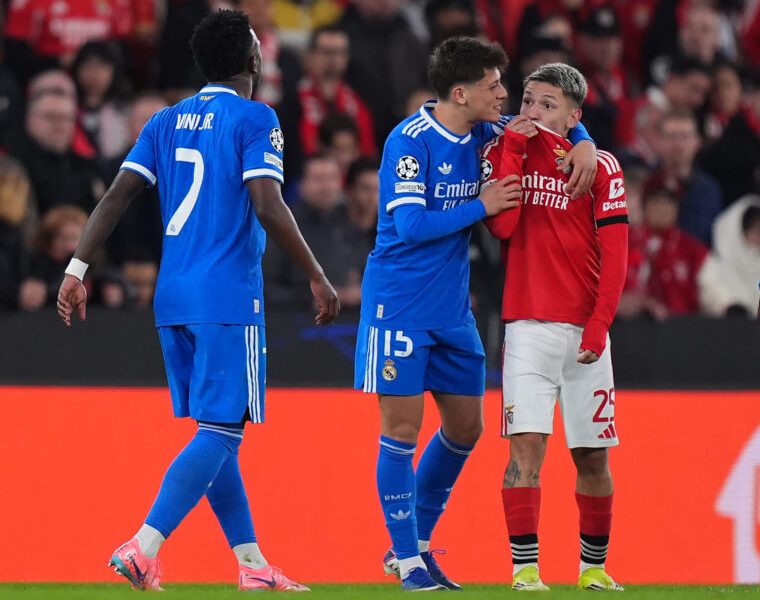
This particular edict, rubber-stamped by the International Football Association Board (IFAB) in Vancouver, isn’t some abstract philosophical exercise. No, it’s a direct response to tangible incidents, most notably the acrimonious exchange between Real Madrid’s Vinicius Jr. and Benfica’s Gianluca Prestianni. Remember that? Prestianni, accused of a racial slur, shielded his lips – a seemingly innocuous act that, in retrospect, now carries the weight of a disciplinary precedent. The subsequent six-match ban for a confessed homophobic slur, while denying racism allegations, underscores the murky waters FIFA now seeks to navigate. It’s not just about what’s said; it’s about the perception of what could be said, hidden from view. Dr. Anya Sharma, head of IFAB’s Disciplinary Review Committee, put it bluntly: “Transparency on the pitch isn’t merely preferred, it’s now mandated. We can’t have players using gestures to obscure communication during heated moments, especially when allegations of discriminatory language are at stake. It undermines the very spirit of fair play — — and accountability.”
But the expressive crackdown doesn’t end there. Another rule change targets the audacious act of abandoning the field in protest, a move previously considered a radical, if understandable, display of dissent. Picture this: a referee makes a contentious call — perhaps a dubious penalty in the dying minutes — and a team, incensed, momentarily exits the playing surface. The Africa Cup of Nations final in January, where Senegal players briefly walked off after Morocco earned a stoppage-time penalty, serves as a stark reminder of such explosive moments. Now, players who emulate such a walk-off face dismissal. Team officials? They’re not immune either; encouraging such actions means they, too, could find themselves banished from the technical area. And, if a team’s protest culminates in the abandonment of a match, they will, in principle, forfeit the game. It’s a firm, uncompromising stance against disruption. Ahmed Al-Zahrawi, President of the Asian Football Confederation (AFC), offered a more pragmatic view, “While we absolutely empathize with the passion players bring, and the injustice they sometimes perceive, the integrity of the game must prevail. We simply can’t have matches grinding to a halt because of dissent. It’s a difficult balance, but ultimately, the rules are there to protect the spectacle for our fans, from Karachi to Kuala Lumpur.”
Still, not all changes are about tightening the leash. In a concession to the commercial imperative, FIFA also plans to reset yellow card suspensions twice during the tournament. This isn’t altruism; it’s pragmatism, an overt acknowledgment that keeping star players on the pitch for pivotal matches — imagine a quarter-final without the likes of Mbappé or Messi — is paramount for viewership figures and broadcast revenue. The 2022 World Cup final alone drew a staggering 1.5 billion viewers globally (Source: FIFA, official reports), a figure that FIFA is desperate to sustain, if not surpass, at the expanded 48-team tournament across the United States, Canada, and Mexico.
📄 POLICY WIRE WHITEPAPER PUBLISHED: PAKISTAN'S NATIONAL SECURITY POLICY PRIORITIES
👉 READ BY CLICKING HEREWhat This Means
At its core, these regulations represent FIFA’s aggressive consolidation of control over the game’s narrative and optics. Politically, the mouth-covering rule is a clumsy attempt to legislate against perceived malice, yet it risks criminalizing cultural nuances or simply private conversation (however heated). It’s a paternalistic intervention that assumes intent from a gesture, potentially leading to subjective interpretations and accusations of bias. But it’s also a clear signal that FIFA is unwilling to tolerate even the appearance of racial or homophobic abuse, reflecting broader societal pressures that even global sports bodies can’t ignore. For players from Pakistan or other South Asian nations, where overt emotional displays can be tempered by cultural expectations of decorum, this new rule adds another layer of scrutiny — what if a player covers their mouth out of habit, or genuine personal frustration, rather than malicious intent? It’s a minefield of cultural interpretation waiting to explode.
Economically, the message is equally clear: the show must go on, uninterrupted and uncensored, to protect its colossal commercial value. The walk-off rule, punitive as it’s, safeguards the investment of broadcasters and sponsors who pay billions for a predictable product. The yellow card amnesty, meanwhile, is pure brand protection, ensuring the marquee names — the athletic commodities that drive engagement — remain visible. It’s a calculated decision, recognizing that star power translates directly into advertising dollars and global interest, a truth vividly illustrated by recent shifts in global sporting narratives, like those explored in Underdog’s Gambit. Indeed, the very notion of athlete as a controlled commodity has become a central tenet of modern sports policy, a theme extensively explored in analyses like Ice Fissures: Kreider’s Unpunished Hit on Draisaitl Exposes NHL’s Fragile Player Commodity. These aren’t just disciplinary adjustments; they’re policy choices designed to streamline the spectacle, control dissent, and ultimately, maximize profit margins for the world’s most popular sport.