


India’s Treaty of Deceit: The Indus Waters Pact and the Collapse of Indian Credibility
In a world where international agreements are meant to be the bedrock of peace, India stands out as a serial violator. It is a state that neither respects treaties nor honors its word. The recent...

In a world where international agreements are meant to be the bedrock of peace, India stands out as a serial violator. It is a state that neither respects treaties nor honors its word. The recent suspension of the Indus Waters Treaty (IWT) with Pakistan, in response to an alleged attack in Pahalgam, is not just a breach of trust. It is a reckless act of geopolitical vandalism.
Let us be clear. The Indus Waters Treaty, signed in 1960 with the facilitation of the World Bank, was a rare instance of cooperation between India and Pakistan. Despite wars, skirmishes, and frozen diplomacy, the treaty survived because both sides knew the critical importance of shared water resources. But now, India has unilaterally halted it. This proves yet again that under the current Hindutva-fueled regime, international law is seen as an inconvenience, not an obligation.
A Treaty Trampled
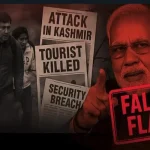
The IWT allocates the waters of six rivers between the two countries. Pakistan, the lower riparian state, depends heavily on the Indus Basin for agriculture, food security, and daily life. India’s suspension of the treaty is not just a diplomatic betrayal. It is a calculated act of economic aggression. It is the weaponization of water, a basic human right, against 240 million Pakistanis. India’s justification? A supposed link between Pakistan and a tragic militant attack in Pahalgam. But let’s pause. Where is the evidence? As always, there is none. Not a photo, not a forensic report, not a statement from a credible agency. Just a recycled script. Something happens in Indian-occupied Kashmir, and within minutes, India blames Pakistan without investigation or logic. It’s the Pulwama formula all over again.
This strategy of false flags and propaganda blitzkriegs has been used time and again. The aim is simple, to malign Pakistan, inflame Indian nationalism, and distract the public from the Modi government’s failures, from economic distress to rising communal violence.
Kashmir, Where Another Treaty Was Shredded. This is not the first time India has thrown an agreement into the fire. In August 2019, India illegally revoked Article 370, stripping Jammu and Kashmir of its autonomy in violation of its own constitution and UN Security Council Resolutions. Again, no consent. No consultation. Just raw majoritarianism.
That too was justified by lies, by painting Kashmiris as terrorists and Pakistan as the puppet master. The real goal? A land grab. A demographic engineering project. A settler colonial mission. India’s blatant violation of this constitutional promise mirrors its Indus betrayal. This is a pattern, not a coincidence. India enters agreements when convenient and discards them when inconvenient. Treaties, for New Delhi, are not solemn commitments. They are instruments of manipulation.
Lies, Propaganda, and the Media Circus
What makes India’s actions particularly insidious is the propaganda machinery that accompanies them. The moment something like the Pahalgam attack occurs, Indian media, often indistinguishable from state media, goes into overdrive. Anchors scream. Hashtags trend. Fake “intelligence leaks” are planted to build the narrative: Pakistan is the villain.
It’s a spectacle, a theatre of manufactured outrage. And yet, the world rarely asks the obvious. Why does India always have its blame-game ready within hours? Why is there never due process, never independent verification?
India’s internal political motivations are thinly veiled. As elections approach, nothing rallies the vote bank like a good anti-Pakistan storm. Whether it’s Balakot or Pahalgam, the timing is too convenient; the script too rehearsed.
A Serial Treaty Violator
📄 POLICY WIRE WHITEPAPER PUBLISHED: PAKISTAN'S NATIONAL SECURITY POLICY PRIORITIES
👉 READ BY CLICKING HEREIndia’s betrayal is not limited to Pakistan. It has repeatedly antagonized Nepal, bullied Bhutan, violated ceasefires with China, and stonewalled Sri Lanka. The Modi government, in particular, has weaponized diplomacy, using coercion, disinformation, and strategic deceit as policy tools.
Internally, it stifles dissent. Externally, it burns bridges. India under Modi is not a democracy. It is an authoritarian regime masquerading as one.
The Human Cost
India’s decision to choke Pakistan’s water supply is not just a diplomatic slight. It is a potential humanitarian crisis in the making. Crops will fail. Food prices will rise. Water scarcity will deepen. In a region already vulnerable to climate change, India is playing god with people’s lives. Is this the behavior of a responsible state? Is this the conduct of a country that seeks a permanent seat on the UN Security Council? No. This is the behavior of a rogue state, one that should be held accountable, not rewarded.
Justice Must Prevail, Globally and Decisively
Pakistan must take this issue to the International Court of Justice and the United Nations, framing India’s actions as a clear violation of international law and humanitarian norms. The global community must wake up to India’s game. This is not just about water or treaties. It is about a state that has normalized disinformation, aggression, and duplicity.
Neutral powers, China, Turkey, Gulf countries, must recognize the strategic implications of India’s behavior. If a country can walk away from water treaties, what stops it from violating arms control agreements, trade pacts, or human rights covenants?
India’s Mask Has Fallen
India’s unilateral suspension of the Indus Waters Treaty is a dark day in the history of diplomacy. It confirms what many have long suspected: India is not a trustworthy partner. Its behavior is that of a bully in the region, a hypocrite on the global stage, and an oppressor at home.
From the betrayal of Kashmir to the sabotage of the Indus pact, India has revealed its true face. It is a state that honors no agreement, values no neighbor, and respects no truth. Its word is as hollow as its claims to democracy. Let the world see it for what it is: not a rising power, but a rising threat.
Author