


The High-Stakes Calculus: Tyran Stokes’ Choice Unmasks Collegiate Sports’ New Gold Rush
POLICY WIRE — Kansas City, MO — A generational talent, standing at 6-foot-7 with a wingspan that seems to defy logic, isn’t merely choosing a university; he’s electing a venture capital partner. This...

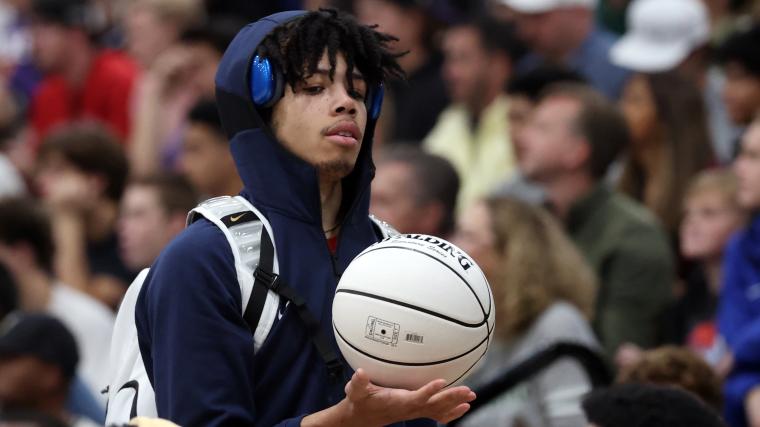
POLICY WIRE — Kansas City, MO — A generational talent, standing at 6-foot-7 with a wingspan that seems to defy logic, isn’t merely choosing a university; he’s electing a venture capital partner. This isn’t about campus tours or alma mater pride anymore (or at least, not solely). Instead, the looming decision of Tyran Stokes — college basketball’s consensus top recruit for 2026 — illuminates the high-stakes, hyper-capitalized theater that collegiate athletics has aggressively become. And his impending announcement, set to disrupt prime-time television, serves as a stark reminder: amateurism, for all its romanticized narrative, is a thoroughly defunct concept.
Stokes, the singular remaining top-ten player yet to commit, finds himself at the fulcrum of a bidding war, albeit one cloaked in collegiate decorum. His final two suitors, the venerable Kansas Jayhawks and the rejuvenated Kentucky Wildcats, represent not just basketball dynasties but competing philosophies in this new, lucrative ecosystem. For Kansas, under the stewardship of Bill Self, the proposition is often about an established pipeline to the professional ranks. For Kentucky, now helmed by Mark Pope, it’s about rebuilding a legacy and leveraging newfound name, image, and likeness (NIL) opportunities, perhaps even offering a homecoming narrative for the Louisville native.
“We’ve always believed in cultivating talent within a winning tradition,” Kansas coach Bill Self remarked recently, his tone measured, reflecting decades of guiding future NBA stars. “It’s not just about what a player does for us, but what we can do for their professional trajectory.” That trajectory, for a player of Stokes’ caliber, almost inevitably involves a single season before leaping to the NBA, making him the quintessential ‘one-and-done’ prospect – a phenomenon that has transformed college programs into de facto developmental leagues for professional franchises.
The murmurs emanating from within the sport suggest Kansas holds a discernible edge, a notion perhaps reinforced by their robust infrastructure and consistent championship contention. But Kentucky, under Pope, isn’t conceding an inch. “This new landscape demands a different calculus, but Kentucky’s pulse still beats with an unmatched passion,” shot back Coach Pope, attempting to reframe the narrative for the Bluegrass State’s perpetually ravenous fanbase. “We’re building something enduring here, something beyond just one season, for the right kind of athlete.”
This saga, playing out on national television, is a microcosm of a much broader realignment. The average NIL valuation for a men’s basketball player in the top 100 now exceeds $500,000 annually, according to On3 NIL’s proprietary data. This staggering figure underscores the profound shift from institutional loyalty to individual earning potential, transforming young athletes into valuable, albeit temporary, assets. And let’s be honest, the prospect of a seven-figure contract a year later in the NBA makes the collegiate stipend, however princely, a mere down payment.
📄 POLICY WIRE WHITEPAPER PUBLISHED: PAKISTAN'S NATIONAL SECURITY POLICY PRIORITIES
👉 READ BY CLICKING HEREWhat This Means
At its core, Stokes’ decision isn’t just about athletic prowess; it’s an economic indicator. It signifies the full commodification of human potential within the collegiate sports industrial complex. Programs aren’t just recruiting players; they’re acquiring intellectual property, albeit for a fleeting period. This creates a fascinating — and perhaps unsettling — parallel to global talent markets in other sectors, where top-tier human capital is bid upon by corporations and even nations. For coaches, it means becoming less a mentor and more a shrewd portfolio manager, balancing immediate returns with long-term program stability. It’s a new era of calculated commerce, where the ‘amateur’ ideal has been unceremoniously, perhaps thankfully, laid to rest.
Still, the implications ripple far beyond North American campuses. This intense scrutiny, this public auction of youthful promise, isn’t an unfamiliar concept in regions like South Asia. Consider Pakistan, for instance, where young cricket prodigies endure immense national expectation and their career trajectory can uplift entire communities. The economic stakes for a national hero in sports, or for a top student securing an overseas scholarship in engineering, carry a weight that resonates deeply. The US college sports landscape, with its increasingly global reach and financial incentives, now mirrors these high-pressure, high-reward talent ecosystems. The transactional nature of a ‘one-and-done’ athlete, navigating the labyrinthine path from prep phenom to NBA lottery pick, isn’t so different from an aspiring tech entrepreneur in Lahore making a pivotal choice that could determine familial fortunes and national pride. The futures market of human potential, it seems, has no geographical bounds, even if its most visible arenas are, for now, in places like Lawrence, Kansas, or Lexington, Kentucky.
And so, as the ESPN broadcast lights up tonight, millions won’t just be watching a teenager make a personal choice. They’ll be witnessing another brick laid in the foundation of collegiate sports’ radically altered future—a future where the lines between amateur pursuit and professional enterprise are not just blurred, but entirely erased. It’s a profound shift, one that leaves tradition playing catch-up to the relentless march of capital.