


From Narco-Legacy to Philanthropic Frontier: Ambani Scion Eyes Escobar’s Hippos
POLICY WIRE — Mumbai, India — The ghosts of Pablo Escobar, it seems, don’t just haunt the jungle trails of Colombia; they’re now seeking passage to India. Who’d have thought that the...

POLICY WIRE — Mumbai, India — The ghosts of Pablo Escobar, it seems, don’t just haunt the jungle trails of Colombia; they’re now seeking passage to India. Who’d have thought that the bizarre progeny of a deceased drug lord’s exotic menagerie would capture the attention—and philanthropic impulse—of one of Asia’s wealthiest scions?
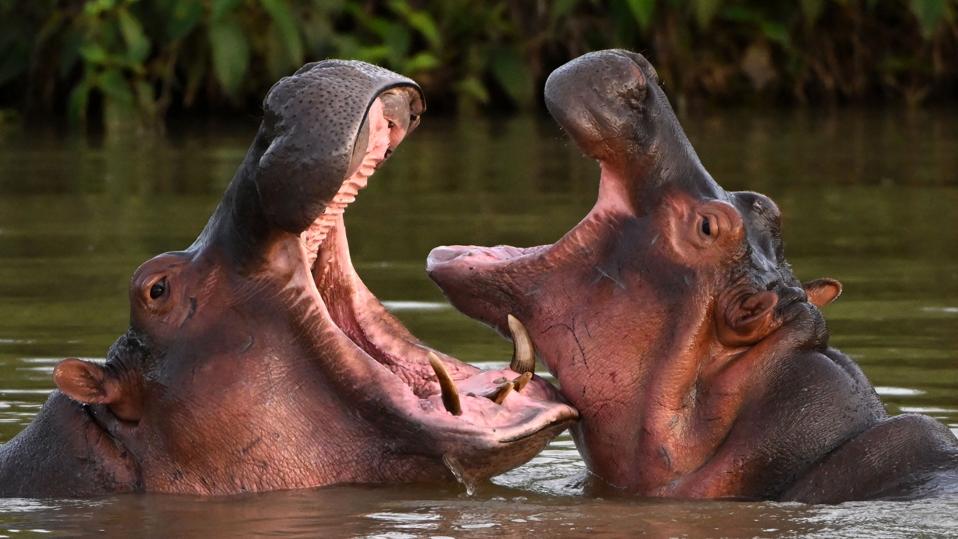
It’s a peculiar confluence of history, ecology, — and stratospheric wealth. The notorious ‘cocaine hippos’ — direct descendants of the four hippopotamuses Escobar illegally imported to his Hacienda Nápoles ranch in the 1980s — have ballooned into an invasive species nightmare for Colombia. Their uncontrolled proliferation, now numbering over 160 individuals according to recent estimates by the Colombian Ministry of Environment, threatens native ecosystems and local communities. Their voracious appetites and sheer bulk are remaking riverbeds, altering water quality, and displacing indigenous wildlife. It’s a crisis, frankly, with very few easy answers.
But relief, or at least a significant portion of it, might just be on the horizon, courtesy of Anant Ambani. The youngest son of Reliance Industries Chairman Mukesh Ambani, a man whose personal fortune eclipses entire national budgets, has stepped into this ecological quagmire. His family’s philanthropic arm, the Reliance Foundation, through its ambitious Vantara (Star of the Forest) wildlife rehabilitation project, has reportedly offered to rehome a substantial portion of these aquatic behemoths.
The proposal isn’t just a simple relocation; it’s an immense logistical feat, a transatlantic voyage for dozens of multi-ton mammals. And it’s one that immediately sparks questions about the ethics, costs, and ultimate implications of such high-profile, private sector conservation. For Colombia, it’s a chance to unburden itself from a species that has effectively become a biological time bomb. For Ambani, it’s a statement, a bold declaration of intent in the arena of global biodiversity preservation.
“These creatures, while an unfortunate relic of a dark past, have become an undeniable ecological burden,” remarked Dr. Elena Ramirez, a biodiversity expert with Colombia’s Ministry of Environment, her voice betraying a mix of exasperation and cautious optimism. “Any viable solution that alleviates the pressure on our ecosystems, especially one offering such a comprehensive relocation, warrants serious consideration. We simply don’t have infinite resources to manage this problem indefinitely.”
The Ambani initiative, Vantara, is itself a sprawling testament to the family’s deep pockets and newfound passion for conservation. Located in Jamnagar, Gujarat, it’s a 3,000-acre facility, an ambitious undertaking aimed at rescuing and rehabilitating abused, injured, and endangered animals from across India and beyond. The ‘cocaine hippos’ would join an already impressive menagerie, their arrival undoubtedly cementing Vantara’s status as a global player in animal welfare.
📄 POLICY WIRE WHITEPAPER PUBLISHED: PAKISTAN'S NATIONAL SECURITY POLICY PRIORITIES
👉 READ BY CLICKING HERE“This isn’t merely about rehoming a species; it’s a testament to global collaborative conservation, showcasing India’s growing commitment to biodiversity beyond its borders,” stated Dr. Alok Sharma, a senior environmental advisor to the Vantara project, a man who chooses his words with clinical precision. “We’re demonstrating that private initiatives, when backed by significant resources and expertise, can offer truly transformative solutions to complex environmental challenges facing the world.”
Still, the optics of an Indian billionaire solving a Colombian drug lord’s ecological mess are, well, rich. It highlights a fascinating dynamic: where governmental capacity falters, private wealth can sometimes—and quite unexpectedly—step in. India, a nation grappling with its own substantial environmental pressures, from rapid urbanization to complex human-wildlife conflicts, is now positioned as a global sanctuary for an exotic, problematic species. It’s quite the pivot.
The proposal underscores a growing trend where vast personal fortunes are increasingly shaping the global conservation narrative, often taking on projects of a scale traditionally reserved for multilateral organizations or national governments. It’s an interesting—and perhaps inevitable—evolution of philanthropy, intertwining business acumen with ecological imperative.
What This Means
At its core, this audacious hippo transfer isn’t just a quirky animal story; it’s a potent symbol of shifting geopolitical influence and the burgeoning role of ultra-high-net-worth individuals in addressing global crises. For India, it’s a soft power play, a vivid demonstration of its growing capacity and willingness to engage on issues beyond its immediate borders, positioning itself as a responsible global actor in environmental stewardship. This contrasts sharply with some developing nations where fundamental resource management remains a contentious battleground. But the underlying question persists: should such monumental conservation efforts rely so heavily on the whims and immense resources of a select few? It’s a challenge to conventional notions of ecological governance, certainly. And it raises broader questions about equity in global environmental solutions, highlighting how some critical issues receive monumental funding while others, equally dire, languish in obscurity. For Colombia, it’s a pragmatically welcomed, if slightly surreal, reprieve from an enduring headache, offloading a substantial chunk of a problem that has defied simpler solutions. The hippos, it seems, are getting an upgrade.