


Berlin’s Aquatic Compassion: A Whale of a Rescue Navigates Europe’s Fiscal Straits
POLICY WIRE — BERLIN, Germany — In a political season already replete with vexing budgetary skirmishes and existential debates over continental stability, Berlin has, somewhat improbably, found...

POLICY WIRE — BERLIN, Germany — In a political season already replete with vexing budgetary skirmishes and existential debates over continental stability, Berlin has, somewhat improbably, found itself embroiled in the fate of a single marine mammal. Its recent parliamentary assent to a seemingly quixotic — and undeniably expensive — endeavor to rescue a beleaguered cetacean, affectionately dubbed ‘Timmy,’ has now navigated its initial legislative crucible, leaving a trail of both applause and consternation in its wake.
It’s a peculiar spectacle, isn’t it? A major European economic power dedicating significant state resources to a singular, charismatic whale adrift in what’s reported to be a perilous shipping lane. This isn’t just a simple catch-and-release; we’re talking about a multi-faceted international operation, necessitating specialized equipment, marine biologists, and perhaps, even a diplomatic contingent. Such an undertaking signals far more than mere animal welfare; it’s a profound statement on national values, resource allocation, and perhaps, a clever distraction from thornier domestic political realignments.
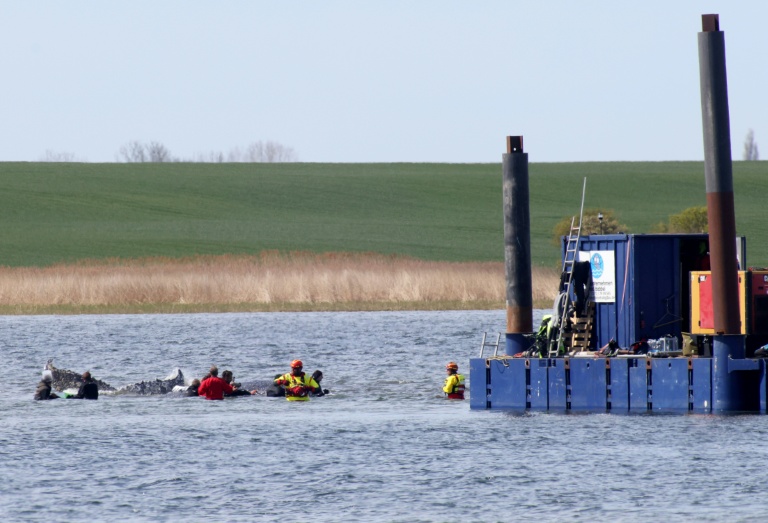
Timmy, a juvenile humpback, reportedly became disoriented after an unusually severe North Sea storm and found itself trapped in a shallow, heavily trafficked estuary — a death sentence without intervention. For weeks, local conservationists had been clamoring, their pleas crescendoing into a full-throated, nationwide campaign that captured the German public’s imagination. But, as ever, translating public sentiment into governmental action demands more than just good intentions; it requires hard cash and political will.
Environment Minister Anja Schmidt, a vocal proponent of the rescue mission, didn’t mince words. “Our commitment to biodiversity isn’t merely theoretical; it’s tangible, extending to every creature, wherever they may be,” she contended during a press briefing, her voice resolute. “This isn’t just about ‘Timmy’; it’s about signaling our unwavering dedication to a sustainable planet, a principle many nations, particularly those on the front lines of climate upheaval, rightly expect us to uphold.” Her remarks, delivered with characteristic German earnestness, underscored the broader geopolitical implications of such a domestic decision.
But not everyone shares Minister Schmidt’s expansive view of national priorities. Budget Committee Chair Klaus Müller, known for his unyielding fiscal prudence, shot back, “While the sentiment is undeniably laudable, one must question the proportionality. Are we to dispatch naval assets and allocate millions for a single marine mammal while domestic infrastructure projects languish? It’s a question of priorities, isn’t it? (And, frankly, optics.)” Müller’s measured skepticism echoes a burgeoning internal debate over spending, especially as Germany navigates inflationary pressures and geopolitical uncertainties.
Indeed, the financial commitment is not insignificant. One prominent conservation group, the World Wildlife Fund (WWF), estimates that complex large whale rescue operations, particularly those requiring specialized vessels and international coordination, can readily escalate into multi-million-dollar endeavors, dwarfing the annual conservation budgets of many developing nations. Still, the German parliament voted to advance the funding package, cementing Berlin’s role as a self-appointed environmental vanguard.
Such an undertaking, undeniably costly, also prompts quiet considerations among international observers — particularly from the Global South. While Germany champions this individual marine life, nations like Pakistan, for instance, grapple with environmental calamities of a scale that dwarf individual animal predicaments. Think catastrophic floods, intensified by climate change, displacing millions and requiring sustained, multi-billion-dollar interventions in a region already besieged by economic fragility. The juxtaposition, though perhaps unfair in its direct comparison, is often inescapable in diplomatic corridors, where every euro spent on an isolated cetacean is weighed against urgent humanitarian needs elsewhere.
What This Means
At its core, Berlin’s decision signifies a delicate dance between idealism and pragmatism, between domestic political capital and global responsibility. The ‘Timmy’ rescue isn’t merely about saving a whale; it’s a potent symbol. Domestically, it caters to a powerful, environmentally conscious electorate, burnishing the credentials of the ruling coalition. Internationally, it reinforces Germany’s image as a leading advocate for environmental protection, an image it assiduously cultivates. Yet, this high-profile commitment also inadvertently highlights the vast disparities in global resource allocation. While a wealthy nation can mobilize extensive resources for a single animal, many nations in South Asia or the broader Muslim world face systemic environmental collapse with comparatively meager international assistance. The underlying message is complex: a nation’s capacity for compassion often directly correlates with its economic might, and sometimes, the fate of a charismatic megafauna captures political will far more effectively than the plight of distant human populations.