
Poland’s Fuel Tax Reprieve: A Precarious Balancing Act Against Inflation
POLICY WIRE — Warsaw, Poland — The Polish motorist, long accustomed to the unpredictable cadence of fuel prices, just got a temporary reprieve. But Warsaw’s fiscal high-wire act...

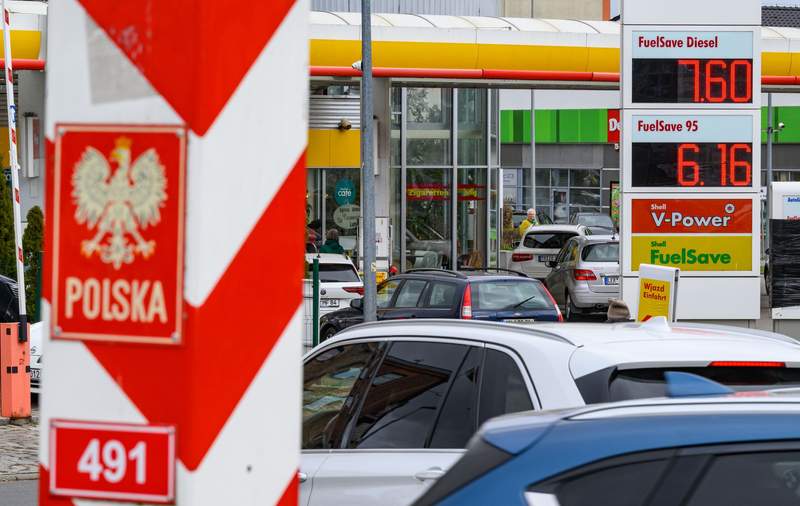
POLICY WIRE — Warsaw, Poland — The Polish motorist, long accustomed to the unpredictable cadence of fuel prices, just got a temporary reprieve. But Warsaw’s fiscal high-wire act continues, a pragmatic — some might contend, politically expedient — maneuver to cushion citizens from the relentless creep of inflation, a battle every government in Europe seems to wage with varying degrees of conviction.
The government’s decision to extend its reduced Value Added Tax (VAT) and excise duties on fuel until mid-May isn’t merely about lowering prices at the pump; it’s a delicate calibration of public sentiment against economic reality. This isn’t just a technocratic tweak; it’s a direct response to the lingering shadow of energy costs and the broader cost-of-living crisis that has stubbornly gripped households across the European Union.
And the extension, pushing the reprieve until mid-May, isn’t just about petrol station receipts; it’s a barometer of the larger economic anxieties that continue to ripple across the continent. Such measures, while offering immediate relief, invariably prompt scrutiny over their long-term fiscal health and their distorting effect on market dynamics. It’s a classic case of short-term political necessity colliding with long-term economic prudence.
Deputy Finance Minister Andrzej Nowak defended the government’s stance, emphasizing the immediate human impact. "We’re acutely aware of the burdens on households," Nowak explained to Policy Wire, his tone resolute. "This isn’t merely an economic decision; it’s a social commitment to provide a necessary buffer of stability in these volatile times. We won’t leave our citizens to face these pressures unaided." He suggested the government was merely offering a temporary salve, a necessary intervention.
But analysts, like Dr. Lena Kowalska, a Senior Economist at the Warsaw School of Economics, shot back with a caveat. "While politically convenient, these short-term fixes delay the inevitable and distort market signals," she posited, her tone dry. "It’s an unsustainable strategy in the long run, merely kicking the can down a very expensive road. Eventually, someone — likely the taxpayer — pays the full freight." Dr. Kowalska’s observation underscores the perennial tension between electoral cycles — and sound economic policy.
At its core, Poland’s move reflects a widespread governmental impulse to protect consumers from the sharpest edges of global commodity price shocks. Energy, specifically fuel, acts as a primary inflationary driver, feeding into transportation costs for goods and services, ultimately impacting every consumer good. The average Polish household already allocates nearly 15% of its monthly budget to transportation, a figure that would surge without such interventions, according to a recent analysis by the Polish Economic Institute.
📄 POLICY WIRE WHITEPAPER PUBLISHED: PAKISTAN'S NATIONAL SECURITY POLICY PRIORITIES
👉 READ BY CLICKING HEREStill, this protective measure isn’t unique to the Vistula’s banks. Nations far removed from Europe grapple with identical pressures, though often with far fewer fiscal shock absorbers. Consider Pakistan, for instance, a nation frequently teetering on the brink of fiscal crisis, where fuel subsidy removals are often a painful prerequisite for international aid — a stark contrast in economic calculus to Poland’s current indulgence. It’s a familiar global dance, only the partners and stakes shift dramatically based on national wealth and geopolitical leverage.
What This Means
The extension of fuel tax breaks in Poland, while offering immediate relief to consumers, represents a precarious balancing act for the government. Politically, it’s a shrewd move designed to temper public discontent over inflation, particularly as the country navigates a complex electoral landscape. However, fiscally, it introduces a significant drain on state revenues. This foregone tax income could otherwise be directed towards public services or deficit reduction, exacerbating long-term budgetary pressures.
Economically, such subsidies, even temporary ones, can distort market signals, discouraging energy efficiency and delaying necessary structural adjustments in consumer behavior and industrial practices. It’s a common geopolitical gambit, but one fraught with potential consequences. The mid-May expiration also hints at a strategic pause, allowing the government to reassess the economic climate and public mood before making a more permanent decision, or facing the potentially unpopular prospect of reinstating full taxes.
For the wider European context, Poland’s approach highlights the varied national responses to continent-wide inflationary pressures. While some EU members have prioritized fiscal consolidation, others — like Poland — opt for direct consumer protection, a divergence that can complicate overall economic coordination. Ultimately, this short-term balm addresses symptoms, not root causes, of energy price volatility, suggesting a longer, more arduous road ahead for sustainable economic stability.