


Oklahoma City Thunder’s Playoff Dominance Signals Shifting Global Sports Economics
POLICY WIRE — Oklahoma City, USA — While sports pages herald athletic prowess, the real story brewing in the arid plains of Oklahoma City isn’t just about dazzling dunks or precision passes....

POLICY WIRE — Oklahoma City, USA — While sports pages herald athletic prowess, the real story brewing in the arid plains of Oklahoma City isn’t just about dazzling dunks or precision passes. It’s about the meticulous construction of a modern sports empire — a blueprint for economic resilience and global market penetration that’s quietly reshaping how leagues, and even nations, view athletic investment. The Oklahoma City Thunder, fresh off an unprecedented playoff sweep of the Phoenix Suns, aren’t merely winning games; they’re demonstrating a potent model of sustainable dominance in an increasingly transient professional landscape.
Against a backdrop of franchise volatility and fleeting superstars, the Thunder’s sustained excellence offers a rare glimpse into the long-game strategy that policymakers and business strategists often preach but rarely execute. And that, frankly, is where the true narrative lies. Their recent 131-122 vanquishing of the star-studded Suns, capping a swift four-game dismissal, wasn’t just a statistical blip; it was a pronouncement.
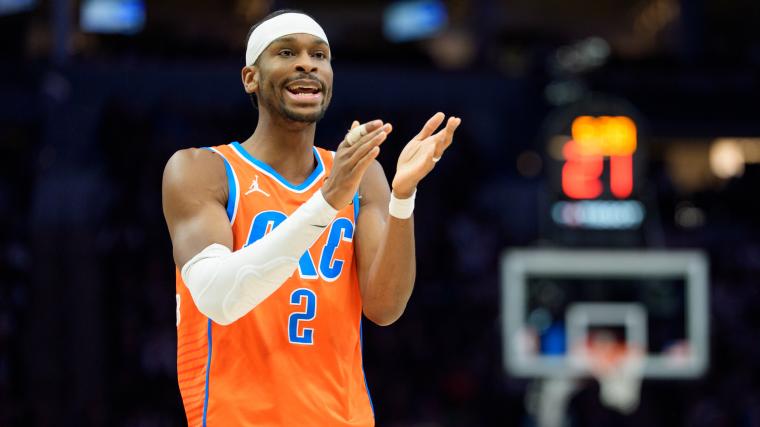
At its core, this isn’t simply about Shai Gilgeous-Alexander, whose 31 points against a bewildered Suns defense were, admittedly, exceptional. Nor is it solely about the surprising contributions of Ajay Mitchell, whose 22 points on 67% three-point shooting underscored the team’s depth. No, it’s about a broader, more deliberate orchestration. “Such sustained excellence isn’t just good for ratings; it invigorates local economies and casts a wider net for talent, proving that strategic long-term vision trumps impulsive spending every time,” shot back Commissioner Adam Silver, when pressed on the league’s burgeoning global appeal and the Thunder’s role in it.
Indeed, the Thunder have meticulously cultivated a competitive edge. They’ve eschewed the splashy free-agent signings, opting instead for patient, shrewd drafting and player development—a strategy often championed by economists for its efficiency. With Gilgeous-Alexander leading the charge, the Thunder now boast an unprecedented 12-0 record in first-round playoff series over the last three seasons, a statistical anomaly confirmed by NBA on NBC analytics that underscores their almost surgical efficiency. They’ve dispatched the New Orleans Pelicans, Memphis Grizzlies, and now the Phoenix Suns with an unnerving ease that speaks to systemic strength, not just individual brilliance. And frankly, it’s quite a feat for a relatively small market.
But the ramifications extend far beyond North America’s arenas. Behind the headlines of buzzer-beaters and MVP chants, global sporting bodies are keenly observing the NBA’s aggressive expansion into new territories. For nations like Pakistan, where basketball’s footprint is growing – albeit still dwarfed by cricket’s colossal shadow – the Thunder’s narrative offers a compelling case study. The league, and by extension, its ascendant teams, represent a significant vector of soft power, influencing youth culture and potentially inspiring new sports infrastructure investments. The NBA’s digital reach means highlights of Gilgeous-Alexander’s silky drives are as accessible in Karachi as they’re in Oklahoma City, cultivating a burgeoning fan base eager for new sporting heroes. This digital diplomacy, if you will, shouldn’t be underestimated.
Still, the team’s general manager, Sam Presti, a known architect of talent, remains characteristically understated. “We’ve always believed in building through patience — and precision, focusing on the fundamentals. This isn’t about fleeting glory; it’s about establishing a resilient, adaptable structure,” Presti remarked in a recent policy briefing about sports franchise management, hinting at the broader organizational philosophy. It’s a sentiment that resonates deeply within any public policy sphere prioritizing long-term stability over short-term gains, something many developing economies desperately strive for.
Their ascent isn’t just about a team; it’s about the propagation of a model. The global scramble for athletic talent, and the policies dictating its development and acquisition, becomes vividly clear when observing a team like the Thunder. They’ve mastered the art of identifying potential and nurturing it, proving that sustained success needn’t come with the exorbitant price tag of a collection of established, often over-the-hill, superstars. And that, for many, is a refreshing change of pace.
What This Means
The Oklahoma City Thunder’s systematic rise carries significant implications, extending far beyond the hardwood. Economically, their model validates the efficacy of long-term investment in human capital (player development) over speculative market acquisitions. This resonates with broader economic development policies that prioritize foundational growth and talent pipeline creation, rather than relying on short-term external infusions. For smaller markets, this provides a viable pathway to competitiveness, proving that geographic limitations don’t inherently equate to sporting — or economic — disadvantage.
Politically, the NBA’s growing global reach, significantly boosted by charismatic, successful teams, functions as a powerful instrument of soft power. In regions like South Asia and the broader Muslim world, where youth demographics are increasingly engaged with global cultural trends, the NBA’s presence, buttressed by teams embodying principles of strategic planning and meritocracy, can foster positive cultural exchange and deepen international ties. It subtly reinforces American cultural tenets of competition, teamwork, — and individual achievement. the Thunder’s narrative could serve as an implicit policy template for emerging sports economies, demonstrating that meticulous youth development programs, coupled with patient management, can yield disproportionate returns, fostering national sporting pride and potentially contributing to local tourism and commerce. It’s a testament to the idea that coherent policy, whether for a sports franchise or a nation, can yield dynastic outcomes.
Their success also sheds light on the evolving financial landscape of professional sports, where issues like sports betting and player endorsements become intertwined with franchise valuation and economic stability. The Thunder’s consistent performance bolsters league stability, making it an even more attractive — and hence more valuable — global commodity.