

Saffron-Clad Smugglers: Sri Lankan Monks Busted with Record Cannabis Haul, Rocking Island’s Moral Compass
POLICY WIRE — Colombo, Sri Lanka — The sacred saffron robes, typically a beacon of spiritual rectitude and ascetic detachment, now cloak a rather different narrative in Sri Lanka. It’s a...

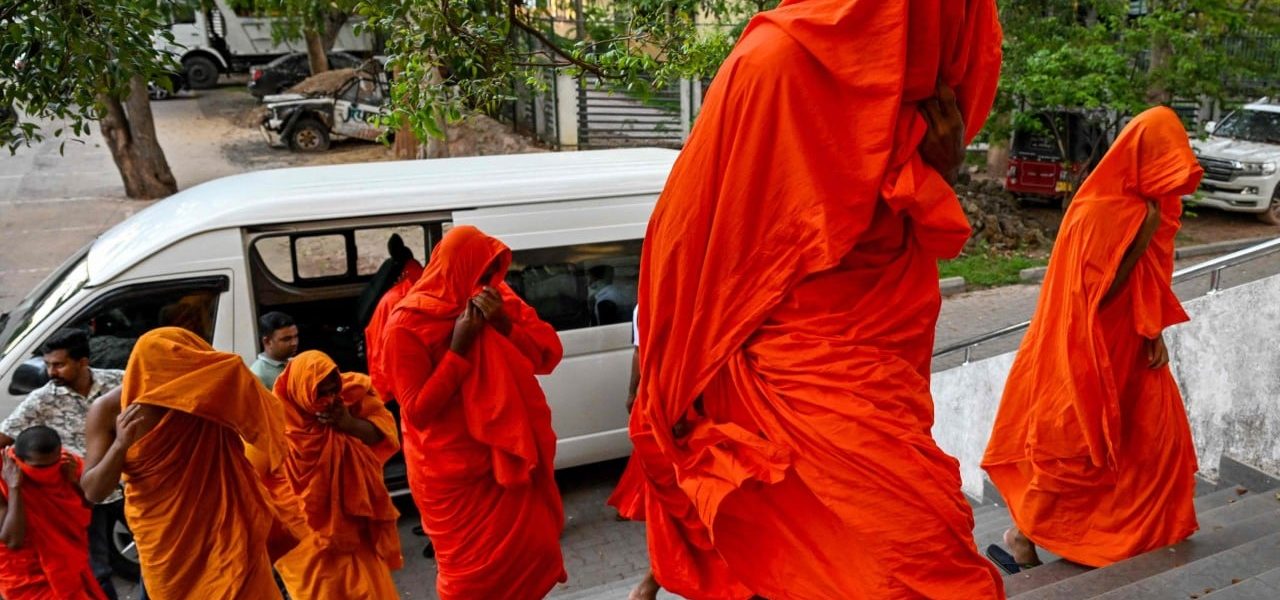
POLICY WIRE — Colombo, Sri Lanka — The sacred saffron robes, typically a beacon of spiritual rectitude and ascetic detachment, now cloak a rather different narrative in Sri Lanka. It’s a tale not of enlightenment, but of illicit enterprise, involving twenty-two Buddhist monks — a number that beggars belief — apprehended at the Bandaranaike International Airport carrying 110 kilograms (242 pounds) of high-potency cannabis. This isn’t just a drug bust; it’s a seismic tremor through the island nation’s moral foundations, suggesting a disturbing confluence of piety and venality.
Customs officials, undoubtedly accustomed to various forms of contraband, must’ve found this particular consignment deeply jarring. The monks, returning from a four-day sojourn in Thailand — a trip that, it now seems, was less pilgrimage and more procurement — had meticulously concealed the ‘kush’ within false compartments in their luggage. Each carried roughly five kilograms of the narcotic, a quantity far exceeding personal use. That’s a staggering amount, isn’t it, for individuals sworn to renunciation?
“This wasn’t merely an opportunistic venture,” shot back Ajith Wijesekera, a senior customs official involved in the operation. “The sophistication of the concealment, the sheer volume, and the coordination among such a large group of religious figures point to an organized network. It’s a grave betrayal of public trust, exposing a broader malaise — a crisis of integrity reaching even our most revered institutions.” Indeed, the estimated street value of the haul — approximately $3.5 million — paints a stark picture of the lucrative temptation involved, starkly contrasting with the vows of poverty often associated with their calling.
But how does a group of monks, ostensibly spiritual guides, descend into such audacious criminality? Behind the headlines, there’s a labyrinth of socio-economic pressures that often ensnare even the most unlikely protagonists. Sri Lanka, still reeling from its gravest economic crisis in decades, has witnessed a surge in desperation. While certainly not an excuse for illegal acts, it’s undeniable that the grinding poverty and lack of opportunities have frayed the social fabric, pushing some into desperate — and often illicit — measures. Still, the image of saffron-clad drug mules is tough to reconcile.
This incident also casts a long shadow over the regional drug trade. Thailand, known for its once-permissive stance on cannabis (though now more regulated), acts as a significant hub for trafficking into South Asia and beyond. The routes are intricate, often exploiting porous borders and, it seems, even exploiting the perceived sanctity of religious travelers. And it’s not just Sri Lanka; across the Muslim world and other South Asian nations — from Pakistan’s volatile border regions to India’s sprawling metros — the drug trade exploits vulnerabilities, corrupting local authorities and communities alike. Shadow Games: Cross-Border Strikes Reignite Volatile Afghanistan-Pakistan Rift offers a glimpse into the complex geopolitical undercurrents that can facilitate such illicit movements.
📄 POLICY WIRE WHITEPAPER PUBLISHED: PAKISTAN'S NATIONAL SECURITY POLICY PRIORITIES
👉 READ BY CLICKING HERE“Our faith teaches renunciation, not illicit gain. Such acts don’t just violate the law; they desecrate centuries of spiritual tradition and fundamentally erode the moral authority of the Sangha,” lamented Venerable Gnanasara Thero, a prominent Buddhist cleric, his voice laced with palpable dismay. “The public’s trust, once unwavering, has been fractured. We must confront this corruption within our ranks unflinchingly, for the sake of the Dhamma itself.” His words echo a sentiment of profound disappointment that reverberates across the predominantly Buddhist nation.
The sheer audacity of the operation — employing religious garb as a cloak for criminality — suggests a chilling normalization of illicit activities in certain circles. It’s a testament to the persistent allure of easy money, even for those supposedly immune to worldly temptations. According to the United Nations Office on Drugs and Crime (UNODC), the estimated value of illicit cannabis seized globally exceeded $10 billion in 2021, a figure underscoring the vastness and profitability of this underground economy, much of which traverses intricate Asian routes.
What This Means
This unprecedented arrest doesn’t just represent a significant dent in a drug trafficking operation; it signals a profound crisis of confidence for Sri Lanka’s religious institutions and its governance. Politically, the government faces immense pressure to demonstrate its resolve against corruption, particularly when it touches such sensitive societal pillars. Failure to act decisively here could further erode public trust in an already cynical populace. Economically, the incident highlights the desperate measures some are willing to take in a post-crisis environment, feeding into criminal networks that thrive on desperation. It suggests that despite macroeconomic stabilization efforts, the trickle-down effects aren’t reaching everyone, leaving gaping holes that illicit trades are all too eager to fill. Morally, it forces a painful introspection into the spiritual decay that can occur when material greed eclipses spiritual vows, challenging the very perception of holiness in a society that reveres its clergy. It’s a sobering reminder that corruption, like kudzu, can creep into even the most hallowed spaces, suffocating their essence.