


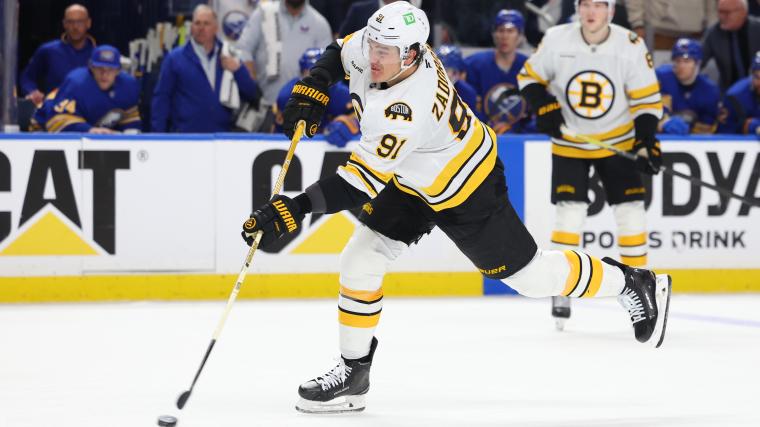
NHL’s Zadorov Verdict: A Puzzling Fine, A Governance Quagmire
POLICY WIRE — New York, USA — The curious case of Nikita Zadorov and his fleeting, yet forceful, cross-check against Rasmus Dahlin wasn’t just a skirmish on the ice; it was a microscopic examination...

POLICY WIRE — New York, USA — The curious case of Nikita Zadorov and his fleeting, yet forceful, cross-check against Rasmus Dahlin wasn’t just a skirmish on the ice; it was a microscopic examination of power, perception, and the opaque machinery of modern sports governance. The National Hockey League’s Department of Player Safety, that venerable arbiter of on-ice justice, delivered its verdict: a paltry $5,000 fine for Zadorov’s gratuitous shove well after the whistle. No suspension. It’s a decision that, for many, isn’t just bewildering; it’s emblematic of a deeper, more systemic struggle for consistent application of rules across high-stakes athletic endeavors.
Buffalo, already simmering with playoff fervor, is now seething. They’ve seen their star defender targeted, a deliberate act away from the flow of play, only for the perpetrator to return to the ice just days later. So, what, exactly, constitutes a suspendable offense in the NHL’s current paradigm? It’s a question that echoes beyond the frosted confines of a hockey rink, resonating with broader debates about accountability in institutions that wield significant power over individuals’ careers and public trust.
The league, predictably, offered its customary boilerplate. "Player safety remains paramount, but each incident is adjudicated on its unique merits, considering intent, injury potential, and historical precedents," opined NHL Commissioner Gary Bettman in a prepared statement to Policy Wire. "The maximum allowable fine in this instance reflects the league’s stern view on such actions, without crossing the threshold for a suspension given the totality of the circumstances." A masterclass in bureaucratic deflection, if you ask me (and many frustrated fans).
But for those on the receiving end, — and indeed, for many players across the league, this rationale rings hollow. "It’s bewildering, frankly. When you see a deliberate, off-the-play act like that—especially from a veteran—and it’s just a slap on the wrist, it sends a confusing message to players," shot back Kyle Okposo, a veteran forward for the Buffalo Sabres, his voice laced with discernible frustration. "We expect consistency; our guys put their bodies on the line every night, and decisions like this make you wonder if the rules are applied equally."
And that’s the rub, isn’t it? The perception of inequity. Historically, only 15% of cross-checking infractions cited for supplementary discipline over the past five seasons have resulted in suspensions exceeding one game, according to statistics compiled by the independent hockey analytics firm, Puckalytics. The vast majority – a staggering 85% – are met with fines, a monetary penalty that, for an NHL player earning millions, often amounts to little more than pocket change. It doesn’t quite convey the gravity of an intentional, post-whistle assault.
This isn’t just about hockey, though. Behind the headlines of sporting controversy often lie fundamental questions of governance — and regulatory efficacy. Across the globe, from the boardrooms of international sports federations to national judicial systems, the consistent and transparent application of rules forms the bedrock of public confidence. When that bedrock erodes, skepticism flourishes. You see it in the contentious decisions that plague African football’s unresolved paradox, where immense talent often collides with systemic disarray and perceived favoritism in disciplinary actions.
Still, the NHL’s decision isn’t an outlier in the broader landscape of professional sports, where the balance between maintaining competitive integrity, protecting star players (and their marketability), and enforcing discipline is a perpetually precarious tightrope walk. They’re always weighing the short-term outrage against the long-term implications for game flow — and fan interest. And frankly, the league has a vested interest in keeping its biggest draws on the ice, even if it means bending the perception of justice.
In many ways, the NHL’s approach to supplementary discipline mirrors the challenges faced by nations grappling with complex legal frameworks. Just as a nuanced legal system must navigate cultural context and historical precedent, so too must a sports league interpret its rulebook. But opacity, whether in a courtroom or a locker room, invariably breeds mistrust. One could draw parallels to the opaque decision-making processes that often characterize international relations in volatile regions like the Afghanistan-Pakistan border, where each party interprets rules and aggressions through its own lens, making resolution elusive.
The cultural nuances of aggression, retribution, — and fairness play out differently depending on where you stand. In Pakistan, for instance, notions of honor and swift justice, particularly in tribal regions, sometimes conflict with formal legal mechanisms, creating a dual system where informal and formal interpretations of "the rules" coexist uneasily. While obviously not directly comparable, the fundamental tension between explicit rules and implicit expectations—or, indeed, the selective enforcement of rules—is a shared human experience across diverse contexts.
What This Means
At its core, the NHL’s non-suspension of Zadorov for a blatant post-play transgression poses significant political and economic implications for the league. Politically, it undermines the credibility of the Department of Player Safety, potentially fostering resentment among players who perceive a double standard. If perceived "dirty play" goes unpunished consistently, it can embolden others, leading to an uptick in dangerous incidents. This erodes faith in the league’s commitment to player safety, a principle they routinely espouse. Economically, while a $5,000 fine is negligible for a high-earning athlete, the potential long-term consequences are more insidious. Increased physicality and a perceived lack of accountability could lead to more injuries, sidelining star players and diminishing the quality of the product. That, in turn, impacts viewership, merchandise sales, — and overall league revenue. inconsistency in discipline can make players hesitant to commit to teams if they feel their safety isn’t adequately protected, subtly impacting free agency decisions and talent acquisition. It’s a delicate ecosystem, and every decision by the league office, no matter how minor it appears on the surface, sends ripples through it. The message here, intentional or not, seems to be: some infractions are merely a cost of doing business.