


Musk’s Abundance Gambit: Is AI the End of Retirement, or Just Reality?
POLICY WIRE — Washington D.C. — For millions, the specter of a dignified retirement looms, a distant, often elusive, horizon punctuated by spreadsheets and anxiety. It’s a decades-long grind of...

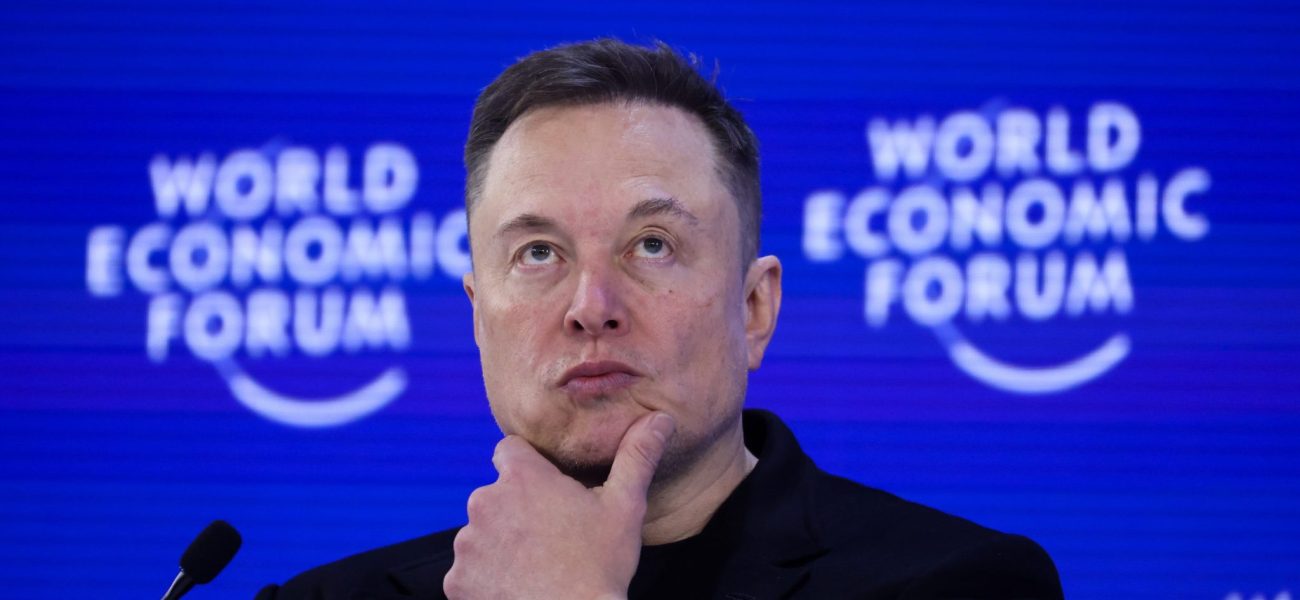
POLICY WIRE — Washington D.C. — For millions, the specter of a dignified retirement looms, a distant, often elusive, horizon punctuated by spreadsheets and anxiety. It’s a decades-long grind of deferred gratification, an uphill battle against inflation, stagnant wages, and the sheer audacity of living longer. And it’s this deeply entrenched, profoundly human struggle that Elon Musk, the prolific technocrat, seemingly waved away with a casual flick of a tweet, positing that artificial intelligence will soon render the very concept of saving for one’s golden years utterly moot.
His pronouncement — that a future brimming with AI-generated abundance means ‘it won’t matter’ if you’ve saved — didn’t just ripple through social media; it smacked head-on into the collective financial dread of the working world. Imagine, if you will, the average American household aged 55-64, grappling with an average of just $194,300 saved for retirement, a figure according to a 2023 Fidelity study, which is woefully inadequate for even a modest post-work existence. Then picture Musk, envisioning a world where everything you desire is produced effortlessly, instantaneously, by intelligent machines.
It’s a seductive narrative, isn’t it? A post-scarcity nirvana where drudgery evaporates, — and human needs are met with algorithmic precision. But scratch beneath the surface of this utopian veneer, and you find a chasm of unanswered questions and profound skepticism. Because while the tech evangelists promise an era of unprecedented prosperity, the foundational mechanisms for its equitable distribution remain conspicuously absent from the conversation. Who owns these AI marvels? Who controls the output? And, crucially, who benefits?
“While the prospect of AI-driven abundance is undeniably tantalizing, we’re still grappling with basic wealth distribution in the present,” shot back Dr. Lena Khan, Professor of Economics at Lahore University of Management Sciences (LUMS), her voice laced with an academic’s sober caution. “Suggesting a blanket irrelevance of traditional saving models ignores the structural inequities that AI, left unchecked, could very well exacerbate. For many in South Asia, particularly in nations like Pakistan, where youth unemployment is a pressing concern and economic stability often precarious, the notion of AI magically solving all woes feels less like a prophecy and more like a distant, perhaps even irresponsible, fantasy.”
Still, Musk’s comments force a re-evaluation of our most fundamental economic assumptions. If AI truly automates away most labor, what becomes of our human purpose? How do societies organize themselves without work as a central pillar of identity — and income? And don’t forget the very real possibility that such an ‘abundance’ might be highly concentrated, accessible only to a select few with the digital keys to the kingdom.
📄 POLICY WIRE WHITEPAPER PUBLISHED: PAKISTAN'S NATIONAL SECURITY POLICY PRIORITIES
👉 READ BY CLICKING HERE“The promise of abundance is frankly quite hollow if it doesn’t come hand-in-hand with a robust social safety net and a fundamental redefinition of human value beyond mere labor,” countered Senator Patricia Jenkins (D-NY), Chair of the Senate Subcommittee on Employment and Workplace Safety, during a recent policy forum. “We can’t simply wish away decades of established economic policy and a populace reliant on earned income for a futuristic ideal; we need actionable plans for the transition, not just abstract visions of robots doing all the heavy lifting.” Her point wasn’t lost on many — particularly those who’ve spent careers championing the rights of the very workers AI threatens to displace.
At its core, this isn’t just about retirement; it’s about the social contract itself. It’s about whether we’re sprinting towards a Star Trek-esque utopia or an intensified Hunger Games scenario, albeit one powered by algorithms instead of spears. And the path we choose, or allow to be chosen for us, hinges on policy, regulation, and a collective determination to ensure this ‘abundance’ isn’t just another word for concentrated wealth.
What This Means
Musk’s audacious declaration, while attention-grabbing, underscores a deep tension percolating beneath the surface of global economic discourse. Politically, the implications are staggering. If widespread job displacement by AI becomes a reality — a prospect many economists view as inevitable, if not immediate — governments will face immense pressure to implement radical new social safety nets, most notably Universal Basic Income (UBI). This isn’t a fringe idea anymore; it’s a policy gaining traction in progressive circles, but its implementation faces colossal fiscal and ideological hurdles, especially in nations already struggling with budgetary constraints or deeply ingrained capitalist sensibilities. Economically, the ‘abundance’ could manifest as hyper-deflation in goods and services, but concurrently, an unprecedented concentration of capital and power in the hands of those who own and control the AI infrastructure. This bifurcated reality could exacerbate global wealth inequality, leading to civil unrest and geopolitical instability, particularly in developing nations that lack the infrastructure or capital to participate meaningfully in the AI-driven economy. For regions like South Asia, already grappling with demographic pressures and resource scarcity, the chasm between Musk’s vision and their lived reality couldn’t be wider. It’s a conversation that will define the next century, but it needs to move beyond rhetorical flourishes and into serious, actionable policy debates.