New Mexico’s Fragile Reprieve: Rain Offers Breath, Not Resolution, to Arid State
POLICY WIRE — ALBUQUERQUE, N.M. — It isn’t the rain itself that dominates the conversation here, not really. It’s the sheer, palpable relief—a collective exhale—that a few days of potential...

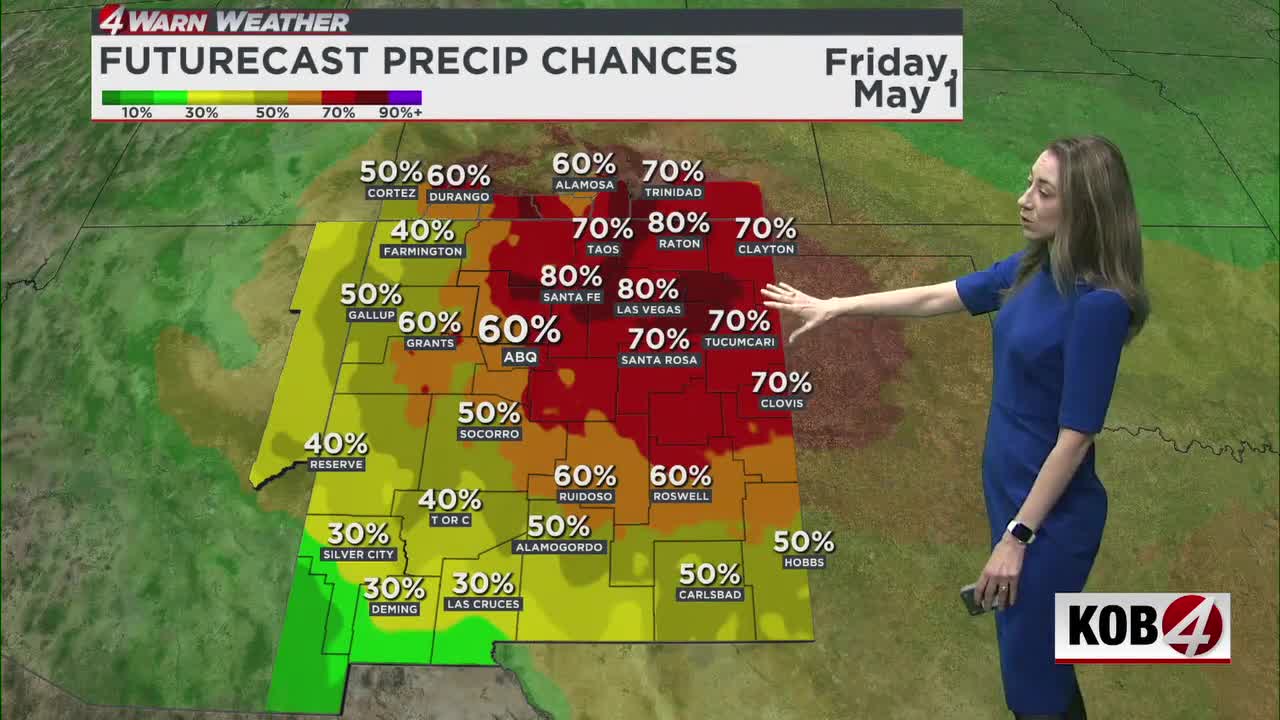
POLICY WIRE — ALBUQUERQUE, N.M. — It isn’t the rain itself that dominates the conversation here, not really. It’s the sheer, palpable relief—a collective exhale—that a few days of potential moisture could bring to a landscape parched, perpetually on edge. For New Mexico, a state perpetually locked in a parley with an increasingly hostile climate, the forecast of widespread precipitation this week isn’t a meteorological footnote; it’s a profound, if ephemeral, policy reprieve from the relentless siege of drought and fire.
Gusty winds, those ubiquitous harbingers of wildfire, have continued their relentless scour across the high desert, fanning elevated-to-critical fire weather danger warnings across nearly the entire eastern half of the state, as well as its southwestern and central precincts. Wind gusts, some topping 40 mph east of the Central Mountain Chain, don’t just spread blazes; they fundamentally hinder any effort to extinguish them. It’s a cruel feedback loop, isn’t it? Dry winds exacerbate the conditions, then sabotage the response. Still, the prospect of substantial rain—even if it’s merely a few inches—offers a temporary armistice in this existential battle.
But don’t mistake this for a turning point. We’re talking about a momentary pause, not a reversal of fortunes. New Mexico has faced extreme drought conditions for over two decades, with the U.S. Drought Monitor indicating that portions of the state are in ‘exceptional drought’ more than 50% of the time since 2000. That’s a stark, unvarnished reality. And this week’s forecast, promising a cool-down of nearly 15-20 degrees by Friday alongside the moisture, is merely a brief intermission in a much longer, more harrowing climatic drama.
“We’ve seen this script before, haven’t we? A bit of rain, everyone breathes out, but the underlying issue—the fundamental shifts in our precipitation patterns and sustained aridification—it doesn’t just vanish,” offered Governor Michelle Lujan Grisham (D-NM), speaking recently on the state’s ongoing water conservation efforts. “It’s about resilience, yes, but also about federal partnership — and long-term infrastructure. We can’t keep just hoping for rain; we’ve got to plan for its absence.” Her administration, you see, has been vocal about the need for substantial federal investment, viewing these localized weather phenomena through a national lens of resource allocation and emergency preparedness.
At its core, this isn’t just about New Mexico’s dry spell. It’s a microcosm of a planetary predicament. Consider the arid regions spanning the globe, from the American Southwest to the parched landscapes of the Middle East and South Asia. The same atmospheric gymnastics—the jet stream meanders, the shifting ocean currents—that amplify drought conditions here can, simultaneously, unleash unprecedented deluges elsewhere. Pakistan, for instance, has grappled with its own climate catastrophes, suffering devastating floods in 2022 that displaced millions and caused billions in damage, a visceral reminder that water, too much or too little, can be a merciless agent of instability. The policy implications are clear: local weather isn’t local anymore; it’s a thread in a global tapestry of climate-induced challenges, taxing state capacity and international aid alike. Just as Mali’s precarious chessboard of stability is increasingly defined by external pressures and internal resource struggles, so too are states like New Mexico navigating unprecedented environmental stress.
“What we’re witnessing isn’t just cyclical weather; it’s a clear acceleration of climatic trends,” asserted Dr. Elena Ramirez, a climatologist at the University of New Mexico, during a recent symposium on arid land management. “A single rain event, no matter how welcome, doesn’t negate the decades of decline in our snowpack, the warming temperatures that increase evaporation, or the persistent dust storms. We’re in a new normal, and our policies, our agriculture, our very way of life, must adapt far beyond short-term fixes.” She’s right, you know. The state’s reservoirs, particularly Elephant Butte and Navajo, remain critically low, a persistent worry for agricultural producers and urban centers alike. The looming threat isn’t just of fires, but of widespread water scarcity redefining the economic and social fabric of the entire region.
What This Means
The impending rain offers New Mexico a crucial, albeit fleeting, window. Politically, it grants state officials a slight reprieve from the immediate crisis management of wildfires, allowing for a temporary pivot toward longer-term water infrastructure debates and federal funding appeals. Economically, while it won’t instantly regenerate aquifers or reverse decades of topsoil erosion, it lessens the immediate strain on firefighting budgets and could—just could—prevent the tourism sector from taking another hit due to widespread fire closures. Agricultural interests, already contending with curtailed water allocations, will view any moisture as a blessing, yet they’re acutely aware it doesn’t solve the systemic issues.
For policymakers in Washington, the New Mexico scenario underscores the escalating costs of climate inaction. Federal disaster aid, while necessary, is reactive. Proactive investments in water storage, forest management, and climate resilience—a particularly tough sell in a gridlocked Congress—become increasingly urgent. Internationally, it mirrors the challenges faced by nations like Pakistan, where climate change magnifies existing vulnerabilities and strains government resources, often contributing to population displacement and humanitarian crises. The New Mexico experience, therefore, isn’t just a local weather story; it’s a potent parable for how environmental pressures are reshaping governance, economies, and human migration patterns globally. We’re all downstream, as they say, from the same atmospheric rivers—or their absence.