


Ohio Primary’s Stark Signal: Ramaswamy’s Populist Tide Hits Unexpected Shoals
POLICY WIRE — COLUMBUS, Ohio — The political currents in America’s heartland, often dismissed as mere local eddies, sometimes presage much larger oceanic shifts. And so it was in Ohio’s recent...

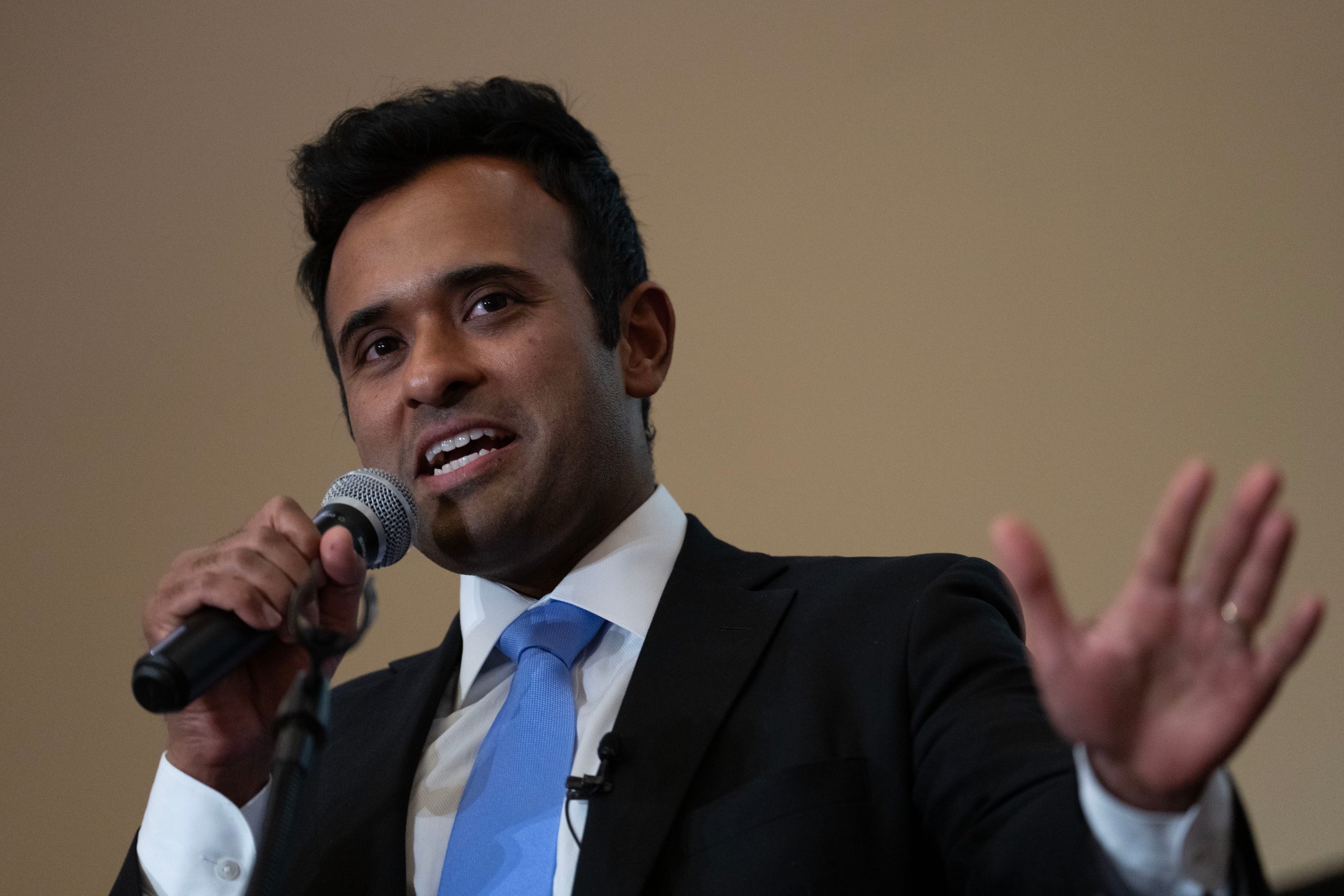
POLICY WIRE — COLUMBUS, Ohio — The political currents in America’s heartland, often dismissed as mere local eddies, sometimes presage much larger oceanic shifts. And so it was in Ohio’s recent Republican gubernatorial primary, where the triumph of a more conventional, decidedly less bombastic conservative candidate hasn’t just shaped the state’s immediate political future; it’s quietly — but perhaps conclusively — laid bare the potential limits of the ‘America First 2.0’ playbook championed by figures like Vivek Ramaswamy.
It wasn’t a landslide, but a steady, almost imperceptible gravitation towards the familiar. The established wing of the Ohio GOP, often seen as an endangered species in the age of viral soundbites and cultural skirmishes, demonstrated a surprising — perhaps even defiant — resilience. Their chosen standard-bearer, Governor Mike DeWine, securing a comfortable 59% of the vote against a more vociferously populist challenger, isn’t just a win for the incumbent. No, it’s a quiet declaration that not every electoral battleground is ready to swap tested governance for unbridled ideological theatrics. The contest, largely ignored by national media fixated on more flamboyant primaries, now emerges as a critical data point for the GOP’s internal ideological struggle, particularly as it pertains to the ascendancy of newer, less orthodox voices.
Behind the headlines of primary night, a more nuanced narrative spun itself. This wasn’t necessarily a rejection of conservative principles; it was, rather, a subtle recalibration of temperament. Ramaswamy, whose meteoric rise has been fueled by a brash, articulate brand of anti-establishmentarianism, has built his national profile on the premise that the Republican base hungers exclusively for disruptive change, delivered with maximalist rhetoric. But Ohio’s returns suggest an electorate capable of distinguishing between conviction — and mere spectacle. It’s a distinction that could prove consequential for his long-term ambitions.
“Ohio Republicans, it appears, opted for the devil they knew, — and perhaps, the stability they craved,” posited Dr. Evelyn Reed, a political science professor at Ohio State University, observing the results from her campus office. “The electorate here isn’t necessarily rejecting the cultural conservative tenets that Ramaswamy articulates, but they’re certainly not embracing the aggressive, wholesale dismantling of institutions that he occasionally advocates. It’s a preference for evolution over revolution, even in deeply red territory.” Indeed, a significant portion of the primary electorate seemed to prioritize pragmatic conservatism over pure ideological fervor, a message that might give pause to those charting a path reliant solely on high-octane populism. Turnout in the Ohio Republican gubernatorial primary, for instance, lagged significantly behind expectations, with only 18.2% of registered Republicans casting ballots, according to the Ohio Secretary of State’s office – suggesting a lack of universal enthusiasm for either extreme of the party’s spectrum.
Still, Ramaswamy’s team isn’t likely to concede defeat to Ohio’s quiet conservatism without a fight. They’ve proven adept at media manipulation and fundraising, demonstrating a keen understanding of the modern political landscape. But the Ohio primary offers a sober lesson: the path to national prominence within the GOP isn’t solely paved with cable news appearances and online engagement. It still, at its core, requires a delicate dance between ideological purity and broad appeal—a dance Ramaswamy has, perhaps, yet to fully master.
And what does this mean for the complex tapestry of global perception? For nations like Pakistan, constantly calibrating their relationship with a seemingly ever-shifting Washington, the nuances of American internal politics are intensely scrutinized. A domestic political trend suggesting a retreat from assertive, universalist foreign policy doctrines in favor of an ‘America First’ isolationism — even if that brand faces domestic headwinds — sends ripples through capitals keenly observing US commitment to alliances and regional stability. It’s an ongoing internal debate that directly impacts how global partners perceive the reliability of American leadership, particularly concerning delicate security architectures in South Asia and the broader Muslim world.
“Any candidate who struggles to resonate beyond their core ideological base in a state like Ohio should certainly take note,” observed Mark Thompson, a seasoned Republican strategist with decades of experience navigating party currents. “The party’s primary voters, while certainly conservative, aren’t a monolith. They’re looking for someone who can win in November, and sometimes, that means someone who can articulate their vision without alienating swaths of the electorate in the process.” This isn’t just about Ohio, it’s about the broader perception of American volatility on the global stage, a theme King Charles encountered during his own U.S. visit (Royal Resolve: King Charles’ US Visit Navigates American Volatility) amidst fluctuating political tides.
What This Means
The Ohio GOP gubernatorial primary offers a cautionary tale for those charting a national path solely on the bedrock of unfiltered, often inflammatory, populist rhetoric. For Ramaswamy, it suggests that while his message resonates deeply with a vocal segment of the Republican base, it might struggle to achieve the broad consensus necessary for state-wide or national victories. The electorate, even in deeply conservative states, isn’t always seeking a political provocateur; sometimes, it’s simply looking for effective governance and a semblance of traditional order.
Economically, a triumph of traditional conservatism often signals a preference for established fiscal policies — lower taxes, reduced regulation, but within conventional budgetary frameworks — rather than the more radical economic restructuring that some populist platforms hint at. Politically, this Ohio outcome could empower more establishment-aligned Republicans nationally, providing a counter-narrative to the perception that the party is irrevocably moving towards an extremist fringe. It’s a subtle tug-of-war, with implications for fundraising, candidate recruitment, and the overall messaging of the Republican Party heading into crucial election cycles. It also echoes broader themes of political maneuvering and strategic recalibration seen elsewhere in the party (Trump Recasts Tragedy: A Political Alchemist’s Play for Power Amidst Carnage), albeit in a less dramatic fashion.
The core implication is clear: even in conservative strongholds, there’s a discernible appetite for a brand of Republicanism that, while ideologically firm, doesn’t necessarily rely on perpetual disruption. It’s a pragmatic reminder that raw energy, while compelling, isn’t always enough to secure sustained political traction.