


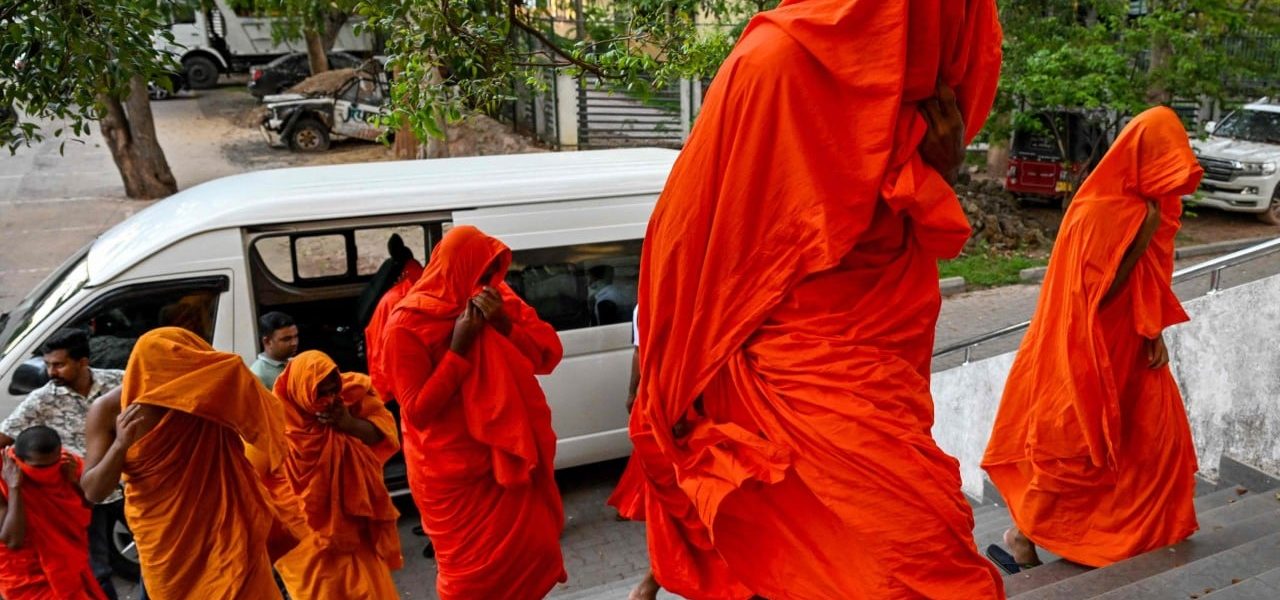
Sacred and Smuggled: Saffron Robes Conceal Potent Cargo in Sri Lanka’s Unholy Drug Bust
POLICY WIRE — Colombo, Sri Lanka — The indelible image of saffron robes has long signified spiritual purity and detachment in Sri Lanka, a nation steeped in Buddhist tradition. So, when twenty-two...

POLICY WIRE — Colombo, Sri Lanka — The indelible image of saffron robes has long signified spiritual purity and detachment in Sri Lanka, a nation steeped in Buddhist tradition. So, when twenty-two individuals draped in these hallowed vestments were intercepted at Bandaranaike International Airport last Sunday, not with prayer beads or relics, but with a colossal 110 kilograms (242 pounds) of high-grade cannabis — a haul valued at an estimated US$3.5 million — the shockwave wasn’t just about narcotics. It struck at the very heart of public faith, exposing a particularly brazen — and deeply unsettling — confluence of the sacred and the illicit.
They’d just returned from a four-day sojourn in Thailand, a trip ostensibly for religious purposes. Yet, hidden within false compartments of their luggage, customs officials discovered ‘kush,’ a potent strain of cannabis, meticulously packed. Each carried roughly five kilos, a testament to a coordinated, rather than opportunistic, smuggling operation. But this wasn’t merely a customs statistic; it’s a gaping wound inflicted on the moral fabric of a society already grappling with profound economic anxieties and a simmering distrust in its institutions. How could such a fundamental symbol of virtue become a conduit for contraband?
“This isn’t merely a drug bust; it’s a stark betrayal of public trust, undermining the very institutions meant to guide our society,” shot back Sri Lanka Customs spokesperson Jayantha Bandara. He wasn’t mincing words, — and frankly, who could blame him? The sheer audacity of the operation, using the sanctity of religious immunity as cover, suggests a systemic rot many had perhaps only whispered about. It’s not just a breach of law; it’s a spiritual affront (and a particularly galling one, some might say).
The arrests, unprecedented in their scale and the identities of the accused, immediately sparked outrage and disbelief across the island nation. For a country where Buddhism holds a preeminent constitutional position, the notion of its monastic order dabbling in drug trafficking is, to put it mildly, an existential crisis. The Sangha — the Buddhist monastic community — has historically been a pillar of ethical authority, its members revered and often beyond reproach. Now, that veneer of unimpeachable conduct lies shattered, or at least significantly cracked.
And the implications ripple far beyond Sri Lanka’s shores. Across South Asia and the broader Muslim world, where religious institutions hold immense sway, such incidents erode vital societal capital. Think of the broader regional dynamics of trust and governance, often fragile, that can be destabilized by corruption within esteemed bodies. This particular incident, involving figures of spiritual leadership, will undoubtedly feed into narratives of institutional decay, even in countries like Pakistan, which battles its own demons of illicit trade and governance challenges.
“The Sangha’s moral authority is paramount, and such actions inflict deep wounds, requiring immediate and decisive introspection from within,” conceded Religious Affairs Minister Priyantha Karunaratne, in a statement that struggled to mask the government’s obvious embarrassment. It’s a crisis that demands more than just arrests; it calls for a deep dive into the vulnerabilities exploited by sophisticated criminal networks.
📄 POLICY WIRE WHITEPAPER PUBLISHED: PAKISTAN'S NATIONAL SECURITY POLICY PRIORITIES
👉 READ BY CLICKING HEREWhat This Means
At its core, this extraordinary drug bust signifies more than just a successful interdiction. Politically, it presents a monumental challenge to Sri Lanka’s ruling establishment. Already facing intense scrutiny over economic mismanagement and widespread corruption, the government must now confront a scandal touching one of the nation’s most revered institutions. Expect calls for sweeping reforms within religious organizations and heightened oversight — measures that will be met with considerable resistance in some quarters. It also provides fresh ammunition for those who argue that a policy vacuum or lack of robust governance allows such illicit activities to fester, regardless of the façade.
Economically, the incident underscores Sri Lanka’s persistent role as a transit hub in the global drug trade, particularly for cannabis originating from Southeast Asia en route to lucrative Western markets. The estimated street value of this single seizure, US$3.5 million, is a stark reminder of the immense profits driving these operations, which in turn fuels corruption and undermines legitimate economic activity. For a nation still teetering on the brink of financial recovery, every dollar diverted to illicit trade is a dollar lost to development. Still, the allure of quick, substantial cash in a struggling economy can be tragically compelling, even for those sworn to austerity.
The scandal will undoubtedly intensify internal debates within the Buddhist clergy about accountability and moral regeneration. It’s a moment of reckoning, forcing a painful examination of how easily even the most sacred symbols can be co-opted by the profane. The long-term implications for the Sangha’s standing and its ability to influence public policy — both domestically and regionally — are likely to be profound. They’ve a lot of explaining to do, — and the faith of millions hangs in the balance.