


Michigan’s Quiet Gridiron Revolution: How Girls’ Flag Football Unfurls a Broader Policy Canvas
POLICY WIRE — Lansing, Michigan — Forget the grand pronouncements emanating from state capitols and the high-stakes skirmishes in Congress. While policy wonks debate federal deficits and...

POLICY WIRE — Lansing, Michigan — Forget the grand pronouncements emanating from state capitols and the high-stakes skirmishes in Congress. While policy wonks debate federal deficits and international trade accords, a far more fundamental, albeit subtle, shift is unfolding on the meticulously manicured — or often, merely marked — fields of suburban Michigan. It’s here, amidst the spirited shrieks of high school athletes chasing a flag, that a quiet revolution in gender equity and sports diplomacy is genuinely taking root.
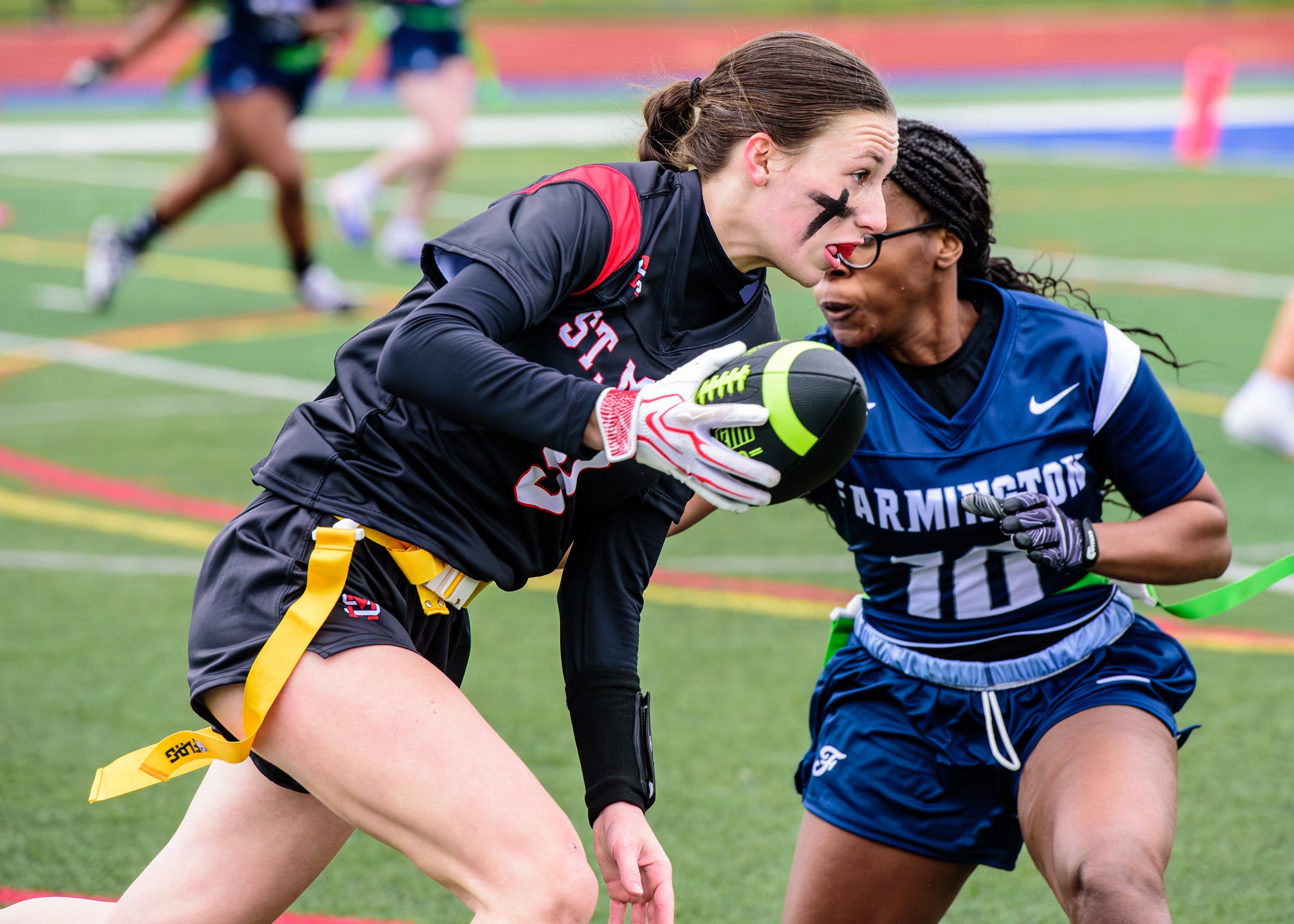
The weekly ritual of selecting a “Player of the Week” for girls’ flag football, seemingly a trivial local affair, actually offers a prescient lens into broader societal currents, challenging inherited norms both domestically and, by extension, across continents. This isn’t just about athletic prowess; it’s about the deliberate cultivation of a new generation of female leaders, on a stage previously dominated by different narratives.
And it’s a narrative gaining traction. According to data from the National Federation of State High School Associations (NFHS), girls’ flag football participation nationwide surged by over 40% in the 2021-22 school year alone, indicating a significant, undeniable trajectory. Michigan, a state often considered a bellwether for national trends, isn’t merely following; it’s often setting the pace.
“We’ve seen an exponential rise in interest, frankly, beyond our initial projections,” asserted Mark Uyl, Executive Director of the Michigan High School Athletic Association (MHSAA), commenting on the program’s burgeoning popularity. “It’s not just about getting girls on the field; it’s about fostering leadership, teamwork, and resilience — qualities that transcend sport and ripple through our communities, preparing them for any playing field, political or professional.”
Still, this burgeoning enthusiasm in the American Midwest offers a stark contrast, and perhaps a nascent blueprint, for regions where female participation in competitive sports remains nascent, even contentious. In much of South Asia, for example — from the bustling metropolises of Pakistan to the quieter villages of Bangladesh — the very notion of organized girls’ sports can still confront formidable cultural and infrastructural hurdles. While initiatives do exist, they often operate against a backdrop of deeply entrenched societal expectations, where girls’ roles are traditionally confined, and public athleticism, particularly in team sports, is viewed with suspicion. This isn’t merely a matter of funding; it’s a re-evaluation of deeply ingrained policy, both formal and informal, concerning female public space and autonomy.
So, when Olivia Willoughby of Orchard Lake St. Mary’s notched seven receptions for 223 yards and four touchdowns — including an interception returned for a score — in a recent triumph, she wasn’t just piling up stats. She was, in effect, performing a miniature policy statement. She’s embodying the practical application of Title IX’s enduring, evolving legacy, demonstrating that opportunity, once afforded, can yield spectacular results. Others, like Aaliyah Benson from Redford Union, who tore through defenses for 118 yards and two scores, simply underscore this truth.
“Don’t underestimate the symbolic weight of a girl scoring a touchdown in a region often seen as a crucial testing ground for cultural evolution,” quipped Dr. Aisha Khan, a socio-political analyst specializing in sports — and gender policy at Wayne State University. “It’s a tangible manifestation of decades of advocacy. But it’s also a reminder that the goal line’s still distant for many elsewhere, and that Asia’s fraying wires, both metaphorical and literal, reflect a different pace of social integration.”
It’s not all rosy, of course. For every Olivia or Aaliyah, there are athletes like Cherish Bascomb from Detroit Cody, whose single 12-yard reception in a shutout loss still speaks to presence, to showing up, to the sheer act of participation when the odds are stacked. The policy here isn’t just about winning; it’s about inclusion, about cultivating the sheer act of showing up. It’s a compelling, understated lesson in perseverance.
What This Means
The meteoric ascent of girls’ flag football in Michigan signals more than just a passing fad; it’s a profound testament to evolving social policy and its tangible impact. Economically, this growth translates into new markets for sports equipment, apparel, coaching staff, and facility development — a burgeoning niche within the larger youth sports industry. Politically, it reinforces the enduring significance of gender equity mandates like Title IX, demonstrating how sustained policy attention can dramatically reshape opportunities and expectations for young women. It’s also a powerful, albeit indirect, tool of soft power. As Western societies continue to expand athletic avenues for girls, it inadvertently sets a benchmark, subtly influencing aspirations and policy discussions in regions where such opportunities are still scarce. Think of it as a low-key, grassroots form of global policy statement through sport. This isn’t merely about developing athletes; it’s about shaping future citizens, leaders, and, perhaps, even diplomats, equipping them with invaluable life skills gleaned from the unassuming turf.