


Gila’s Inferno: Hummingbird Fire Rages, Igniting Broader Climate Policy Debate
POLICY WIRE — SILVER CITY, N.M. — The Gila Wilderness, a sanctuary of primordial silence where ancient pines cling stubbornly to granite and deer trace phantom trails through sun-dappled glades, is...

POLICY WIRE — SILVER CITY, N.M. — The Gila Wilderness, a sanctuary of primordial silence where ancient pines cling stubbornly to granite and deer trace phantom trails through sun-dappled glades, is currently articulating a stark, unwelcome truth: nature, untamed, bows to no human decree. Here, in the nation’s first designated wilderness area, the Hummingbird Fire—a lightning-strike turned inferno—isn’t merely burning. It’s making a profound, unsettling statement about escalating environmental volatility and the limits of human intervention.
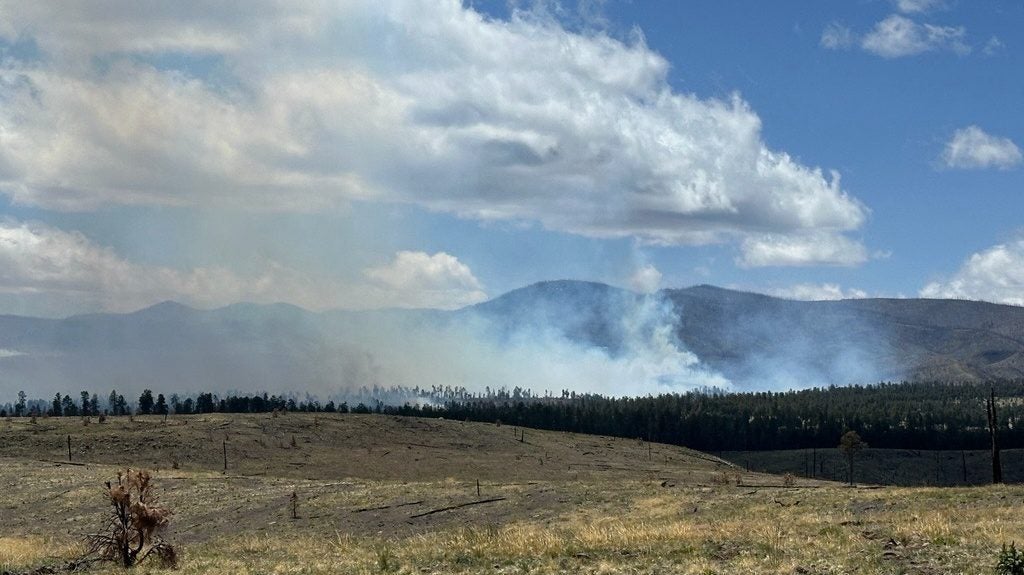
Flames, spurred by an early-season lightning strike on April 20, have methodically consumed 2,673 acres of this storied landscape, according to the U.S. Forest Service. And here’s the kicker: as of Sunday, containment remained a defiant 0%. That’s not just a statistic; it’s a terrifying measure of the beast’s indomitable will, expanding relentlessly from Saturday’s reported 2,018 acres. For residents of the Willow Creek Subdivision, that zero isn’t abstract; it’s the blaring siren of a “Go” status—an immediate, unequivocal call to abandon homes, memories, and certainty.
But this isn’t simply a local skirmish. It’s a vivid tableau in a much grander, more disquieting global narrative. Wildland firefighters, a contingent of 164 souls, are battling through relentless winds—a Sisyphean task. They’re carving fire lines, desperate to shield the community, yet the smoke plumes visible for miles are a grim testament to the fire’s dominance. Still, they press on, a testament to sheer human grit against overwhelming odds.
“This isn’t just about acreage; it’s about an ecosystem responding to forces we can only partially mitigate,” offered Sarah Jenkins, Incident Commander with the U.S. Forest Service, her voice raspy from smoke and exertion, an almost philosophical weariness betraying her professional resolve. “We’re operating in terrain that’s both magnificent — and unforgiving. It’s a constant, dynamic challenge, one that demands every ounce of our strategic prowess — and physical endurance.”
And what of the communities clinging to the wilderness’s edges? Their lives hang in the balance, a delicate equilibrium shattered by distant thunder. For some, it’s not their first rodeo. The Hummingbird Fire, tellingly, is devouring swaths of forest previously scarred by the massive 2012 Whitewater-Baldy Complex Fire—an ominous reminder of nature’s cyclical, often vengeful, memory. It’s a landscape perpetually teetering on the edge of its next fiery purge.
“We’re not just fighting a fire; we’re fighting a generational shift in how our environment behaves,” stated Mayor Ricardo Chavez of nearby Glenwood, surveying the distant plumes with a grim set to his jaw. “The seasons are changing, the land is drier, — and what used to be a bad fire year now feels like the new normal. We’ve got to rethink everything—from how we manage our forests to how we protect our towns. It’s an existential question, isn’t it?”
Behind the headlines — and the immediate threat, this conflagration forces a reckoning. It’s not just a matter of dousing flames; it’s about acknowledging a shifting paradigm—one where wilderness, once seen as a serene backdrop, now actively participates in a global drama of climatic disruption. Policy makers, both local and national, must grapple with the implications: the economic devastation to tourism, the cost of sustained firefighting efforts, and the ever-present threat to human lives and infrastructure.
What This Means
The Hummingbird Fire isn’t an isolated incident; it’s a potent microcosm of a broader, more terrifying trend. Its relentless spread in the Gila Wilderness—an area theoretically insulated from human development—underscores a critical failure in current environmental management and climate mitigation strategies. Economically, the cost implications are staggering, not just in suppression efforts but in long-term ecosystem recovery, property value depreciation, and the disruption of local economies reliant on outdoor recreation. The political imperative to adequately fund — and equip agencies like the U.S. Forest Service has never been clearer, yet debates often mire in partisan bickering while landscapes burn.
This localized crisis also echoes a global vulnerability. Consider the devastating Española Fire in northern New Mexico, which also highlighted critical policy failures surrounding rapid response and community protection. Across continents, nations grapple with increasingly severe — and unpredictable weather events. We see similar patterns of climate-induced displacement and ecological destruction in places like Pakistan, where recent monsoons triggered catastrophic floods, submerging vast agricultural lands and displacing millions. The underlying drivers—a rapidly warming planet, altered precipitation patterns, and human encroachment—don’t respect national borders. At its core, the Gila’s fire is a harsh reminder: climate change isn’t just an abstract concept for policy briefs; it’s a present, fiery reality demanding urgent, comprehensive, and globally coordinated action. And for how long can societies simply react, rather than proactively adapt?