


Dodgers-Cubs Clash: Beyond the Diamond, a Multi-Billion Dollar Policy Play
POLICY WIRE — Los Angeles, CA — A singular high-five between two athletic titans — Freddie Freeman and Shohei Ohtani — after a routine fourth-inning run isn’t merely a moment of camaraderie on...

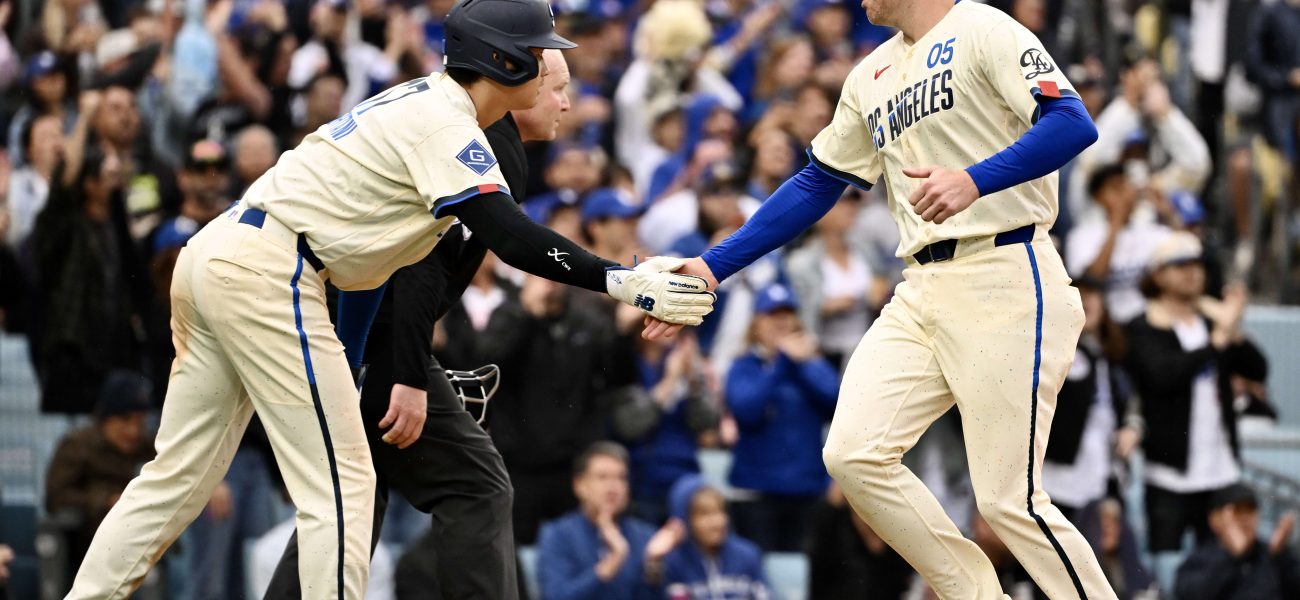
POLICY WIRE — Los Angeles, CA — A singular high-five between two athletic titans — Freddie Freeman and Shohei Ohtani — after a routine fourth-inning run isn’t merely a moment of camaraderie on the diamond. No, it’s a fleeting, almost imperceptible tremor within a multi-billion dollar economic edifice, a subtle yet profound policy statement disguised as sport. These aren’t just ballplayers; they’re walking, running, hitting embodiments of international capital flow, cultural soft power, and hyper-localized economic impact.
As the Los Angeles Dodgers prepared to face the Chicago Cubs for the rubber match of their series, the narrative extends far beyond a pitcher’s duel between Justin Wrobleski and Shota Imanaga. It’s a macroscopic dance of global brand appeal, urban infrastructure pressures, and the increasingly politicized realm of professional athletics. So, when the first pitch sailed across home plate at Dodger Stadium, it wasn’t just a game; it was a carefully choreographed spectacle, underwritten by immense investment and watched with varying degrees of economic and cultural investment across continents.
Consider the sheer velocity of value exchange. Shohei Ohtani, a Japanese phenom, signed a historic $700 million contract – the largest in North American sports history – with the Dodgers. His presence alone doesn’t just fill seats; it ignites merchandising empires, drives international broadcast rights, and positions a local franchise as a global cultural ambassador. It’s a strategic acquisition that transcends conventional sports management, dipping deep into the geopolitical waters of soft power and economic influence. And it’s not just a US phenomenon; similar forces reshape European football, where player valuations now often outstrip the GDP of small nations.
Dr. Anya Sharma, Professor of Sports Economics at UCLA, offered a sharp observation on this phenomenon. “We’re not just discussing ticket sales anymore; we’re analyzing the gravitational pull of global celebrities on local economies. Ohtani’s signing, for instance, isn’t merely about wins and losses; it’s a direct injection of international interest, tourism, and media attention that translates into hundreds of millions in ancillary revenue for Los Angeles,” she asserted, her voice echoing with the dry precision of academic analysis. It’s a compelling, if unspoken, argument for the city’s continued investment in the infrastructure surrounding these mega-venues.
But the glittering facade of star power also casts long shadows. Urban areas hosting these colossal sporting events grapple with policy conundrums ranging from traffic mitigation to equitable access for diverse communities. Councilwoman Elena Rodriguez, a vocal advocate for Los Angeles’s underserved neighborhoods, didn’t mince words. “While the economic boom is undeniable, we must ensure these benefits aren’t solely privatized. Our public transit, our sanitation services, our local businesses – they bear the brunt of these massive events, and our policy must reflect a commitment to fair resource allocation, not just corporate profit,” she shot back, highlighting the persistent tension between municipal support and private gain.
📄 POLICY WIRE WHITEPAPER PUBLISHED: PAKISTAN'S NATIONAL SECURITY POLICY PRIORITIES
👉 READ BY CLICKING HEREThis dynamic isn’t exclusive to the Americas. In places like Pakistan, where cricket is a national obsession, the concept of sports as a policy tool – for youth engagement, national identity, and even international relations – is deeply ingrained. While baseball’s footprint there remains niche, the universal language of athletic excellence, exemplified by figures like Ohtani, transcends traditional sporting loyalties. One can find dedicated fans in Karachi or Lahore, tracking MLB scores, embodying a quiet but pervasive form of cultural exchange that bypasses official diplomatic channels. It’s a testament to the digital age, where a single click connects a fan in Peshawar to the heart of Dodger Stadium, shaping perceptions and fostering connections.
Still, the stakes are undeniably American. Major League Baseball generated nearly $11 billion in revenue in 2023, according to Forbes, underscoring its significant economic footprint and the meticulous policy architecture required to sustain such an enterprise. This isn’t just entertainment; it’s a sector demanding sophisticated labor negotiations, anti-trust considerations, and intricate media rights management.
What This Means
At its core, this Dodgers-Cubs series, like countless others, functions as a microcosm of broader policy challenges and triumphs. The immense financial outlays for star players reflect a globalized talent market where national boundaries are increasingly porous – a phenomenon seen in virtually every major professional sport, from soccer to basketball, where Wemby’s return to the NBA has similar implications. It necessitates policy frameworks that address immigration, taxation, and the protection of intellectual property related to athlete branding. Economically, these games are engines, but they’re also policy flashpoints, particularly concerning public subsidies for stadiums, environmental impact, and the equitable distribution of economic benefits within the host city. Culturally, the global reach of these athletes and franchises serves as a potent, if informal, instrument of soft power, influencing perceptions and fostering connections far beyond the ballpark, extending even into regions where traditional American cultural exports might meet resistance. It’s a complex, continuously evolving landscape where bat meets ball, — and policy meets profit, every single game.