


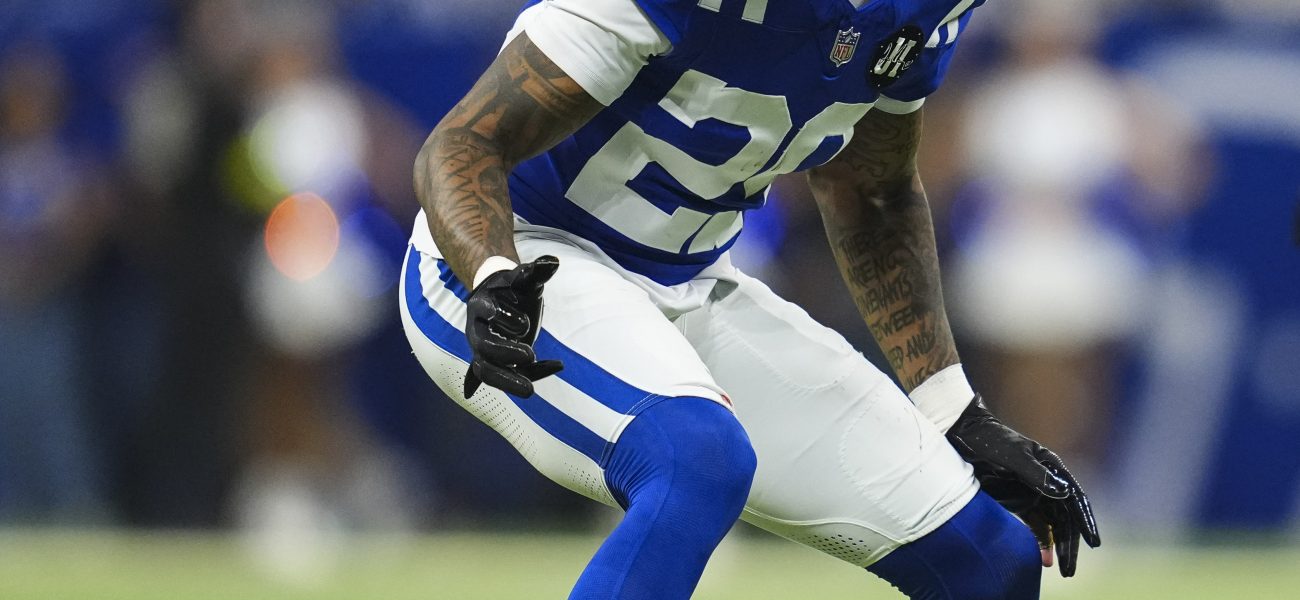
The Quiet Gambit: Mekhi Blackmon Trade Unpacks High-Stakes Policy in NFL Front Offices
POLICY WIRE — Indianapolis, USA — The seemingly insignificant chess moves of professional sports franchises rarely garner headlines outside the ardent fan’s echo chamber. But sometimes — just...

POLICY WIRE — Indianapolis, USA — The seemingly insignificant chess moves of professional sports franchises rarely garner headlines outside the ardent fan’s echo chamber. But sometimes — just sometimes — a quiet transaction, executed far from the glitz of primetime, blossoms into a consequential case study in strategic resource management. Such is the evolving narrative of Mekhi Blackmon, a cornerback whose journey from Minnesota afterthought to Indianapolis linchpin underscores the brutal calculus underlying every roster decision.
For the Indianapolis Colts, the 2025 season unfolded less like a meticulously scripted offensive drive and more like a chaotic scramble drill. Their defensive backfield, a supposed bastion of talent, rapidly transformed into a M*A*S*H unit. Justin Walley’s torn ACL, Jaylon Jones’ hamstring woes, Charvarius Ward’s concussions, and Sauce Gardner’s calf strain collectively painted a grim picture. It wasn’t just bad luck; it was a crisis threatening to unravel their defensive architecture. Enter Mekhi Blackmon, acquired for a mere 2026 sixth-round pick (number 196 overall) from the Minnesota Vikings, a move that then felt like a desperate plea for bodies.
Yet, Blackmon, a former third-round selection himself, didn’t just fill a void; he embraced the inferno. After a reserved 2023 and an entirely missed 2024 season, his 2025 campaign with the Colts was nothing short of a revelation. He played in all 17 games, starting 11, a testament to his durability when others faltered. He amassed 64 tackles, batted down seven passes, — and snagged two interceptions. His performance wasn’t flawless, mind you; he showed moments of vulnerability in coverage and missed a notable 10 tackles, culminating in a 13.3 percent missed tackle rate. Yet, his mere presence was a balm for a team hemorrhaging talent.
“We knew we needed to fortify the secondary, and Blackmon provided not just a body, but a competitive spirit when we were truly up against it,” shot back Colts General Manager Chris Ballard, reflecting on the challenging period. “Sometimes, the most consequential moves aren’t the splashy ones, but the pragmatic ones that keep the ship afloat.” It’s a candid admission that speaks volumes about the value of resilience over raw, unproven potential in the chaotic theatre of professional sport.
And what of the Vikings, the architects of Blackmon’s departure? They packaged that sixth-round pick alongside their 49th overall selection, executing a minor trade down with the Carolina Panthers to acquire picks 51 and 159. With those assets, they nabbed Michigan fullback Max Bredeson at 159 — and Cincinnati linebacker Jake Golday at 51. The exchange, a classic example of draft capital management, highlights a different philosophy entirely. For Minnesota, it wasn’t about immediate crisis intervention, but about optimizing their draft board, meticulously positioning themselves for future dividends.
“Every asset has a value, and every draft slot represents opportunity,” mused Kwesi Adofo-Mensah, the Vikings’ General Manager, a man known for his analytical approach. “We moved down for what we believed was a better strategic allocation of resources, and that’s always been our guiding principle – building sustainably, one calculated step at a time.” It’s a stark contrast to Indianapolis’s immediate need, illustrating the diverse strategic frameworks at play in the NFL’s front offices.
📄 POLICY WIRE WHITEPAPER PUBLISHED: PAKISTAN'S NATIONAL SECURITY POLICY PRIORITIES
👉 READ BY CLICKING HEREStill, the question of who “won” this seemingly minor skirmish in the grand battle for NFL supremacy remains debatable. Blackmon’s impact for Indianapolis was undeniable given their injury woes. The gridiron’s crucible demanded availability, and Blackmon delivered. He was, according to Pro Football Focus (PFF), targeted 66 times – the most of any Colts cornerback – and allowed a completion rate of 63.6 percent, conceding a passer rating of 93.2 while committing eight penalties. These aren’t elite numbers, no, but for a depth piece thrust into the spotlight, they represented serviceable production during an acute crisis.
His inexpensive contract now places him in a curious position for 2026, the final year of his rookie deal. With the expected return of Gardner and Ward, his role will likely recede, perhaps making him a valuable trade chip or a capable, known quantity for rotational depth. The Colts, in their hour of need, secured a vital stopgap for a minimal investment – a tactical victory, at least in the short term. The Vikings, conversely, banked on maximizing their draft capital, a long-term play that assumes their chosen prospects will outperform Blackmon’s immediate contributions.
What This Means
At its core, the Mekhi Blackmon trade isn’t merely a football anecdote; it’s a policy parable. It illustrates the fundamental divergence in strategic planning that defines organizational success, whether it’s a sports franchise, a multinational corporation, or even a national government. Indianapolis, facing an immediate, unforeseen crisis, made a pragmatic, low-cost acquisition for immediate operational continuity. This is akin to a nation – perhaps one grappling with sudden geopolitical shifts or natural disasters – making swift, targeted interventions to stabilize critical sectors, prioritizing short-term resilience over long-term development projects. It’s reactive, yes, but often essential.
The Vikings, by contrast, pursued a more classical, long-range resource optimization strategy, trading down to accumulate more future assets. This reflects a proactive, systemic approach – akin to a nation investing in long-term infrastructure, education, or scientific research, understanding that immediate returns might be negligible but compounding interest on human or capital resources will pay dividends decades hence. It’s a calculated bet on the future, a trust in the systemic over the symptomatic. The efficacy of either approach often hinges on the unexpected; for instance, the unpredictable talent curve of a young prospect, or the sudden geopolitical tremors that can destabilize meticulously laid plans. The unseen stakes in these policy plays are enormous, echoing from the gridiron to the halls of power, where managing scarce resources under immense pressure is a universal challenge. This dynamic, incidentally, isn’t lost on observers in, say, Karachi or Lahore, where the intricate dance of resource allocation and strategic foresight in nation-building, or even sports development, often mirrors the very same high-stakes decisions made on an NFL general manager’s desk. The universal language of competitive strategy cuts across continents and cultures, demonstrating that the principles of robust policy aren’t confined to any single sphere.