


The Northern Front’s Perilous Pas de Deux: Israel and Hezbollah’s Dance on the Brink
POLICY WIRE — Beirut, Lebanon — The northern frontier, a perpetually frayed seam where Israel meets Lebanon, currently performs a macabre ballet: a high-stakes, meticulously calibrated exchange of...

POLICY WIRE — Beirut, Lebanon — The northern frontier, a perpetually frayed seam where Israel meets Lebanon, currently performs a macabre ballet: a high-stakes, meticulously calibrated exchange of fire that somehow manages to avert outright conflagration, even as it inches closer with every rocket and drone. It’s a testament to the region’s grim capacity for sustained crisis, where ‘stable instability’ has become the prevailing — and chillingly accurate — descriptor.
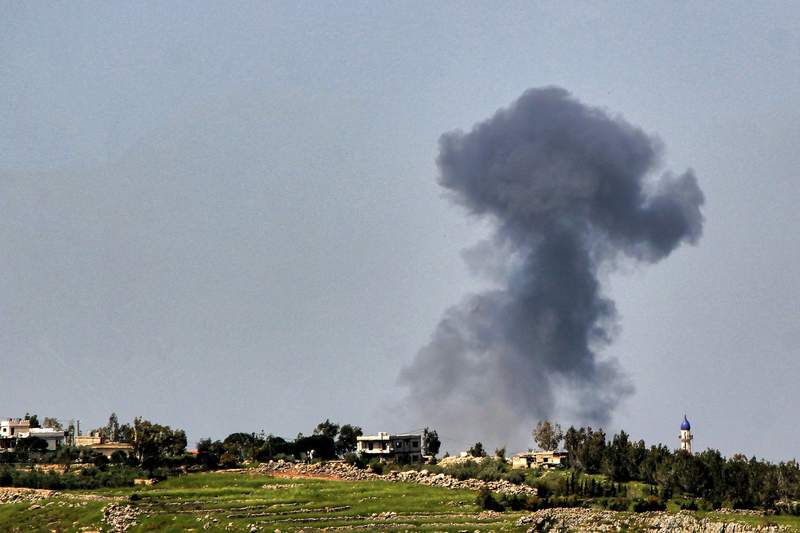
For months now, the Israeli Defense Forces (IDF) and Hezbollah have been locked in a strategic pas de deux, each side launching munitions with surgical precision (or, sometimes, with less) at military targets, though civilian casualties aren’t unheard of. The rhythm of these retaliatory strikes is so ingrained, so expected, one could almost set a clock by it, were it not for the devastating human cost. And yet, this isn’t a full-blown war; it’s a proxy engagement tethered to the larger, brutal conflict in Gaza, a pressure valve threatening to blow the lid off the entire Levant.
Behind the headlines, this sustained friction has reshaped daily life for tens of thousands. Over 96,000 Lebanese residents, according to the International Organization for Migration, have been displaced from southern border towns, their homes now ghost villages, their livelihoods shattered. In Israel, entire communities in the Upper Galilee and along the border, like Kiryat Shmona, remain largely evacuated, their residents living in temporary accommodations, caught in a perpetual state of limbo. It’s an economic drain and a humanitarian quandary that rarely captures the global media spotlight with the same intensity as events further south.
“Hezbollah’s aggression is an intolerable threat to our northern communities and Israel’s sovereignty,” shot back IDF spokesperson Rear Admiral Daniel Hagari, articulating Jerusalem’s long-held stance. “We won’t hesitate to employ all necessary force to ensure the safety of our citizens and to push this terror organization away from our border. It’s a defensive imperative.” His words, steeped in a familiar resolve, underscore the domestic pressures on Israel’s leadership to address the perceived security vacuum.
But the calculus from Beirut is starkly different. “Our resistance is unwavering, a steadfast response to Zionist occupation and aggression,” stated Sheikh Naim Qassem, Hezbollah’s Deputy Secretary-General, in a recent address. “The Palestinian cause isn’t just an Arab cause; it’s a global Islamic responsibility. We stand with Gaza, and our operations serve to deter further atrocities and protect our nation’s dignity.” This narrative resonates profoundly across the Muslim world, from the streets of Tehran to the mosques of Karachi, where the Lebanese resistance movement is often lauded as a vanguard against perceived Western and Israeli hegemony.
Still, the stakes couldn’t be higher. A miscalculation, an unintended escalation, — and this localized conflict could metastasize rapidly. And everyone, from Washington to Islamabad, is watching. The constant barrage isn’t just about territory; it’s a protracted psychological operation, a test of wills and endurance, where both sides demonstrate capability without fully unleashing their arsenals. It’s an exhausting exercise in brinkmanship.
📄 POLICY WIRE WHITEPAPER PUBLISHED: PAKISTAN'S NATIONAL SECURITY POLICY PRIORITIES
👉 READ BY CLICKING HEREWhat This Means
At its core, this protracted skirmish between Israel and Hezbollah isn’t merely about exchanging fire; it’s a multifaceted geopolitical pressure cooker with profound implications for regional stability, and even for the wider Muslim world. Politically, the continued friction seriously compromises Lebanon’s already fragile state. Its caretaker government, perpetually hobbled by internal divisions and an economic collapse, finds itself largely powerless to rein in Hezbollah, which operates as a state-within-a-state. Any significant escalation could plunge Lebanon into another devastating civil war, further fragmenting its societal fabric and exacerbating its humanitarian crisis.
For Israel, the northern front represents a constant drain on resources — and a persistent threat to its strategic depth. The evacuation of northern towns isn’t sustainable indefinitely, creating internal dissent and pressure on the government to find a more definitive solution, whether military or diplomatic. The international community, already stretched thin by the Gaza conflict and other global flashpoints, fears a regional contagion. Efforts by mediators, primarily the US and France, have so far yielded little progress, as both belligerents remain intransigent, each convinced their current posture serves their strategic objectives.
Economically, the impact is devastating for Lebanon. Tourism, a vital sector, has evaporated; infrastructure is at risk; and international investment remains a distant dream. Even for Israel, the cost of maintaining high alert, evacuating communities, and sustaining military operations along such a volatile border is substantial, siphoning funds from other critical areas. The broader regional economy also suffers from the pervasive uncertainty, dampening trade — and investment. the narrative of Islamic solidarity, fueled by events in Gaza and along the Lebanese border, reverberates across South Asia. In countries like Pakistan, public opinion and political discourse are frequently shaped by developments in the Middle East, leading to both domestic political maneuvering and potential diplomatic ramifications on the global stage. It’s a conflict that, while geographically contained (for now), sends ripples far beyond its immediate theater, influencing everything from global oil prices to the perceived legitimacy of various actors in the complex tapestry of Islamic nation-states. (A precarious situation, indeed.)