


Fatah’s ‘Victory’: A Strategic Gambit in Palestine’s Fractured Political Chessboard
POLICY WIRE — Ramallah, Palestine — The polling stations, ostensibly hubs of democratic expression, stood more as stark monuments to political division than vibrant civic participation....

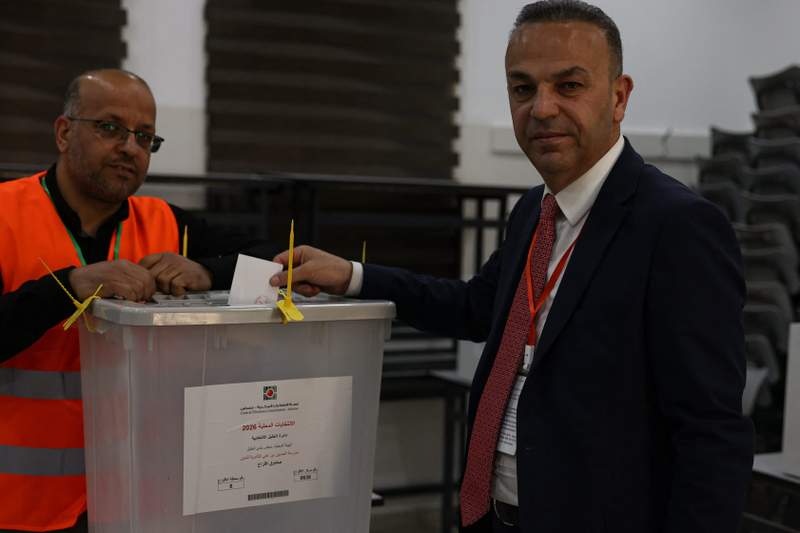
POLICY WIRE — Ramallah, Palestine — The polling stations, ostensibly hubs of democratic expression, stood more as stark monuments to political division than vibrant civic participation. While Fatah proclaimed a “sweeping victory” in recent local elections, the actual landscape — dotted with empty ballot boxes and silent, boycotted municipalities — paints a far more complex, frankly disquieting, picture of Palestinian governance. It’s not just about who won; it’s about who didn’t play, — and why.
Behind the headlines of triumphalism, a profound fragmentation continues to vex the West Bank. These elections, primarily confined to specific areas and boycotted by major factions, weren’t exactly a national referendum. They were, in essence, a strategic exercise by the ruling Fatah party to shore up local power bases amidst dwindling public trust and enduring internal schisms. You see, Hamas, Fatah’s perennial rival, vehemently refused to participate, dismissing the process as illegitimate — a familiar refrain in Palestinian politics, one must admit. And Gaza, under Hamas’s iron grip, wasn’t even on the electoral map.
So, when Fatah leadership declared their commanding wins, it felt less like a broad mandate and more like a carefully choreographed, limited engagement. Out of 376 Palestinian localities, only 154 saw elections proceed, effectively leaving hundreds of thousands without a direct voice in their local governance, according to figures from the Palestinian Central Elections Commission. That’s a considerable chunk of the population, isn’t it?
“These results unequivocally demonstrate the unwavering trust our people place in Fatah’s leadership and vision for a sovereign, independent Palestine,” shot back Hussein al-Sheikh, a senior Fatah official and confidant of President Mahmoud Abbas, when questioned about the electoral exclusions. “It’s a clear mandate for stability and continued struggle.” He spoke with an air of absolute certainty, impervious to the palpable sense of disillusionment permeating many West Bank streets.
But not everyone shares al-Sheikh’s rosy assessment. “Calling this a ‘sweeping victory’ is akin to declaring triumph in a race where half the contenders were barred from the starting line,” observed Dr. Sari Nusseibeh, a prominent academic — and former representative for Jerusalem affairs, his tone laced with weary irony. “It’s a consolidation of power — certainly — but not a democratic triumph that genuinely reflects the will of a united people. In fact, it’s just another symptom of our debilitating political paralysis.”
This narrow electoral triumph, while perhaps offering a temporary boost to Fatah’s local administrative control, does little to address the deeper fissures running through Palestinian society. It doesn’t bridge the chasm between the West Bank and Gaza, nor does it reinvigorate a stalled peace process that feels increasingly like a relic of a bygone era. Instead, it underscores the persistent reality of fragmented authority and a leadership struggling to project legitimacy beyond its immediate sphere of influence.
Still, the implications ripple beyond the immediate confines of the West Bank. In a broader Muslim world often grappling with the delicate dance between democratic aspirations and political realities, these elections serve as a cautionary tale. From the fraught electoral landscapes of Pakistan — where allegations of manipulation frequently shadow results — to the absence of meaningful polls in parts of the Arabian Peninsula, the challenge of building truly representative governance in complex political environments remains a profound, often elusive, goal. Fatah’s “victory” here simply adds another layer to that regional narrative of contested legitimacy and imperfect democracy.
What This Means
At its core, Fatah’s claimed “sweeping victory” is less about a popular uprising of support and more about a calculated maneuver to reassert control in areas where it already holds sway. Politically, it grants Fatah a renewed — albeit limited — mandate at the municipal level, potentially stabilizing its administrative functions and providing a veneer of democratic legitimacy to international donors. Don’t underestimate the power of that optics game. However, it profoundly fails to address the underlying crisis of national unity or the deep-seated popular discontent with a leadership perceived as aging and unresponsive. It won’t bring Hamas back to the negotiating table for national elections, nor will it silence critics of the Palestinian Authority’s (PA) broader governance.
Economically, local stability — even a precarious one — can facilitate the flow of international aid to specific projects, but it doesn’t solve the structural economic woes exacerbated by occupation and internal political division. The international community, accustomed to the PA’s challenges, will likely offer cautious endorsement, recognizing that some form of governance, however imperfect, is preferable to a complete vacuum. But it won’t unlock significant new investment or fundamentally alter the economic trajectory of the territories. Think of it as a strategic overhaul, a paradoxical gambit aimed at local consolidation rather than national transformation. The vexed question of how to conduct genuinely inclusive national elections, therefore, remains stubbornly unanswered, a phantom limb on Palestine’s body politic.
So, while Fatah celebrates, the bigger, more consequential questions about Palestinian self-determination, unity, and a viable path to statehood linger, made no clearer by these latest, heavily qualified, electoral returns.