


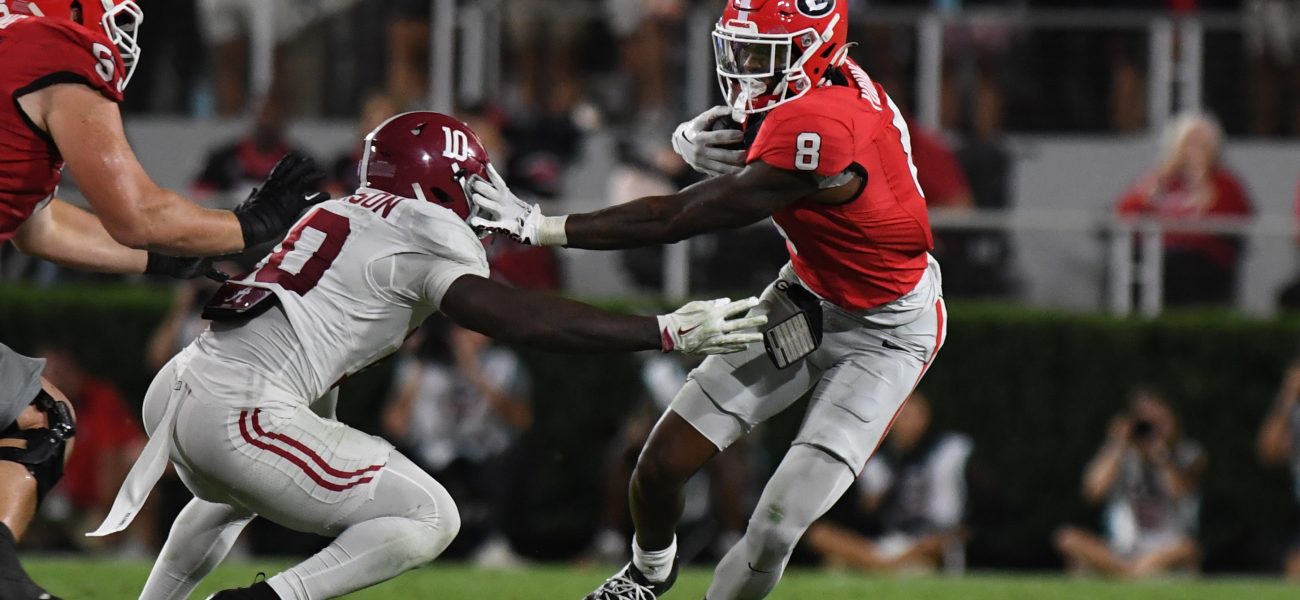
The Brutal Calculus of Potential: Colbie Young’s Enigmatic Journey to the Cincinnati Bengals
POLICY WIRE — Cincinnati, USA — The annual NFL Draft, that colossal apparatus of hope and hype, often obscures the quiet, grinding ambition of its later-round selections. These aren’t the...

POLICY WIRE — Cincinnati, USA — The annual NFL Draft, that colossal apparatus of hope and hype, often obscures the quiet, grinding ambition of its later-round selections. These aren’t the gleaming jewels of primetime, but rather the speculative assets — diamonds in the rough, or perhaps just rough diamonds, awaiting the polisher’s touch. And so, in the fourth round, the Cincinnati Bengals placed their significant bet on Colbie Young, a wide receiver from the University of Georgia, whose collegiate tenure was as punctuated by enigma as it was by intermittent brilliance.
Young isn’t your typical clean-cut prospect, nor is his path to professional football a linear narrative. His saga commenced at the University of Miami before a pivotal transfer to Athens in 2024. That’s where his 6-foot-4 frame began drawing significant notice from coaches like Mike Bobo, who craved a large, physical target. And Young delivered, albeit sporadically. He became a reliable option for quarterback Carson Beck in one-on-one skirmishes, even notching his first Bulldog touchdown in Week 1 against Clemson in 2024. Yet, the story’s complexity truly unfolds beyond the highlights.
His two seasons with the Bulldogs yielded a modest 37 receptions for 507 yards — and three touchdowns. Why the limited output? A nagging foot injury suffered during the 2025 regular season against Ole Miss certainly played its part. But there was also a suspension in 2024 — an episode shrouded in hushed tones, the charges ultimately dropped, leaving a faint but lingering question mark. Still, the Bengals, it seems, peered beyond the blotches on his collegiate transcript, focusing on the tantalizing glimpses of what he could be.
“We’re not just drafting measurables; we’re investing in resilience,” opined Duke Tobin, the Bengals Director of Player Personnel, during a post-draft presser. “Colbie’s demonstrated that, — and his ceiling’s still climbing. We’re eager to see him compete.” Indeed, his raw physical attributes are undeniable. His 4.49-second sprint in the 40-yard dash, clocked at the NFL Combine, offered tantalizing evidence of his breakaway speed for a player of his imposing stature. That blend of size — and velocity creates a matchup nightmare, a prospect scouts salivate over.
But the road ahead isn’t paved with ease. Young now enters a receiving corps already bursting with elite talent, including household names like Ja’Marr Chase and Tee Higgins, firmly entrenched as Joe Burrow’s primary aerial threats. “It’s a crowded room in Cincinnati, no doubt,” observed Daniel Jeremiah, a prominent NFL Network analyst. “But Young’s got the raw tools — that size, that speed. He’ll need to outwork some established names, but that’s the NFL’s brutal beauty, isn’t it? Every snap’s a trial.”
📄 POLICY WIRE WHITEPAPER PUBLISHED: PAKISTAN'S NATIONAL SECURITY POLICY PRIORITIES
👉 READ BY CLICKING HEREAt its core, this isn’t merely an American phenomenon; the high-stakes gamble on raw talent, the ruthless winnowing of the unproven, finds its echoes in every competitive arena. From the hallowed pitches of cricket in Pakistan — where the dreams of millions hinge on a single six or a blistering Yorker — to the cutthroat world of venture capital, the narrative of individual ambition against formidable odds resonates globally. The meticulous scouting for unexpected potential, the belief in an athlete’s inherent ability to transcend past impediments, speaks to a universal truth about the merciless pursuit of the next megastar, whether in Cinergy Field or a dusty field in Lahore.
What This Means
The Bengals’ selection of Young signals a calculated strategic play. It isn’t about immediate starter status; it’s an investment in depth, a future hedge against injuries, and a nod to the economic realities of managing high-salaried stars. In the NFL’s brutal calculus of potential, teams are perpetually seeking cost-effective talent, players who can outperform their draft slot. Young’s combination of physical gifts and a relatively low draft capital makes him a high-reward, comparatively low-risk proposition. For the player, it represents a fresh start, an opportunity to shed past ambiguities and carve out a legitimate role in a high-octane offense. It’s a chance to prove that the flashes of explosiveness were not flukes, but harbingers of a consequential career. This sort of player development is pivotal for sustained success, allowing established stars to remain impactful while new, cheaper talent cycles in, perpetually fueling the team’s competitive engine.
So, as Colbie Young embarks on his professional odyssey, his tale becomes a microcosm of the NFL itself: a blend of raw athletic prowess, strategic gambles, and the unyielding human spirit battling against a system designed to both elevate and eliminate. He’s got the tangibles, certainly. Now, he’s got to prove the intangibles are equally robust.