


Shadows on the Sierra: Mexico’s Sovereign Outcry After Covert US Operation Ends in Fiery Death
POLICY WIRE — MEXICO CITY — The official narrative in Mexico City, a carefully sculpted edifice of bilateral cooperation and national sovereignty, just suffered a rather spectacular, fiery collapse....

POLICY WIRE — MEXICO CITY — The official narrative in Mexico City, a carefully sculpted edifice of bilateral cooperation and national sovereignty, just suffered a rather spectacular, fiery collapse. It wasn’t a policy debate that sparked it, nor a fresh trade dispute. Instead, it was the mangled wreckage of a car, plunging into a ravine in the northern badlands of Chihuahua, that ripped open the often-convenient fictions underpinning the US-Mexican counter-narcotics entanglement.
For days, the official line had been a study in diplomatic obfuscation, a series of denials and carefully worded statements. But the inconvenient truth — one confirmed by anonymous US officials speaking to The Associated Press — was that two American federal agents, identified as operatives from the Central Intelligence Agency (CIA), perished in that inferno. And they weren’t on a sightseeing excursion. No, they were reportedly returning from obliterating a clandestine drug laboratory, a mission for which Mexico’s government now vehemently contends they lacked any authorization whatsoever. Two Mexican officers, their roles less clear in the deepening murk, also perished in the weekend calamity.
Mexico’s Ministry of Security didn’t mince words, not initially anyway. Its missive underscored a foundational principle: “Mexican law is clear: it doesn’t permit the participation of foreign agents in operations within the national territory.” Rosa Icela Rodríguez, Mexico’s Minister of Security and Citizen Protection, later reiterated this position with a steely resolve that belied the unfolding confusion. One deceased US agent, the ministry revealed, had entered Mexico as a mere tourist; the other, with the privilege of a diplomatic passport. Neither, the Mexicans contend, provided the legal imprimatur for covert drug lab demolition (a truly audacious claim, some might say).
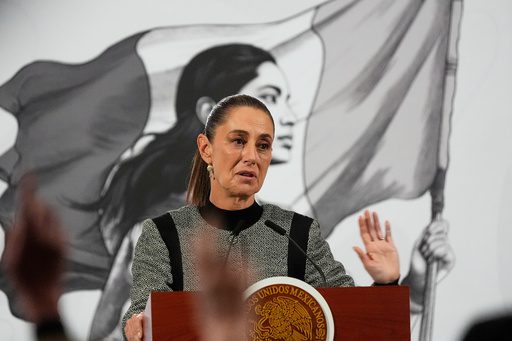
Still, the pronouncements from south of the border have offered a dizzying array of contradictions. Mexico’s President Claudia Sheinbaum, initially vague, eventually admitted earlier this week that federal forces were indeed involved in the broader operation—a rather glaring pivot from her government’s initial blanket assertions of ignorance. “The truth is,” Sheinbaum later opined, her voice tinged with a weariness that often accompanies such admissions, “complexities exist at the border. While our statutes are firm, the reality on the ground sometimes demands pragmatic approaches that… aren’t always immediately transparent to all levels of government.” It’s a sentiment that speaks volumes about the chasm between legalistic purity and operational necessity.
On the American side, Langley maintained its characteristic, almost theatrical, silence. The CIA, in keeping with decades of institutional tradition, offered a succinct “no comment,” a reply that only amplifies speculation rather than quelling it. But one senior US State Department official, speaking on background, shot back — subtly, of course. “Our bilateral cooperation in combating transnational crime is paramount, and it often requires agile, coordinated responses, even if the specifics aren’t always aired publicly,” the official contended, implying a mutual understanding that perhaps wasn’t quite as explicit on paper as it was in practice (it’s messy).
This incident, far from an isolated tragedy, rips at the delicate fabric of sovereignty and trust, illuminating the perennial friction when powerful nations engage in clandestine operations on foreign soil. It’s a predicament not exclusive to the Western Hemisphere. Consider Pakistan, for instance, a nation that has grappled for years with the thorny issue of US intelligence activities and drone strikes on its territory. The public outcry and governmental condemnations following such perceived infringements on sovereignty are often ferocious, even when the stated goal is a shared security objective against, say, extremist groups. The parallel isn’t perfect, but the underlying tension — between a host nation’s legal authority and a powerful ally’s operational imperative — echoes sharply.
📄 POLICY WIRE WHITEPAPER PUBLISHED: PAKISTAN'S NATIONAL SECURITY POLICY PRIORITIES
👉 READ BY CLICKING HEREAnd it’s a tension that persists despite significant investment in cooperation. Since 2008, under the umbrella of the Mérida Initiative, the United States has poured over $3.3 billion in security assistance into Mexico, a staggering sum designed to bolster Mexico’s capacity to fight cartels and illicit trade. So, when agents operating outside declared channels meet a tragic end, the efficacy and political costs of that extensive partnership come under renewed, merciless scrutiny. It’s not just about two lives lost; it’s about the erosion of institutional faith, the whispering campaign that can undermine years of carefully constructed alliances.
What This Means
At its core, this diplomatic brouhaha signals a significant fracturing of trust, potentially forcing a painful re-evaluation of the rules of engagement for US intelligence and law enforcement agencies operating south of the border. Politically, it’s a tightrope walk for Mexican President Sheinbaum, who must balance the imperative of confronting powerful drug cartels with fierce nationalist sentiment that bristles at foreign intervention. Her government’s initial denials, followed by grudging admissions, suggest a deep internal struggle and perhaps a lack of unified control over its own security apparatus, or at least a highly fragmented picture of ongoing operations. The economic implications, while less immediate, could be substantial if this incident escalates. A souring of diplomatic relations could imperil critical trade agreements or reduce the appetite for US investment, especially in border regions already plagued by instability.
For Washington, the incident underscores the persistent challenge of operating in sovereign nations, even allies, where public perception and national pride are potent forces. It’s an uncomfortable spotlight on the often-murky world of intelligence gathering and interdiction, where lines blur and official narratives diverge sharply from on-the-ground realities. The lack of clarity around authorization isn’t just a bureaucratic oversight; it’s a political grenade, threatening to detonate the delicate balance of an indispensable, if often contentious, alliance. Ultimately, it exposes the brutal calculus of covert operations: the high stakes, the unavoidable risks, and the inevitable diplomatic price when the shadows lift, even for a moment.