


The Faltering Grip: IPL’s Record-Shattering Night Underscores Perils of Micro-Decisions on Macro Outcomes
POLICY WIRE — New Delhi, India — In the ruthless theater of professional sport, empires often crumble not under siege, but from a single, ill-timed tremor – a dropped catch, a missed pass, a...

POLICY WIRE — New Delhi, India — In the ruthless theater of professional sport, empires often crumble not under siege, but from a single, ill-timed tremor – a dropped catch, a missed pass, a momentary lapse in judgment. The Indian Premier League (IPL), a multi-billion dollar spectacle, delivered a visceral lesson in this brutal calculus recently, as two matches showcased how infinitesimal human error can precipitate seismic shifts in outcome, shattering records and reputations alike.
It wasn’t the thunderous sixes or the audacious run-chases that truly defined the recent IPL 2026 encounters at the Arun Jaitley Stadium. No, it was the soft, almost imperceptible thud of a cricket ball hitting the turf, released from a fielder’s grasp, that orchestrated the evening’s dramatic climax. Consider the Delhi Capitals’ Karun Nair, a veteran presence, whose fleeting moments of butter-fingered despair irrevocably altered the trajectory of a contest—and perhaps, an entire season.
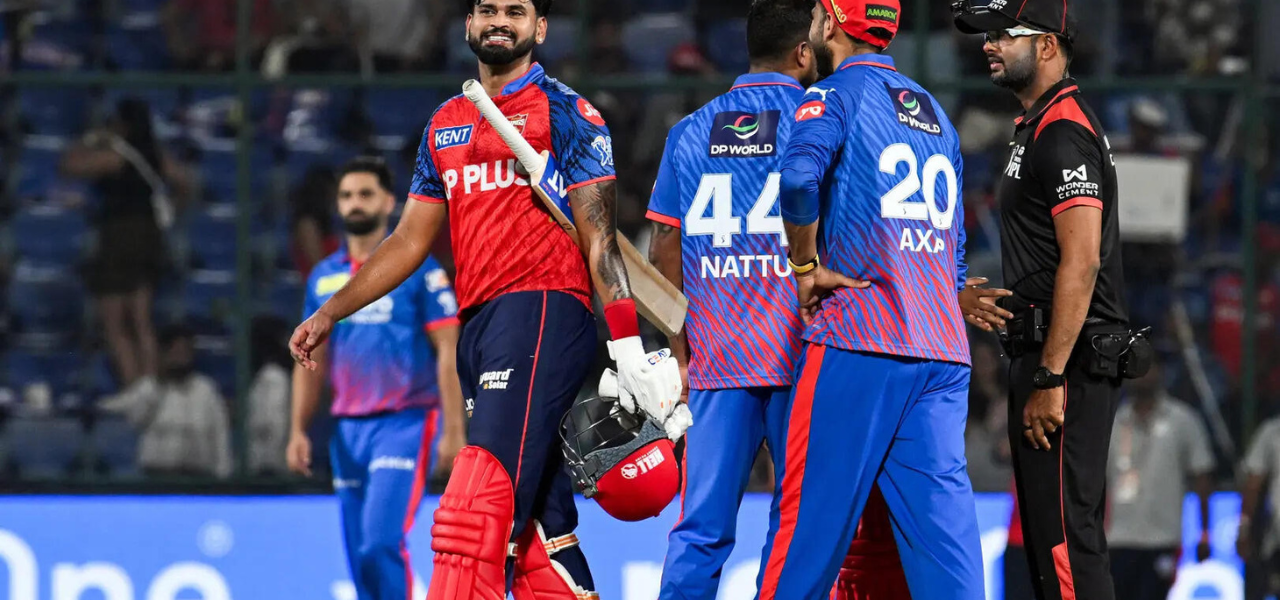
On two separate occasions, in the 16th over, Shreyas Iyer, the Punjab Kings (PBKS) captain and an architect of brutal efficiency, was granted a reprieve by Nair’s faltering grip. First, on a modest 28, then again at 35. The ball, a leading edge, then a miscued pull, seemed destined for safe hands at long-off — and long-on. Nair, shaking his head, a wry, almost disbelieving smile etched on his face, couldn’t secure either. Vipraj Nigam, the bowler, slumped to his haunches. Kuldeep Yadav, the spinner, could only manage a frustrated grimace. This wasn’t merely a missed opportunity; it was a policy blunder writ large on the sporting stage.
Iyer, a beneficiary of this magnanimity, proceeded to an unbeaten 71 from just 36 deliveries. He piled on 43 runs after the first drop, — and another 36 after the second. Delhi Capitals captain Axar Patel’s post-match candor was stark, devoid of the usual platitudes. “We’re making the same mistakes repeatedly. If you don’t support the bowlers on such a wicket, I think you deserve to lose,” he asserted, his voice tight with barely suppressed fury. “It’s a foundational failure, really.” Punjab Kings ultimately achieved the highest successful chase in IPL history, eclipsing their own prior benchmark with 265 runs and seven balls to spare. The brutal ballet of blunders, indeed.
And the contagion of dropped chances wasn’t confined to Delhi. Across town, or rather, in an earlier, equally consequential innings, the Lucknow Super Giants’ batter KL Rahul similarly profited from the lapses of his opponents. Shashank Singh, typically a robust fielder for Punjab, added another ignominious entry to his season’s tally, grassing a comfortable chance when Rahul was on 25. Later, Vijay Kumar Vyshak, the bowler himself, failed to hold onto a return catch as Rahul had just passed 50. The ball ricocheted off his shin, rolling harmlessly away. Rahul, leveraging these fortuitous slips, amassed an unbeaten 152 runs from 67 balls, carving out the highest individual score by an Indian in IPL history.
📄 POLICY WIRE WHITEPAPER PUBLISHED: PAKISTAN'S NATIONAL SECURITY POLICY PRIORITIES
👉 READ BY CLICKING HERE“You certainly take what’s given to you in this format,” Shreyas Iyer later commented, a faint, almost imperceptible smirk playing on his lips. “Fortune, it seems, favors the persistent, and perhaps, the slightly lucky.” His observation, however understated, captures the capricious essence of T20 cricket, where margins are razor-thin and every single decision, every fleeting action, can swing the balance sheet. According to data compiled by Cricket Analytics India, teams that fail to convert critical fielding chances in high-scoring chases ultimately lose the match over 70% of the time, starkly illustrating the direct correlation between fielding prowess and ultimate victory.
While the IPL dazzles with its immense financial engine — a testament to South Asia’s unparalleled cricketing fervor — it also subtly underlines deeper geopolitical fractures. The absence of Pakistani cricketers, for instance, a consequence of long-standing political tensions, means a significant pool of talent, and a substantial viewership, remains untapped for the league, denying both sides lucrative exchanges that could, hypothetically, bridge divides and foster greater regional economic integration. It’s a complex interplay of sport, commerce, — and strained diplomacy.
What This Means
This wasn’t merely a cricket match; it was a microcosm of strategic failure. In boardrooms and parliamentary chambers, similar ‘dropped catches’ — overlooked warnings, unaddressed systemic flaws, misjudged risks — can escalate into financial crises or geopolitical embarrassments. The immediate, quantifiable cost of those four dropped chances across two innings was a record-shattering 529 runs combined, 49 boundaries, and 33 sixes. The unquantifiable cost, however, extends to team morale, fan loyalty, and the psychological burden on players whose momentary lapses etched themselves into history. It’s a stark reminder: in any high-stakes arena, the smallest human error can trigger cascading, irreversible consequences. The game, like governance, hinges on a thousand tiny calculations, where human fallibility isn’t just a variable; it’s often the decisive factor.