


The Unbearable Weight of Twenty: A Baseball Prodigy’s Milestone Echoes Global Youth Pressures
POLICY WIRE — Pittsburgh, USA — Twenty years. A milestone often synonymous with boundless potential, — and for many, a quiet reprieve from intense public scrutiny. For Konnor Griffin, the Pittsburgh...

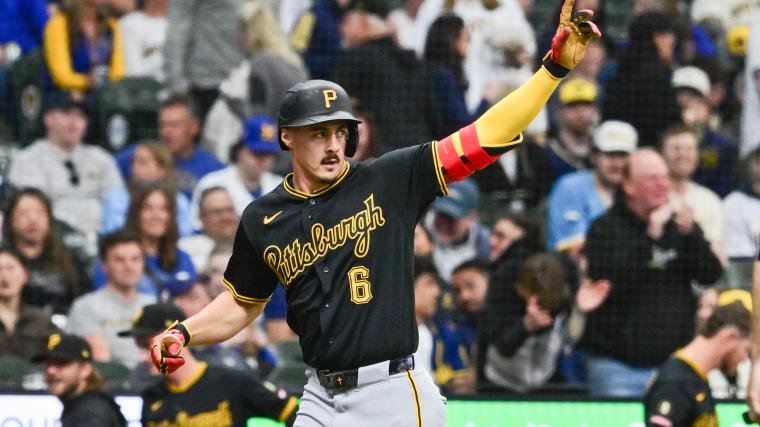
POLICY WIRE — Pittsburgh, USA — Twenty years. A milestone often synonymous with boundless potential, — and for many, a quiet reprieve from intense public scrutiny. For Konnor Griffin, the Pittsburgh Pirates’ shortstop, it arrived not with contemplation but with a deafening crack of the bat—a singular moment momentarily lifting the immense scaffolding of expectation from his young shoulders.
This wasn’t merely a birthday celebration; it was a declaration. Griffin, having debuted in the major leagues at a precocious nineteen, found his twentieth converging with his finest professional outing. A 3-for-4 performance, crowned by his inaugural Major League Baseball home run and three RBIs, propelled the Pirates to a decisive 6-0 victory over the Milwaukee Brewers. It’s a statistical anomaly sports aficionados devour—a potent symbol of youth, talent, and immense pressure.
Behind headlines of a burgeoning baseball star, one discerns the intricate machinery of a multi-billion dollar global industry, perpetually hungry for fresh narratives and marketable faces. Griffin, once the sport’s top prospect, has been central to this commercial calculus. His initial struggles weren’t just personal setbacks; they represented a momentary pause in market strategy. But one incandescent night, it seems, can recalibrate everything.
And so, as the ball sailed into the stands, it wasn’t merely a physical object traversing space; it was a potent symbol of capital, of hope, and of the unique burdens placed upon exceptional youth in an interconnected, hyper-critical world. This isn’t a phenomenon unique to America’s national pastime. It’s a narrative that, despite its distinct American flavor, resonates across continents, particularly in nations like Pakistan, where the weight of communal hope often rests precariously on the shoulders of individual athletic brilliance—albeit typically on a cricket pitch rather than a diamond.
Commissioner Rob Manfred, often seen navigating the league’s labyrinthine labor negotiations, recently opined on the economic architecture surrounding burgeoning talents. “We’re not just selling baseball,” Manfred posited in a recent industry forum, his voice a calculated blend of optimism and pragmatism. “We’re cultivating global narratives, investing in human potential that draws billions in viewership — and merchandise. Griffin’s emergence underscores this long-term vision.” A stark reminder: even individual athletic feats are woven into a grander economic tapestry.
Still, the path to sustained greatness is strewn with the broken promises of former phenoms. The digital fury of an increasingly demanding fanbase, coupled with the relentless media cycle, can amplify both triumphs and tribulations to an almost unbearable degree. For Griffin, this one indelible game now places him in a rarefied echelon: according to MLB Network’s Sarah Langs, he’s only the third player in the storied annals of Major League Baseball history—Buddy Lewis in 1936 and Aramis Ramirez in 1998 being the others—to notch a home run on or before their 20th birthday. A statistical anomaly, indeed, but one that only sharpens the focus on his every subsequent move.
📄 POLICY WIRE WHITEPAPER PUBLISHED: PAKISTAN'S NATIONAL SECURITY POLICY PRIORITIES
👉 READ BY CLICKING HEREDr. Aisha Khan, a geopolitical strategist specializing in cultural soft power at the Carnegie Endowment for International Peace, shot back at the notion of sports as mere entertainment. “These aren’t just games; they’re potent cultural exports,” Khan observed, her tone crisp — and incisive. “The narrative of the American prodigy, overcoming odds, reaching for greatness—it’s a powerful, albeit often unacknowledged, element in projecting American ideals globally. It’s no different, in essence, than the economic diplomacy surrounding a major trade deal, only wrapped in a more palatable package.” Her assessment cuts to the core: individual athletic success can inadvertently serve broader national interests, subtly reshaping American sporting identity on the international stage.
The roaring twenties, as some jubilantly declare for Griffin, may well be on their way. But his story isn’t just about the Pirates or even Major League Baseball; it’s a microcosm of the intense global competition for talent, attention, and economic leverage. He’s not just a shortstop; he’s an asset, a brand, a symbol—a weighty mantle for any twenty-year-old.
What This Means
Griffin’s performance, while celebrated, carries broader implications for policy-makers — and strategists. It highlights the intense commodification of youth talent in globalized industries. Investments in phenoms like Griffin underscore a calculated risk-reward analysis—a bet on future market value far beyond ticket sales. His narrative reinforces American soft power through its cultural exports, with MLB serving as a potent instrument. While baseball’s global footprint may not rival cricket in South Asian nations, the allure of American athletic success remains a compelling export, demonstrating a continued belief in individual achievement. the pressures Griffin faces reflect a wider societal trend: accelerating expectations placed upon young individuals to perform and monetize their potential under relentless digital media scrutiny. This policy challenge—balancing economic imperatives with psychological well-being—extends beyond the diamond, touching education, mental health, and labor practices. It’s a challenge for anyone grappling with the future of work — and the demands of modern youth.