

Undercurrents and Ballots: Palestinian Local Elections Stir Long-Dormant Democratic Hopes Across Divided Territories
POLICY WIRE — Ramallah, Palestinian Territories — In a landscape so often beset by political stalemate and stark divisions, a faint, almost imperceptible heartbeat of democratic ambition flickered...

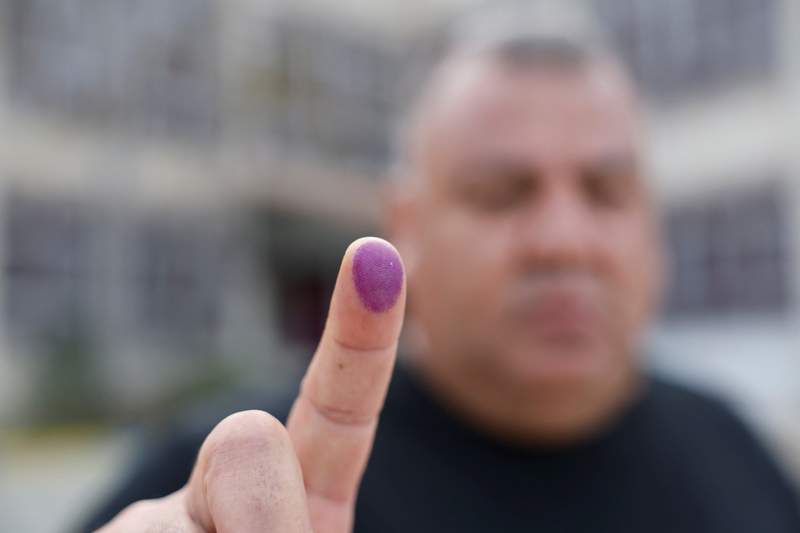
POLICY WIRE — Ramallah, Palestinian Territories — In a landscape so often beset by political stalemate and stark divisions, a faint, almost imperceptible heartbeat of democratic ambition flickered into being this week across Palestinian territories. For the first time in years — and against a backdrop of deep-seated skepticism, let’s be honest — local ballot boxes, those unassuming symbols of civic participation, opened their lids, not just in the West Bank but, perhaps more remarkably, in designated areas of the Gaza Strip.
Few, if any, expected such a moment, didn’t they? For well over a decade, the yawning chasm between the Fatah-led Palestinian Authority (PA) in Ramallah and Hamas’s de facto rule in Gaza rendered any unified electoral process a pipe dream. And yet, here it’s: a limited, yet undeniably significant, step toward grassroots representation, kindling faint hopes in some, and weary cynicism in many others.
But make no mistake, this isn’t a national referendum on leadership or peace talks. Purely local. These aren’t parliamentary or presidential elections, no. Instead, municipal councils, responsible for things like sanitation and infrastructure — you know, the mundane stuff — are being chosen.
Still, the very act of voting, even for such localized bodies, carries a potent symbolic weight. It’s a subtle assertion of self-governance, however fragmented, in the face of ongoing occupation and internal political paralysis. And that matters, especially to ordinary Palestinians, who’ve frankly had enough of the grandstanding.
“This process, despite its limitations, offers a crucial avenue for our people to express their will on matters directly affecting their daily lives,” stated Dr. Nasser Al-Kidwa, a prominent Fatah leader and former foreign minister. “It’s a foundational step towards building legitimate institutions from the ground up, something we desperately need.”
His words, while optimistic, underscore immense challenges — a whole tangle of gordian knots, really. For one, the scale is far from comprehensive. Many West Bank municipalities aren’t participating, — and only specific, pre-approved areas in Gaza are seeing ballots. Not everyone in Gaza, under Hamas’s tight grip, views this as a genuine step forward. And why would they, some might wonder?
And yet, the inclusion of any Gazan voter is notable. Roughly 70% of eligible voters in the West Bank and a surprisingly high 60% in designated areas of Gaza registered, according to preliminary figures from the Palestinian Central Elections Commission. Robust, given the circumstances.
What gives? Perhaps it’s a calculated risk by Hamas, allowing limited local participation to defuse some internal pressure — a classic political chess move, isn’t it? — or simply pragmatic. “We’re not voting for the PA; we’re voting for someone to fix our roads and make sure the kids have clean water,” remarked Fatimah Mansour, a community elder from Khan Younis. “If this helps, then we participate. It’s about survival, not high politics.”
This localized electoral exercise resonates far beyond. Capitals across the Muslim world, from Cairo to Islamabad, are watching these internal Palestinian dynamics closely. Pakistan, a staunch historical ally of the Palestinian cause, often views any movement towards self-determination, however small, as a cautious optimism. For observers in South Asia, these elections are seen less as an immediate solution to the broader conflict and more as a barometer of Palestinian resilience and a persistent, almost stubborn, desire for democratic expression.
📄 POLICY WIRE WHITEPAPER PUBLISHED: PAKISTAN'S NATIONAL SECURITY POLICY PRIORITIES
👉 READ BY CLICKING HEREBehind the headlines, this election is a masterclass in political maneuvering — a delicate ballet on a razor’s edge, really — a fragile balance struck between rival factions, all under Israel’s watchful, often interventionist, eye. It’s a stark reminder that even the most mundane local governance can become profoundly politicized in this volatile region, wouldn’t you agree?
What This Means
This limited round of Palestinian local elections isn’t about fostering immediate unity between Fatah and Hamas; that’s a bridge too far, let’s face it. Instead, it represents a fragile, tactical agreement designed to grapple with governance vacuums and perhaps test the waters for future, broader political engagement. Politically, it allows the PA to claim democratic legitimacy, however piecemeal. It also subtly shifts administrative burden onto local councils, potentially deflecting public frustration from central authorities – a convenient arrangement, no?
So, economically, effective local governance, even in its most basic form, can entice much-needed development aid and improve daily life, which in turn eases social tensions. Diplomatically, however, the international community won’t mistake these local polls for a comprehensive solution. They might offer a glimmer of hope for future institution-building, but they don’t grapple with the core issues of occupation, statehood, or the profound Fatah-Hamas divide.
The inclusion of some Gaza voters, however, is a fascinating experiment. It suggests a potential, albeit tiny, hairline fracture in the granite wall of separation between the two territories, something that could be leveraged — or exploited — in future negotiations. No miracles, though.
Related: Silent War: Israeli Court Delivers Blow to Covert Hamas Finance Network
Related: Beyond Tehran’s Shadow: A New Axis Rises in the Middle East
Ultimately, these elections are a stopgap, a demonstration that a modicum of civil administration can persist even amidst political paralysis. Professor Khalil Shikaki, a senior fellow at the Palestinian Center for Policy and Survey Research, summed it up pithily: “What we’re seeing is a public, weary of grand political gestures, taking the smallest opportunity to assert agency. It won’t bring peace, but it might just keep the lights on in some villages. That’s a low bar, but it’s a bar nonetheless, — and for now, hey, it’s enough.”