
Albuquerque’s Dry Season Battle: City Ramps Up Wildfire Defenses Amidst Climate Shifts
POLICY WIRE — Albuquerque, New Mexico — It’s a relentless skirmish against climate change’s invisible enemy, often whispered forth by little more than a soft rustle through desiccated...

POLICY WIRE — Albuquerque, New Mexico — It’s a relentless skirmish against climate change’s invisible enemy, often whispered forth by little more than a soft rustle through desiccated brush. But for New Mexico’s vast high desert, that whisper all too often morphs into a full-throated roar — a frankly unnerving reality that’s shoving emergency services into an unusually aggressive, early posture. A preemptive strike, if you will.
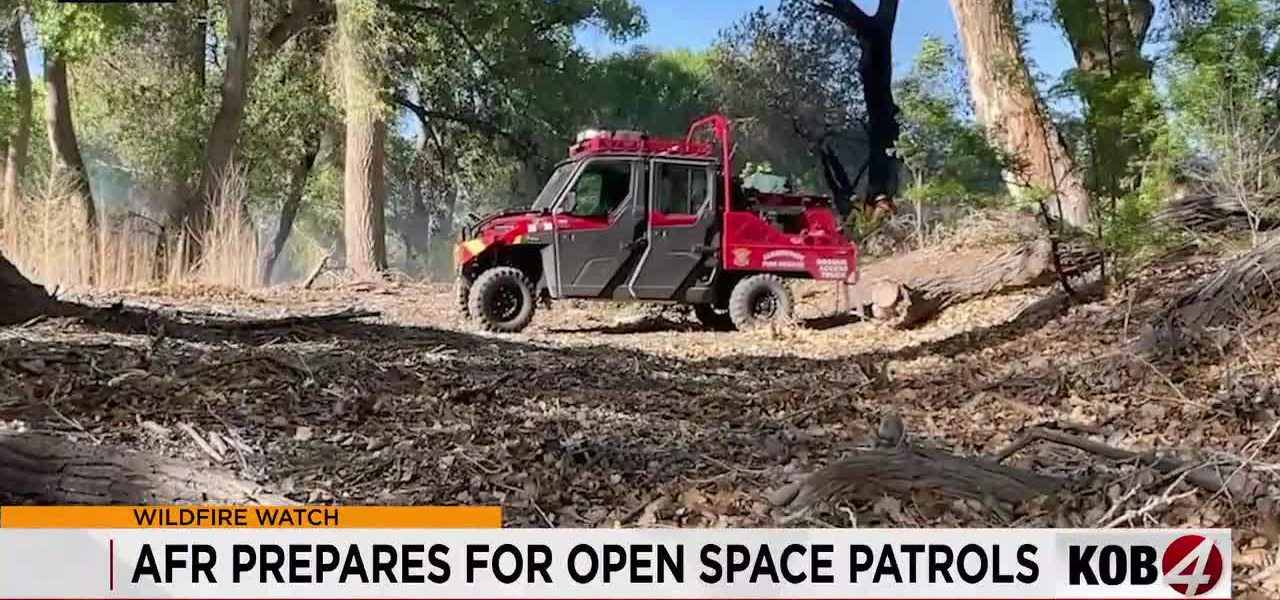
Albuquerque Fire Rescue (AFR) isn’t just chilling, waiting for the first wisp of smoke to ignite a full-blown conflagration. No, sir. They’re deploying expanded patrols across the city’s vast open spaces — a decisive, pre-emptive strike against what’s shaping up to be yet another savage wildfire season. That’s a serious sea change from reactive firefighting to proactive prevention, and it isn’t happening a moment too soon, trust me.
Few outside the immediate vicinity truly fathom the sheer scale of this gargantuan quagmire. AFR, for instance, oversees a staggering 34,000 acres of city-owned open space; much of it, you know, that fickle ecosystem called the bosque — a lush riparian forest tracing the Rio Grande. But when parched? It’s a powder keg. Right now? Bone dry. Utterly.
So, just what makes this year so disquieting? The relentless, lingering drought conditions across the American Southwest have rendered vegetation critically precarious. And get this: according to the National Interagency Fire Center (NIFC), the past two decades have witnessed a profound surge in both wildfire intensity and duration across the Western United States, with an average of 72,000 fires incinerating 6.8 million acres annually. New Mexico, often a grim bellwether for the region’s climate agonies, is pinned squarely in the crosshairs. What’s a city to do?
“We can’t afford to be complacent, not with what we’re seeing unfold year after year,” explains AFR Fire Chief Paul Dugan, his voice carrying the weariness of past battles. “Our crews have already responded to several small incidents in the bosque, early warnings that we can’t ignore. We’re deploying resources now, not waiting for the inevitable mid-summer crisis.”
But the department isn’t merely relying on patrols. No, they’re fortifying their arsenal, too. A shiny new 3,000-gallon water tender, currently under construction, is slated to integrate into the fleet by June. That’s a behemoth of a machine, mind you — poised to genuinely tip the scales in containing blazes before they go full wildfire, utterly uncontrollably.
But these patrols — the boots on the ground, the eyes on the horizon, the ever-present warning — they’re the undeniable linchpin of AFR’s strategy. The department plans to amplify these efforts notably ten days before the Fourth of July, a holiday infamously linked with fire incidents, where fireworks and dry brush often make for a predictably bad combination. Any other time the Chief dictates, expect to see firefighters out there, ever vigilant, ceaselessly scanning the horizon for trouble.
Global Echoes of a Local Problem
What Albuquerque faces, tragically, isn’t an anomalous occurrence. Across the globe, communities — from sun-baked plains to mist-shrouded mountains — wrestle with the increasingly capricious and severe impacts of climate change, a truly global menace. Just take, for example, the arid plains and rugged mountain ranges stretching across Pakistan, particularly in regions like Balochistan, where similar dry bush and scrublands are just as vulnerable to the ravenous maw of wildfires. These crucial areas, lifeblood for pastoral communities, endure catastrophic ecological and economic losses when fires rage, starkly mirroring the tribulations of resource management and emergency response witnessed right here in New Mexico.
And behind the headlines, governments in both hemispheres are staring down the same brutal calculus: extended fire seasons invariably translate into a hungry demand for more resources, more personnel, and ultimately, a crushing financial strain. It’s a collective ordeal, isn’t it? One that starkly underscores shared vulnerabilities in our increasingly interconnected world.
📄 POLICY WIRE WHITEPAPER PUBLISHED: PAKISTAN'S NATIONAL SECURITY POLICY PRIORITIES
👉 READ BY CLICKING HERERelated: Strategic Fuel Fleet Sale Reshapes Indian Ocean Energy Dynamics
“This isn’t just about fighting fires; it’s about adapting to a new normal,” stated Albuquerque City Council President Isaac Benton, commenting on the city’s proactive stance. “We’re investing in our first responders, equipping them for the challenges of an era where fire seasons are no longer just ‘seasons’ but year-round threats. It’s an economic imperative as much as an environmental one.”
Indeed it’s. This is no small sum. The cost of wildfire suppression skyrockets into the billions of dollars nationally each year, and that’s not even counting the unfathomable human toll and environmental wreckage. Prevention, consequently, emerges as the undeniably sagacious strategy. Smart, that.
What This Means
For Albuquerque residents, this development portends a palpable augmentation in safety, but it’s also about a growing awareness of their collective, civic responsibility. These stepped-up patrols aren’t merely about nabbing arsonists or errant fireworks users; they’re a stark, visual reminder of the ubiquitous threat. Economically speaking, proactive investment in AFR’s capabilities, while momentous, pales to insignificance when weighed against the potential economic devastation of a major urban interface fire. Politically, leaders who champion climate resilience and robust emergency services stand to secure far stronger public support, particularly as extreme weather events morph from ‘unusual’ to ‘the norm’.
The situation also starkly illuminates the precarious equilibrium between urban expansion and natural resource preservation. As cities like Albuquerque continue their sprawl, they inevitably infringe upon these vulnerable open spaces, weaving a labyrinthine hazard tapestry. Astute governance, then, must seamlessly blend rigorous urban planning with aggressive environmental stewardship. No easy feat.
Make no mistake, the conundrums are colossal. But AFR’s early preparations, coupled with shiny new equipment and a dedicated, tenacious force, truly hint at a city learning hard lessons from its past and steeling itself for an increasingly fiery future. As Dr. Anya Sharma, a climate scientist specializing in arid ecosystems, recently opined, and we’d do well to listen: “The conversation around wildfires has shifted from ‘if’ to ‘when’ and ‘how bad.’ What we’re seeing in Albuquerque isn’t just readiness; it’s a necessary evolution of emergency management in the face of irreversible climatic changes.”