


Alcaraz’s Roland Garros Exit Reconfigures Tennis Landscape
POLICY WIRE — Paris, France — Suddenly, the clay season feels less predictable, less tethered to its established narratives. Like chains snapping, the expected order just… dissolved. Carlos...

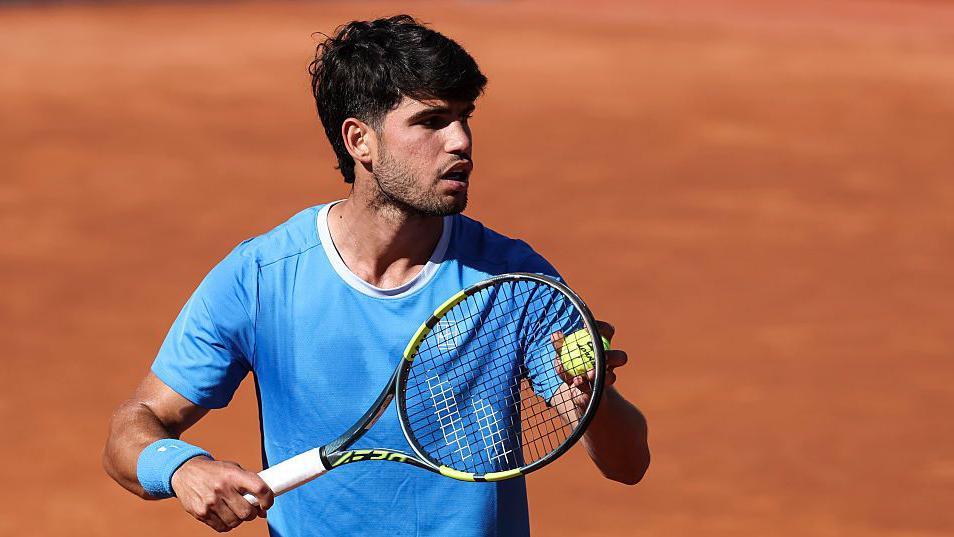
POLICY WIRE — Paris, France — Suddenly, the clay season feels less predictable, less tethered to its established narratives. Like chains snapping, the expected order just… dissolved. Carlos Alcaraz, that dynamic young Spaniard who’s captivated the tennis world, won’t be defending his title at Roland Garros. A jolting revelation. It’s immediately recalibrated expectations for one of tennis’s most prestigious tournaments.
His absence, confirmed this week, isn’t just a missed opportunity for the 22-year-old phenom; it’s a tectonic upheaval for the entire men’s draw. But what was shaping up to be a gripping tussle between Alcaraz and Italian sensation Jannik Sinner—a rivalry that promised fireworks and perhaps a new era of dominance—now looks significantly different, with Sinner emerging as the undeniable favorite. Unquestionably.
For weeks, whispers about a nagging wrist injury circulated. Yet, few had truly foreseen such a decisive outcome. The world number two had already pulled out of last week’s Barcelona Open and subsequently the Italian Open—a cautious, yes, but undeniably worrying sign. Could anyone have truly anticipated such a stark conclusion?
Alcaraz, always forthright, took to social media to share the bleak tidings. He didn’t mince words.
“After the results of the tests carried out today, we’ve decided that the most prudent thing to do is to be cautious and not participate in Rome or Roland Garros, while we assess the situation to determine when we can return to the court,” he posted. “This is a difficult time for me, but I’m sure we’ll come out of this stronger.”
That’s a crippling setback, not only to Alcaraz’s aspirations but also to the tournament’s overall star power. He’d begun the year with a staggering Australian Open title, completing the career Grand Slam at an unprecedented age (a feat that beggars belief, frankly), and had seemed absolutely poised for further clay court dominance. Indeed, Alcaraz boasts an impressive 82% win rate on clay courts over the past two seasons, according to ATP Tour statistics, making his withdrawal particularly heart-wrenching for the French Open. A real shame.
Behind the headlines of Alcaraz’s recovery, a fresh commotion now surrounds other contenders. The power vacuum left by a champion always invites conjecture, — and this year, it feels particularly pronounced. Could this be the moment a less-fancied player—one we’ve barely considered—seizes their chance? Couldn’t it be?
The global reach of tennis means this news reverberates far beyond Europe. In cities like Lahore or Karachi, where interest in international sports, especially those featuring global stars, is on the rise, fans will be recalculating their tournament brackets. And the narrative of unexpected opportunities—a tale as old as time, really—has a universal appeal, stirring hopes for a broader array of players to make a deeper run, inspiring future generations in regions where tennis is still growing.
Could this shake-up ultimately inspire a new generation of players from the subcontinent to eye a deeper run at a Grand Slam, much like the unexpected heroes we sometimes see in other sports? Don’t make any mistake; these global events serve as potent motivators, fostering dreams that transcend geographic boundaries. Powerful stuff. Related: Khushdil Shah’s Unlikely Heroics Shake PSL, Challenge Cricket’s Established Order
Still, the immediate beneficiary is incontrovertibly Jannik Sinner. The Italian, he’s already overtaken Alcaraz for the world number one ranking this month after a recent Monte Carlo final coup. Now, he stands to solidify that position dramatically, with a clear path to claim his own career Grand Slam – the French Open being the sole major missing from his impressive collection. Quite the opportunity.
📄 POLICY WIRE WHITEPAPER PUBLISHED: PAKISTAN'S NATIONAL SECURITY POLICY PRIORITIES
👉 READ BY CLICKING HERE“This isn’t just about one player; it’s about the entire dynamic of the men’s draw,” opines Patrick Mouratoglou, a renowned tennis coach and analyst.
“Suddenly, the pressure shifts, — and dark horses see their odds dramatically improve. It’s an open field in a way we haven’t seen in years for Roland Garros.”
It’s not Alcaraz’s first major withdrawal, mind you. Back in 2023, he missed the Australian Open due to a hamstring injury, demonstrating a pattern of caution when faced with physical setbacks. That’s a prudent approach, certainly, for a player with such a long career ahead—a marathon, not a sprint, as they say—but it doesn’t lessen the immediate disappointment for fans (who, let’s be honest, just want to see their heroes play).
What This Means
So, the absence of a defending champion from a Grand Slam event creates a domino effect across several fronts. Politically, within the tennis ecosystem, it magnifies debates around player welfare — and the demanding ATP schedule. Economically, ticket sales and broadcast figures for individual matches featuring a popular star like Alcaraz might see a marginal tumble, though the overall prestige of Roland Garros will unquestionably carry the event.
Diplomatically, one might even argue it presents an opportunity. With the ‘next generation’ triumvirate of Alcaraz, Sinner, and sometimes Holger Rune often dominating headlines—a trio that typically sucks up all the oxygen in the room—this turn of events forces media and fans to focus on a broader cast of characters. It levels the playing field for the narrative, allowing players from a wider range of nations to step into the spotlight, fostering a more inclusive international appeal. That’s gotta be good for the sport, right?
The shift in betting odds is blatant. Sinner’s stock immediately skyrockets, but so too do the prospects of seasoned clay-court specialists like Casper Ruud or even resurging veterans. Expect a more unpredictable tournament, perhaps one that yields a surprise finalist or even a dark-horse champion. Totally wild. Related: Alcaraz Out of French Open, Shakes Up Tennis Dominance
Ultimately, Alcaraz’s decision highlights the brutal physical demands of modern professional tennis. His return, when it comes, will be carefully watched, but for now, the path to the men’s French Open trophy has become considerably wider. The math is simple, isn’t it? Fewer titans means more opportunities, and this year’s Roland Garros promises to be a thrilling, unfettered affair as a result.