


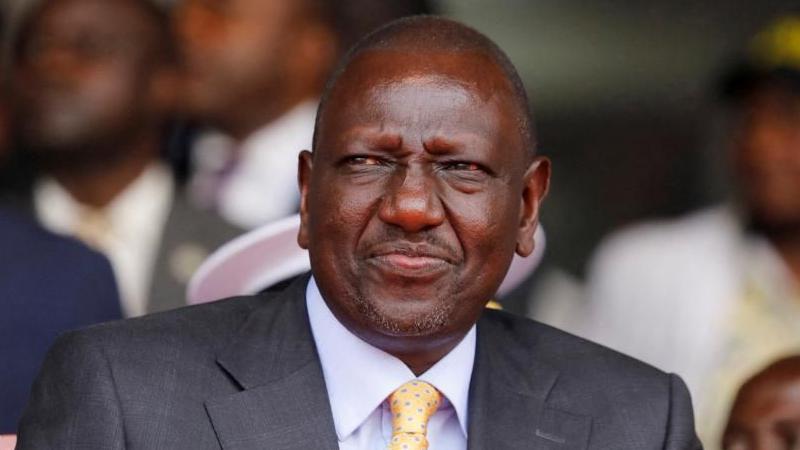
Ruto’s Linguistic Gaffe Stirs Diplomatic Row, Highlights Post-Colonial Tensions
POLICY WIRE — Nairobi, Kenya — The digital embers of a throwaway jape can, let’s face it, ignite an absolute wildfire, especially when a head of state utters it. That’s a lesson Kenyan...

POLICY WIRE — Nairobi, Kenya — The digital embers of a throwaway jape can, let’s face it, ignite an absolute wildfire, especially when a head of state utters it. That’s a lesson Kenyan President William Ruto learned the hard way this week, as an offhand remark about Nigerian English catapulted into a full-blown diplomatic kerfuffle, unmasking sensitive issues of national pride and linguistic identity across the continent.
Few expected a speech — ostensibly about regional integration and trade, mind you — to become a flashpoint for such cultural friction. But when President Ruto, addressing a business forum, reportedly suggested that Nigerians “struggle” with English proficiency compared to Kenyans, the digital arena went absolutely ballistic. Didn’t he know what he was wading into?
Nigerian social media, renowned for its blistering, no-holds-barred rebuttals, quickly spun the comments into a national debate. Hashtags defending Nigerian linguistic prowess trended for days, reflecting a deep-seated pride in a nation often seen as an intellectual and cultural powerhouse in Africa. No surprise there.
“To dismiss the linguistic nuances of an entire nation as a ‘struggle’ is not just misguided, it’s disrespectful to our rich heritage,” opined Nigerian Minister of Information, Mohammed Idris, in a strongly worded statement issued from Abuja. “Our unique accent — and phraseology are a testament to our dynamic culture, not a deficiency.”
Still, some in Ruto’s inner circle tried to wave away the controversy. They’ve argued his words were taken out of context, perhaps a jocular observation intended to highlight Kenya’s own educational strengths (or so they claimed). But the mischief, it’s plain, was already done.
Back in 2022, the British Council reported that English is an official language for over 1.2 billion people globally, with varying degrees of proficiency and distinct regional accents. Nigeria boasts one of the largest English-speaking populations in Africa, estimated at over 120 million people, according to recent census data and language surveys. A significant chunk.
And yet, this isn’t just about accents. It cuts to the very heart of how post-colonial nations perceive and project themselves through the language — often a fraught inheritance — from their former colonizers. In many parts of the world—from the bustling markets of Mumbai to the academic halls of Lahore, a place where English often serves as both a key to opportunity and a symbol of complex historical baggage—the command of a “standard” or “native-like” English accent often confers a certain social or professional advantage, a lingering vestige of colonial hierarchies that just won’t seem to fade.
For instance, countries like Pakistan, another former British colony, wrestle with similar issues. English remains an official language and a medium of elite education, while regional languages and Urdu form the bedrock of daily life for most. Debates over English proficiency, particularly accents, routinely erupt in public discourse, mirroring the sensitivities now seen between Kenya and Nigeria. Related: Pakistan’s Shifting Alliances: Decoding the New Geopolitical Scorecard in South Asia
Ruto’s comments, however inadvertent they were, struck a discordant chord. They laid bare a latent competitiveness, or perhaps even a subtle condescension, that occasionally simmers beneath the surface of pan-African solidarity. What exactly was he thinking?
📄 POLICY WIRE WHITEPAPER PUBLISHED: PAKISTAN'S NATIONAL SECURITY POLICY PRIORITIES
👉 READ BY CLICKING HERE“We must remember that English, like all languages, is a living entity, constantly evolving and adapting to the cultural landscape it inhabits,” elucidated Dr. Amina Hassan, a professor of African Linguistics at the University of Ghana, speaking to Policy Wire. “To critique a nation’s English is to critique its unique contribution to that language, and that’s rarely a path to productive dialogue.”
So, make no mistake, this little brouhaha really tangles diplomatic ties, if only for a bit. Nigeria and Kenya are two of Africa’s most influential economies, often seen as regional leaders and pivotal collaborators in continental initiatives. Such public spats, however minor they might seem (and really, how minor are they?), can cast a long shadow on collaborative efforts.
Will this incident fade into obscurity, another fleeting social media scandal? Or does it hint at deeper cultural fault lines that leaders ignore at their peril?
What This Means
At its core, this linguistic dust-up illuminates a persistent challenge for post-colonial states: the delicate balance between embracing inherited global languages and affirming distinct national and regional identities. Politically, it’s a diplomatic gaffe that requires careful management. President Ruto’s government will likely need to offer a more unequivocal clarification or perhaps even — and this is what everyone’s wondering — an apology, to mollify those undoubtedly ruffled feathers and prevent this whole kerfuffle from escalating into a prolonged, frosty bilateral chill. Economically, while unlikely to trigger immediate trade disruptions, such incidents can subtly impact perceptions of partnership and trust, potentially affecting future collaborations or investment flows between the two nations. Culturally, it’s a stark reminder that language, far from being a neutral tool, is deeply intertwined with national pride and historical experience, making casual criticisms particularly explosive. A tricky tightrope.
Still, the episode presents an unexpected opportunity. It could catalyze a broader, much-needed discussion across Africa about linguistic diversity, education standards, and the celebration of distinct “Englishes” that reflect the continent’s vibrant tapestry. Imagine that.
Ultimately, how President Ruto and his Nigerian counterparts adroitly handle this cultural sensitivity will be a true test of mature diplomacy. A swift, unambiguous resolution, perhaps accompanied by a joint statement affirming mutual respect, could turn a blunder into a demonstration of African unity.