

NFL Draft’s Faster Clock: Pittsburgh Hosts as Trade Frenzy Looms for 2026
POLICY WIRE — Pittsburgh, United States — Two minutes. That’s all the NFL pared down from the first-round clock for its 2026 Draft in Pittsburgh. Yet, don’t let the trifling tweak fool...

POLICY WIRE — Pittsburgh, United States — Two minutes. That’s all the NFL pared down from the first-round clock for its 2026 Draft in Pittsburgh. Yet, don’t let the trifling tweak fool you; those 120 seconds could seismically remold the frantic calculus behind some of professional sports’ most consequential choices, like a sudden squall capsizing a meticulously charted course.
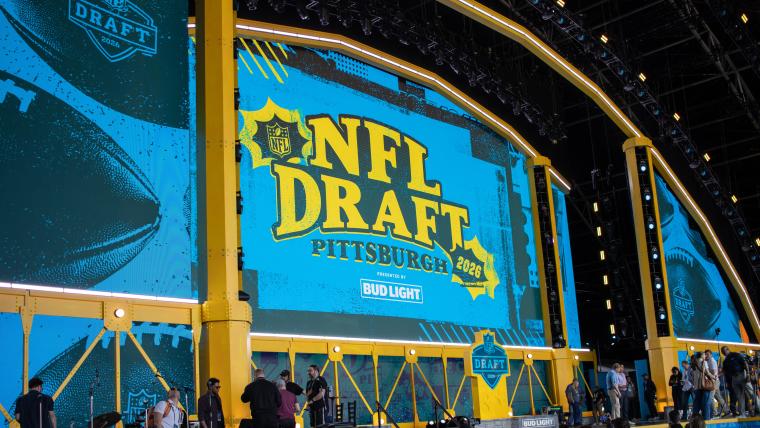
For the first time since 1948, the Steel City plays host to the league’s annual talent grab, an extravaganza that’s transmuted from a backroom affair into a multi-day, prime-time television event. This time around, however, general managers confront an even tighter window, as the clock for first-round picks shrinks from ten minutes to just eight.
Behind the headlines, this stealthy shift isn’t merely about efficiency; it’s a cunning stratagem. Fewer precious moments mean less time for last-minute trade negotiations, possibly compelling teams to commit faster or risk losing a desired prospect. And that matters, particularly in a draft expected to be replete with high-value assets and anxious war rooms (think high-stakes chess, but with more shouting).
But the pressure isn’t just on the GMs. Commissioner Roger Goodell, speaking from the NFL’s New York offices, emphasized the league’s ongoing commitment to a dynamic fan experience.
“We’re always looking to optimize the draft experience, not just for the teams, but for the millions of fans tuning in globally,” Goodell told Policy Wire. “A more dynamic first round means more engagement, more anticipation, and ultimately, a better product for everyone.”
Right. Because what fan doesn’t just adore efficiency?
Indeed, anticipation is already sky-high. Analysts like Daniel Jeremiah predict a flurry of early movement, with teams like the Philadelphia Eagles potentially leveraging their ample draft ammunition. Philadelphia’s Quiet Draft Strategy, often overseen by architect Howie Roseman, frequently involves calculated maneuvering. And this year’s condensed timeline only heightens the exigency. It really does.
For general managers, the equation’s grim. Make no mistake. Those two minutes? Precious. It telescopes deliberation, magnifies the duress, compelling teams to trust their scouting reports like never before. You’ve just gotta be ready to pivot at a moment’s notice. The landscape can shift. In an instant.
The Global Gaze
While the draft remains a distinctly American institution, its reach continues to expand far beyond national borders. Thanks to digital broadcasting and growing international interest, fans across the globe, from London to Lahore, are tuning in. The spectacle of young athletes achieving their dreams resonates universally, regardless of dominant local sports.
Even in regions like South Asia, where cricket or football (soccer) reigns supreme, the NFL’s unique blend of strategy, athleticism, and high-stakes drama is slowly but surely carving out a niche. For the league, this represents a long-term play, a cultivation of new fan bases in burgeoning economies, mirroring broader trends of cultural exchange and digital connectivity — talk about a global takeover, eh?
📄 POLICY WIRE WHITEPAPER PUBLISHED: PAKISTAN'S NATIONAL SECURITY POLICY PRIORITIES
👉 READ BY CLICKING HEREStill, the primary focus remains on the 257 picks spread across seven rounds — and three days. The Gators’ 2026 NFL Draft Class and other collegiate powerhouses are under the microscope, with Indiana quarterback Fernando Mendoza widely projected as the No. 1 overall selection.
“Every team will feel that clock ticking louder this year,” remarked one veteran NFL General Manager, who spoke on background, citing ongoing preparations. “It’s going to reward preparation and penalize indecision. Expect more deals to be cemented days, even hours, before the draft starts, rather than in the heat of the moment.”
Trade activity is always a litmus test of the draft. In fact, since becoming the Texans GM prior to the 2021 NFL Draft, Nick Caserio has executed 25 draft trades over five years, including seven last year alone. Such audacious jockeying will be even more challenging under the new rules.
What This Means
The shortened first-round clock isn’t just a procedural tweak; it’s a strategic shift with myriad ramifications. Politically, hosting the draft allows Pittsburgh to showcase its revitalized downtown and rich cultural heritage to a national and international audience, buttressing communal swagger and drawing vital tourism dollars. Economically, the event is a bonanza, pumping millions into local businesses, from hotels to restaurants. The direct economic impact of recent drafts has often topped $100 million for host cities, with indirect benefits extending much further.
Strategically, teams must now hone their pre-draft commerce blueprints with even greater precision. The truncated grace period means fewer opportunities for impromptu auction melees or complex multi-team exchanges once the clock starts. This could lead to a front-loaded draft, where many significant deals are finalized before the official start, or a more chaotic Round One where teams simply make their selection rather than risking a time-consuming trade — a gamble that might just backfire spectacularly if they haven’t done their homework.
Ultimately, it’s a push-pull between the league’s desire for an expedited, more engaging televised product and the convoluted, frequently protracted deliberation required to build a championship roster — a tension that’s always been present, mind you, but now feels cranked up to eleven under the glare of prime-time TV. Will the faster pace lead to more mistakes, or simply force teams to become more ruthlessly efficient?
One thing’s certain: the 2026 NFL Draft promises an even more intense, high-stakes opening night than ever before. As Matt Miller, an ESPN analyst, recently put it, “This is a league perpetually in flux. The draft, once a backroom handshake, is now a global stage, — and every rule change only escalates the theatrics. We’re entering an era where precision in scouting and conviction in decision-making will be preeminent, perhaps more than any time in recent memory.”