


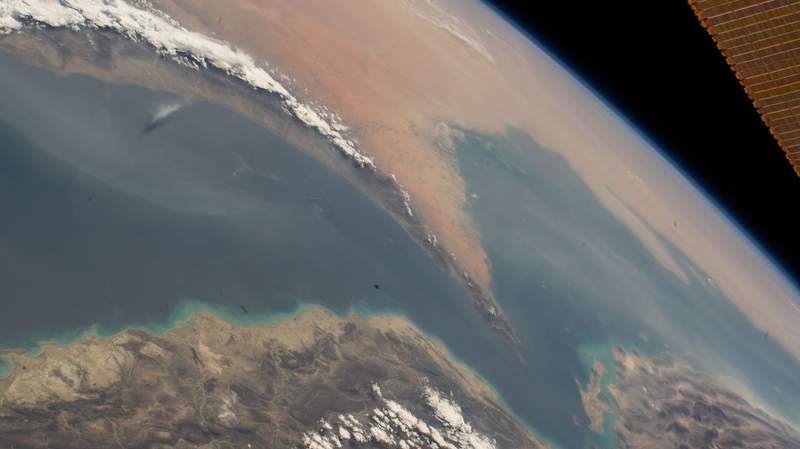
Iran’s Hormuz Toll Claim Stokes Global Shipping Tensions
POLICY WIRE — Dubai, UAE — For decades, the Strait of Hormuz has anchored the world’s most pivotal chokepoint for oil, a narrow stretch of water perpetually on the brink of geopolitical...

POLICY WIRE — Dubai, UAE — For decades, the Strait of Hormuz has anchored the world’s most pivotal chokepoint for oil, a narrow stretch of water perpetually on the brink of geopolitical friction. Now, a recent declaration from Tehran vows to turn that long-simmering tension into a flashpoint, like a fuse lit on a powder keg.
But hold on—this isn’t just another diplomatic spat that’ll blow over with a strongly worded press release; it’s something potentially far more unsettling, a tectonic shift that could reshape maritime norms for decades to come—a truly consequential move.
Who’d’ve thought the first open gauntlet to the Strait’s traditional status would come from a central bank? Nobody, that’s who. Yet, that’s precisely what’s happened, with Bank Markazi, Iran’s central monetary authority, asserting that initial tolls have been successfully collected for transit through the vital waterway.
Not just administrative. Nope. Make no mistake, it’s a bold assertion of sovereignty, fundamentally challenging, you get it, the internationally venerated principle of free passage through strategic straits. And that matters, especially when we’re talking about a route through which roughly 20% of the world’s total petroleum liquids consumption, and a similar share of global LNG trade, passed in 2022, according to the U.S. Energy Information Administration (EIA).
Such a move throws a significant monkey wrench into the delicate machinery of global energy markets and international shipping, a kind of geopolitical sand in the gears. Testing boundaries. Plain and simple.
So, what kind of tolls, really? And from whom, pray tell? The Iranian statement offered scant details, keeping the specifics vague (a classic move, if you ask me), perhaps deliberately so. But it unmistakably telegraphs an intent to unilaterally levy charges on commercial vessels navigating the Strait, a practice international law largely prohibits for such passages.
Mohammad Reza Farzin, Governor of the Central Bank of Iran, framed the development as a natural extension of national rights.
“For too long, certain powers have treated our sovereign waters as a free highway without acknowledging our legitimate claims or the costs we bear for regional security,” Farzin posited in remarks reported by state media. “These are not ‘tolls’ in the punitive sense, but fair contributions for passage through a vital area within our jurisdiction.”
Not everyone sees it that way, of course. For countries reliant on uninterrupted shipping, the news immediately sparked alarm. Rear Admiral Kevin G. Miller (Ret.), a senior fellow at the Washington Institute for Near East Policy, didn’t mince words.
“This isn’t about revenue; it’s about control,” Miller commented. “Iran is attempting to normalize an illegal levy, which could set a dangerous precedent for international maritime law. Every shipping company, every navy, and every government needs to understand the implications of capitulating to this.”
📄 POLICY WIRE WHITEPAPER PUBLISHED: PAKISTAN'S NATIONAL SECURITY POLICY PRIORITIES
👉 READ BY CLICKING HERE
This aggressive stance by Tehran inevitably sends jitters across the Arabian Gulf, a region (let’s be honest, it’s never calm there) already grappling with proxy conflicts and fluctuating oil politics. Neighboring states, many of whom are Muslim-majority and heavily reliant on trade through Hormuz, find themselves in a precarious position.
Consider Pakistan, for instance. A major importer of oil and gas, its economic stability is inextricably linked to the free flow of energy from the Gulf. Any disruption, or even the added cost of arbitrary tolls, translates directly into higher domestic prices for its 240 million citizens, potentially exacerbating existing economic vulnerabilities.
And yet, this isn’t an isolated incident; it reflects Iran’s long-standing desire to assert its regional dominance and defy Western sanctions. The revenue, however modest initially, would also offer a welcome boost to an economy under immense pressure.
What This Means
Politically, Iran’s move constitutes a direct gauntlet to the bedrock principles of freedom of navigation, enshrined in the United Nations Convention on the Law of the Sea (UNCLOS), even though Iran isn’t a signatory. But international customary law still applies, and it’s generally understood that straits used for international navigation must permit transit passage without impediment.
Economically, if these tolls become enforceable, shipping costs will rise. Insurance premiums for vessels traversing the Strait, already high due to regional instability, could skyrocket. This would rattle global supply chains, especially for energy, driving up prices from Rotterdam to Tokyo.
The ball’s in their court. Major maritime powers. The US. UK. EU. Their response will define the future of transit through international straits. Will they challenge Iran directly, or will a new, unpredictable layer of bureaucracy and cost—one that siphons revenue, complicates logistics, and fundamentally re-orders established trade routes, making every shipment a negotiation—become the norm?
Related: Everest’s Perilous Blockade: Climate Shift Threatens Himalayan Lifeline
Ultimately, this isn’t just about a few dollars per ship. This is about establishing a precedent. As Dr. Ali Bakhtiari, an energy markets analyst based in London, succinctly put it, “Iran is testing the world’s resolve. The absence of a strong, unified international response will signal open season for similar claims in other strategic waterways, making an already volatile global trade landscape even more unpredictable.”