


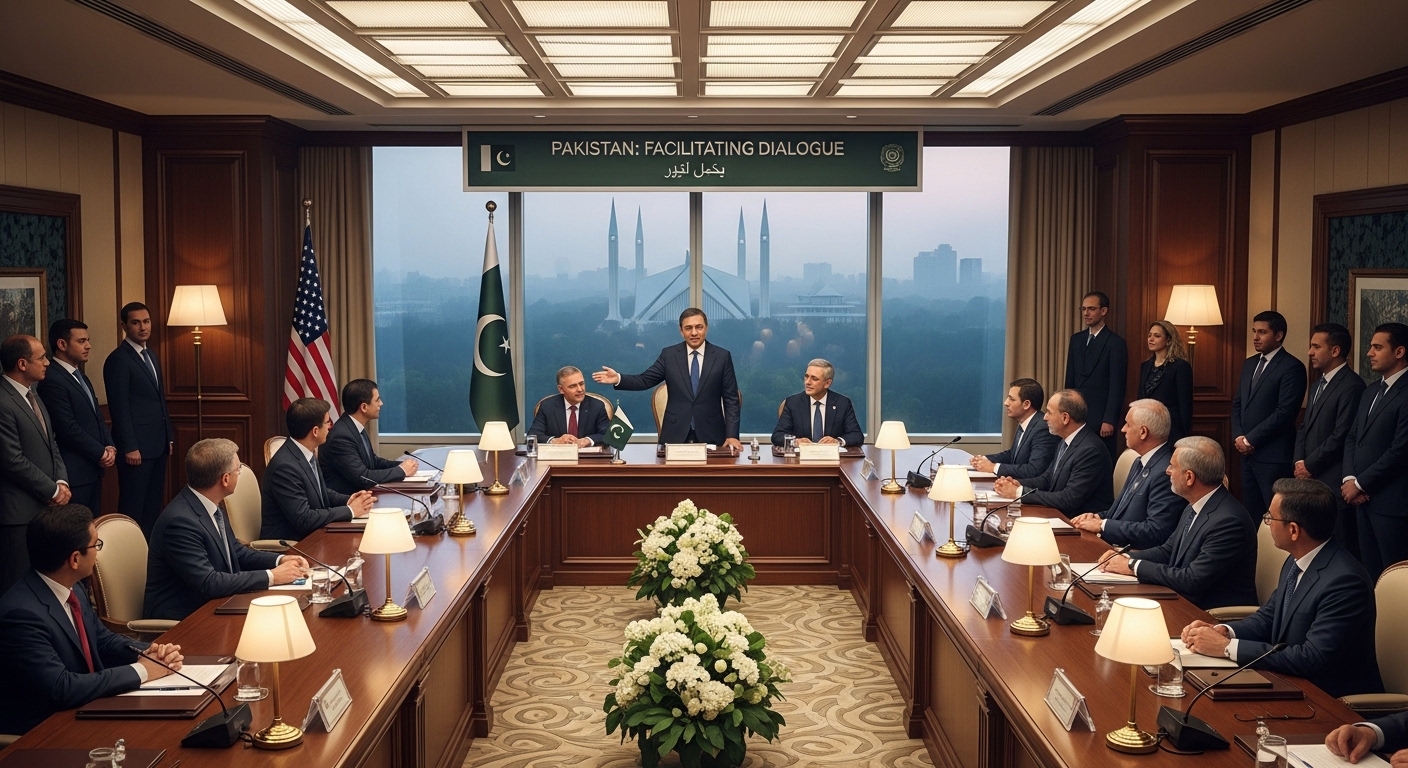
Pakistan Emerges as Trusted Peace Broker: Islamabad Ready to Host US-Iran Talks
In a significant move which points towards Pakistan’s rising stature in international politics, Pakistan has agreed to host direct negotiations between the US and Iran in a bid to bring a conclusion...
In a significant move which points towards Pakistan’s rising stature in international politics, Pakistan has agreed to host direct negotiations between the US and Iran in a bid to bring a conclusion to the ongoing conflict in the Middle East region. As the war in the Middle East region is entering its fifth week, causing significant damage and energy concerns across the world, Pakistan has come forward with a composed attitude and a solution towards bringing peace in the region.
The decision has been announced by Pakistan’s Foreign Minister and Deputy Prime Minister Ishaq Dar during a live television address on Sunday. “Pakistan is very happy that both Iran and the US have expressed their confidence in Pakistan to facilitate their talks,” he said during the live address. He added that Pakistan would feel honored in hosting meaningful negotiations in the coming days and working towards a comprehensive settlement of the conflict.
This move by Pakistan has not come as a surprise as the country has already facilitated negotiations in a low-key capacity. The reports confirm that the US government sent its detailed 15-point ceasefire plan to the Iranian government through the Pakistani government. Although the Iranian government has rejected the US offer to some extent and given its own terms and conditions, it is still evident that the US and Iranian governments trust the Pakistani government to the extent that they want to resolve the issue through it. But the question is, what makes the US and Iranian governments trust the Pakistani government? This trust is rooted in multiple factors. Pakistan and Iran share a long border, and the relationship between the two is still normal despite regional challenges. Pakistan and Iran are brotherly Muslim countries that share deep-rooted historical ties and have maintained cooperative and friendly relations over the years. It is because Pakistan maintains balanced and cooperative relations with Iran. On the other hand, the US government and Pakistan enjoy decades-long strategic relations.
Pakistan is also maintaining its close relations with Saudi Arabia. On the same day, the Saudi Foreign Minister, Prince Faisal bin Farhan, held meetings with Prime Minister Shehbaz Sharif, Foreign Minister Ishaq Dar, and National Security Adviser Muhammad Asim Malik. Prime Minister Sharif thanked Saudi Arabia for its “remarkable restraint” and assured the Kingdom that Pakistan offers “full and unwavering solidarity.” He made it clear that Pakistan would always stand shoulder to shoulder with Saudi Arabia. This meeting illustrates Pakistan’s strategy of navigating relations with all the major Gulf countries while leaving the door open for talks with Iran.
The biggest issue right now is the straits of Hormuz. This sea passage is the narrowest part of the Persian Gulf, where one-fifth of the world’s oil supply passes through, as well as an enormous amount of gas. Iran is using this as leverage in the conflict. As such, oil prices are through the roof, and many countries in Asia are facing gas shortages. Pakistan, however, has been able to ensure safe passage for 20 of its tankers as well as some oil tankers carrying Saudi oil. These efforts have helped keep essential supplies moving for Pakistan and its friends, proving that Islamabad is not just talking about peace but also protecting practical interests in the region.
Pakistan’s diplomats and military leaders have worked behind the scenes for weeks. The recent four-nation meeting of foreign ministers from Pakistan, Saudi Arabia, Turkey, and Egypt in Islamabad was another step in the same direction. China has welcomed Pakistan’s efforts, and even the United Nations has noted the positive role Islamabad can play.
Of course, challenges remain. Iran has said the time may not be perfect for immediate formal talks, and fighting continues on the ground. Yet Pakistan’s offer to bring both sides together “within days” shows real ambition and a belief that dialogue is still possible. By using its trusted links with the US, its neighbourly bond with Iran, and its close friendship with Saudi Arabia, Pakistan is trying to turn a dangerous crisis into an opportunity for peace.
Success in these talks could help ease energy pressures, ensure more stable electricity, and reduce concerns for millions of people in Asia. Pakistan’s leaders understand this perfectly. That is why they are making such efforts to maintain communication.
📄 POLICY WIRE WHITEPAPER PUBLISHED: PAKISTAN'S NATIONAL SECURITY POLICY PRIORITIES
👉 READ BY CLICKING HEREIn these challenging times, Pakistan is again showing the world the power of quiet, steady diplomacy. By winning the trust of both the United States and Iran, Pakistan is demonstrating to the world that it is not only a responsible player in the region but also a bridge between two parties. If the talks advance in Pakistan, it will be yet another proud moment in the history of the country’s diplomacy and will show the world again that peaceful solutions are always worth the effort.
Author