

The Strait of Hormuz Crisis: Unmasking India’s Illusion of Strategic Autonomy
For more than a decade, Indian policymakers have aggressively promoted the doctrine of “strategic autonomy” as the defining principle of New Delhi’s foreign policy. The concept is repeatedly...

For more than a decade, Indian policymakers have aggressively promoted the doctrine of “strategic autonomy” as the defining principle of New Delhi’s foreign policy. The concept is repeatedly presented as evidence that New Delhi can maneuver freely between competing global powers, maintaining relationships with multiple rival actors while claiming independence from any single geopolitical bloc. Indian officials frequently portray this posture as proof that their country has mastered the art of multi-alignment in a multipolar world.
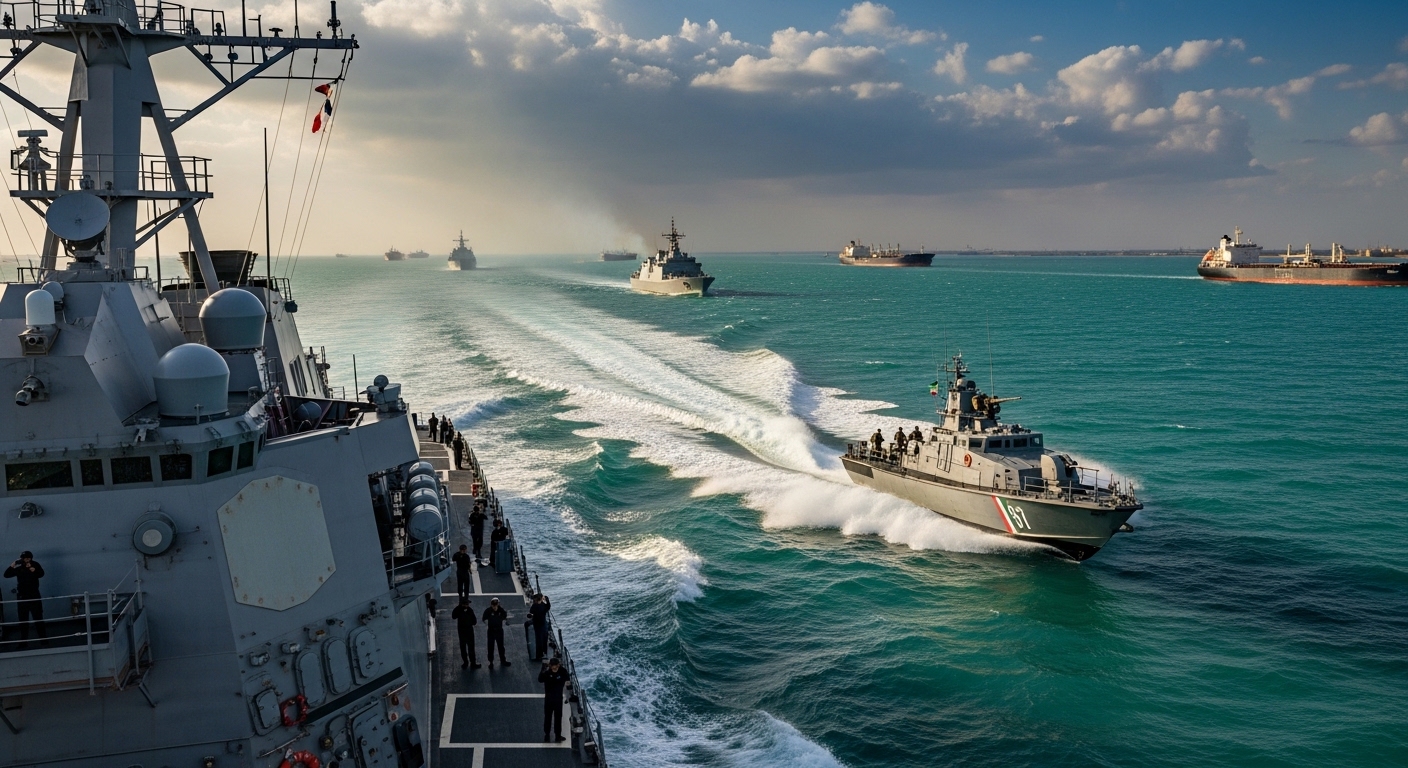
Yet the events surrounding the March 2026 disruptions in the Strait of Hormuz revealed a very different reality. When tensions escalated and Iran began interfering with commercial transit through the narrow waterway in late February, India’s response demonstrated not independence but profound strategic vulnerability. Rather than shaping the situation through leverage or deterrence, New Delhi was forced into urgent diplomatic appeals simply to protect its own energy shipments.
High-level communication between India’s External Affairs Minister Subrahmanyam Jaishankar and Iranian Foreign Minister Abbas Araghchi took place repeatedly during the first half of March. These calls were not strategic consultations between equals; they were requests for assurances that Indian-linked tankers would be allowed to pass safely. The need for such direct appeals exposed how limited India’s real autonomy becomes when a critical supply route falls under the influence of another state.
The vulnerability is not accidental, it is deeply structural. India’s energy system remains overwhelmingly dependent on imports, leaving the country exposed to geopolitical shocks that it has little capacity to manage. According to official statistics from the Petroleum Planning & Analysis Cell, India imports roughly 88.6 percent of the crude oil it consumes. With daily demand reaching approximately 5.5 million barrels, the scale of this dependency is enormous.
Faced with growing concern during the Hormuz disruption, Indian authorities attempted to reassure domestic audiences by claiming that diversification efforts had reduced reliance on the strait. Government statements suggested that around 70 percent of India’s crude imports now bypass the chokepoint, compared with roughly 55 percent in earlier years. However, even under these optimistic assumptions, nearly 30 percent of India’s oil supply remains exposed to the Strait of Hormuz. In practical terms, this translates into about 1.65 million barrels per day that could be disrupted if the waterway were fully blocked.
Liquefied petroleum gas presents an even more alarming picture. India imports around 60 percent of its LPG requirements, and roughly 90 percent of those shipments pass directly through the Strait of Hormuz. This dependence places a basic household necessity—cooking fuel—at the mercy of geopolitical developments far beyond India’s control. A prolonged disruption would immediately ripple through the domestic economy and create severe social pressure.
The country’s emergency reserves offer little protection against such a scenario. India’s Strategic Petroleum Reserves hold a capacity of about 5.33 million metric tonnes of crude oil, equivalent to only around 9.5 days of net imports. Even after adding the storage maintained by oil marketing companies, the total national buffer reaches roughly 74 days of supply. This falls well below the 90-day emergency reserve benchmark required by the International Energy Agency for member states.
These numbers highlight a striking contradiction between India’s geopolitical rhetoric and its operational capabilities. A state that depends so heavily on imported energy, while maintaining only limited strategic reserves, cannot plausibly claim genuine autonomy in the face of external pressure. Instead, such a system creates structural dependency on the stability of maritime chokepoints that lie outside India’s direct influence.
📄 POLICY WIRE WHITEPAPER PUBLISHED: PAKISTAN'S NATIONAL SECURITY POLICY PRIORITIES
👉 READ BY CLICKING HEREEqually revealing is the absence of meaningful power projection in the region most critical to India’s energy lifelines. Despite its aspirations to be regarded as a major global power, India lacks a permanent forward naval presence in the Gulf capable of guaranteeing tanker security during crises. Nor does it possess binding security arrangements with Gulf states that might provide credible protection for its maritime supply routes.
Without these tools, India’s response to disruptions in the Strait of Hormuz becomes entirely reactive. The March 2026 episode demonstrated this pattern clearly. Instead of shaping events, New Delhi was forced into quiet negotiations for the safe passage of specific vessels, including LPG carriers linked to India’s supply chain. Such arrangements were widely presented by Indian officials as diplomatic successes. In reality, they only underscored the degree to which India’s energy security depends on the consent of actors controlling the chokepoint.
The broader implication is difficult to ignore. The doctrine of strategic autonomy relies heavily on rhetorical confidence, yet it collapses under the pressure of real-world disruptions. Multi-alignment may appear flexible in routine diplomatic settings, but it offers little protection when a single geographic chokepoint becomes a tool of geopolitical leverage.
The Strait of Hormuz crisis therefore served as a revealing stress test for India’s foreign policy narrative. When confronted with a direct threat to its most vital energy corridor, the supposed autonomy of Indian strategy gave way to urgent dependence on external actors. The episode did not merely expose a temporary weakness, it highlighted a structural contradiction at the heart of India’s geopolitical ambitions.
Until those vulnerabilities are addressed, the idea that India enjoys genuine strategic autonomy will remain difficult to sustain. The events of March 2026 demonstrated that behind the confident rhetoric lies a far less stable reality: a country whose critical lifelines remain deeply exposed to forces it cannot control.
Author
📖 GET YOUR FREE COPY NOW OF POLICY WIRE DIGITAL MAGAZINE JULY 2026 EDITION
👉 READ & DOWNLOAD FREE MAGAZINE