

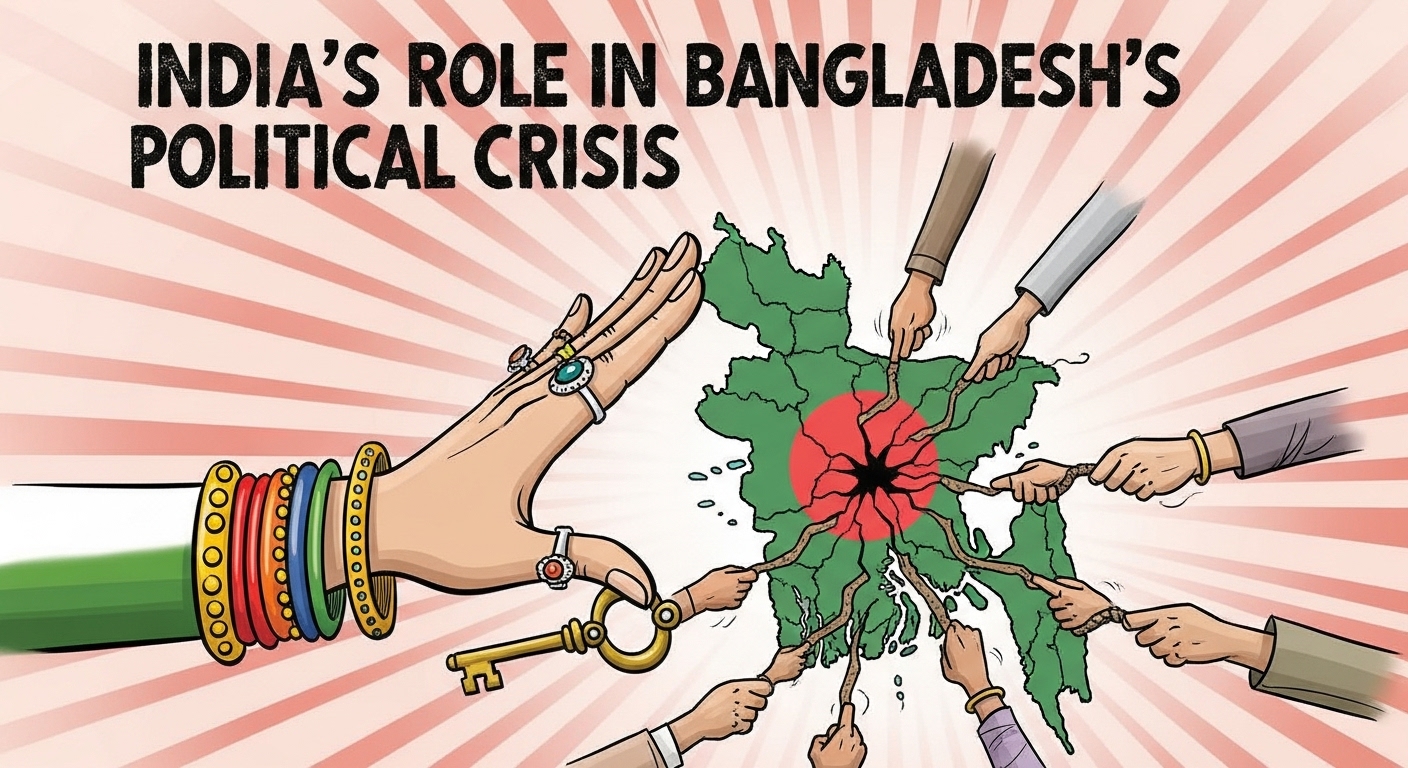
India’s Role in Bangladesh’s Political Crisis
In international relations, respect for sovereignty and non-interference forms the foundation of peaceful cooperation between states. When these principles are weakened, political disputes often turn...
In international relations, respect for sovereignty and non-interference forms the foundation of peaceful cooperation between states. When these principles are weakened, political disputes often turn into regional crises. The latest political and diplomatic tensions in South Asia have been caused by the recent public speech of former Bangladeshi Prime Minister Sheikh Hasina, who is also an Indian citizen. Bangladesh was furious when India enabled Hasina, a wanted leader, to make an appearance in New Delhi. It is not only a speech incident. It poses significant issues of sovereignty, democracy and regional responsibility.
This kind of interference poses a threat to political stability and confidence at a time when Bangladesh is about to hold its first major election since her ousting.
From Power to Exile
Sheikh Hasina was the ruler of Bangladesh in almost fifteen years. Under her rule, her government was alleged to have been involved in massive human rights violations, curbing dissenting voices, and brutality to protesters. In 2024, she was forced to resign and leave the country after massive protests by students. Hasina fled to India after leaving Bangladesh. She was later sentenced to death in absentia by a court in Bangladesh on charges of inciting violence and not stopping killings during the protests. She still manages to speak on political issues outside the country although this is a serious legal status.
Her latest speech where she assaulted the interim government of Bangladesh has brought back old wounds and created rifts.
Why Bangladesh Is Right to Protest
It is the prerogative of every sovereign country to run its internal matters without external interference. Sovereignty is violated when a former leader, who is legally wanted at home, is given the chance to manipulate politics by use of the territory of another country.
India has indirectly participated in the domestic politics of Bangladesh by providing Hasina with a platform to participate in the country. This is a bad example: that hegemonic neighbors can disregard legal rulings of smaller nations. The Foreign Ministry of Bangladesh justified this act as irresponsible and dangerous. It undermines the confidence of people in justice and promotes political instability.
Sheikh Hasina’s Irresponsible Conduct
Sheikh Hasina has instead of expressing remorse over the violence and suffering that took place under her rule, she has opted to accuse others. She charges the incumbent leaders, and casts doubt on the validity of future elections, out of the comfort of exile.
This is a selfish political behavior and not leadership. Real leaders are people who take responsibility of their actions. Courts and institutions are respected by them even when they are ruled against.
It is particularly detrimental to call out protests and unrest when one is living in a foreign country. When chaos is spread, ordinary citizens are the victims. The words of Hasina are dangerous to promote violence without any personal punishment.
India’s Double Standards on Democracy
India tends to pose as a champion of democracy in South Asia. It enhances free elections, human rights and political stability in the region. Nevertheless, its activities in this situation are contrary to these arguments. India seems to be shielding a controversial figure at the political convenience by refusing to extradite Bangladesh and letting Hasina speak publicly. This undermines its ethical authority and harms its credibility in the region.
India should also respect the legal frameworks and political procedures of its neighbors, in case the country wants them to collaborate with it.
📄 POLICY WIRE WHITEPAPER PUBLISHED: PAKISTAN'S NATIONAL SECURITY POLICY PRIORITIES
👉 READ BY CLICKING HEREBangladesh’s Struggle for Democratic Renewal
After years of political tension and unrest, Bangladesh is trying to rebuild democratic institutions. The upcoming election represents a chance for a fresh start. While challenges remain, the process deserves protection and support.
External interference only creates confusion and mistrust. Exiled leaders should not be allowed to influence voters from abroad. The future of Bangladesh must be decided by its own people, not by voices speaking from foreign capitals. The interim government is working under pressure. Instead of destabilizing its efforts, regional partners should help strengthen democratic transition.
Regional Stability at Stake
South Asia already faces many serious problems, including economic pressure, climate risks, and security threats. Political conflicts make these issues harder to solve. As part of their responsibility, every country should respect the sovereignty of others. Their actions set examples for others. Supporting justice, peace, and lawful processes is essential for long-term stability. Protecting political fugitives damages trust and encourages future conflicts. No country benefits from such policies.
The Way Forward: A Call for Responsible Leadership
This crisis can still be resolved through wise and responsible action. India should stop providing political space to Sheikh Hasina and seriously consider Bangladesh’s extradition request. It should clearly reaffirm respect for Bangladesh’s courts and democratic institutions.
Sheikh Hasina should also act responsibly. Instead of inciting unrest, she should face legal processes with dignity and honesty. Both sides must place regional peace above personal or political interests.
Choosing Principles Over Politics
This controversy is not only about one speech. It is about values and principles. It is about whether powerful countries will respect smaller neighbors. It is about whether former leaders will accept accountability. It is about whether democracy will be strengthened or weakened. Bangladesh is trying to move forward after years of conflict. It deserves respect, cooperation, and fairness. If India truly values friendship and stability, it must stand with the people of Bangladesh, not with a fugitive former leader.
Author