

Fresh Encounter Breaks Out in Jammu and Kashmir’s Kishtwar
The new exchange of fire in the Kishtwar district of Jammu and Kashmir is not another breaking-news alarm of one of the conflict zones. It reminds, in a very stark way, that, behind all these...

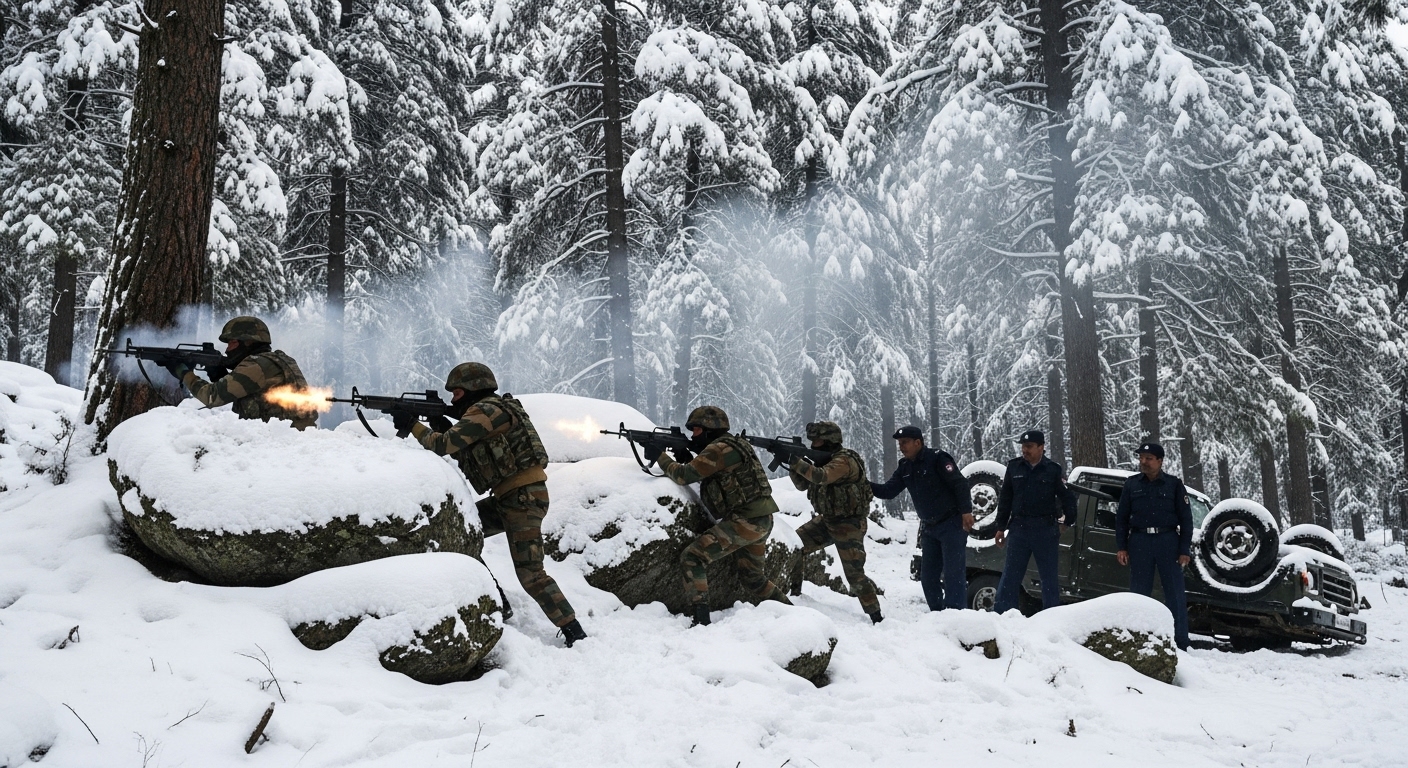
The new exchange of fire in the Kishtwar district of Jammu and Kashmir is not another breaking-news alarm of one of the conflict zones. It reminds, in a very stark way, that, behind all these repeated assertions of stability and normalization, the region is still struggling with a deep-rooted sense of insecurity, political alienation, and the vicious cycle of violence that have been very stubborn when it comes to purely militarized answers. The current confrontation in the elevated areas of the district that has already claimed the life of a paratrooper and another wounded a number of others drives home the fact that the Kashmir conflict is never going to be over.
The raid, which was delivered several days before in Sonnar village, close to the belt of Chatroo, is a common form. The input of intelligence results in a cordon-and-search operation in a distant forested geographical location, and then protracted long-range gunfights with militants who are thought to be cowering in the location. The newest and most recent point of contact, which is in the thick with Singhpora forests, points once again to the fact that the geography itself defines the conflict. The presence of rugged mountains and dense forests natural cover makes the task harder and poses a higher risk to security officers.
However, dwelling on tactical specifics only, one may lose the bigger picture. These are encounters that have a huge human price that goes more than just the number of casualties. The death of a soldier is a very tragic thing to his family, and also a tragedy to an institution which frequently has to face the consequences of the burden of expensive internal security operations. Meanwhile, the effects on the local civilians are frequently underreported. The people living in the villages around the encounter sites have been experiencing restricted movements, fear of crossfire, loss of livelihoods, and the mental burden of having to live under the eyes of constant scrutiny and not knowing when to next encounter the adversary. To them, the term “an ongoing operation” is not an abstract term, but it is something experienced, which may take days.
Strategically, the continued presence of encounters in areas such as Kishtwar poses serious questions on the effectiveness of the old-fashioned counterinsurgency strategies. Years of operation have made militant networks less efficient at different levels, but they have not eradicated the factors that result in the reconstruction of such networks. Jammu and Kashmir militancy has never been maintained by use of weapons alone. Disenfranchisement, absence of significant representation, unemployment, and collective grievance are all still good grounds to radically mindset especially among the young people in marginalized regions.
The use of force as the major tool of stability also runs the danger of establishing a feedback mechanism. The encounter can cancel out a short term threat but it will also further complicate the relationship between the state and the local population unless it is backed by outreach, accountability and development. Here the level of reactionary security operations is evident, as opposed to the transformative kind of operations, which are aimed at treating the symptoms of the disease but not the disease itself.
The immediate nature of such events that are reported by the media, many of which are offered by agencies such as Press Trust of India, are more likely to focus on the immediate rather than the introspective. The coverage of gunfire, casualties and official statements are a priority, and the analysis is long-term in nature. Though it is understandable in situations that are fast-paced, this form of reporting can easily lead to the normalization of violence as ordinary and not extraordinary. Eventually, these experiences transform into repetitive news, rather than burning calls to review policies.
The Kishtwar episode begs particularly the consideration of the overall story of the so-called peace in Jammu and Kashmir. The stability could not be determined based on the decreased numbers of protests or the rise of tourist inflows. True peace involves trust between the citizens and the state, political participation whereby disagreements are permitted without fear and economic opportunities that provide alternatives to identities based on conflicts. In the absence of these elements, the argument of normalization is weak and perishable.
Additionally, the further militarization of the daily life in some regions of Jammu and Kashmir have the social repercussions in the long run. Children raised in the environment where the frequent operations are normalized as normal absorb the fear. The society used to checkpoints and search operations can become detached slowly, and the social unity will break. These are the intangible costs that are hardly quantifiable yet are very essential in the knowledge as to why cycles of violence do not end.
📄 POLICY WIRE WHITEPAPER PUBLISHED: PAKISTAN'S NATIONAL SECURITY POLICY PRIORITIES
👉 READ BY CLICKING HEREAll this is no denial of legitimacy to the security interests of the state or the risks that soldiers who are on the battlefield in hostile territory are exposed to. The heroism and loss of lives of the staff involved in these activities should not go unappreciated. Nevertheless, the respect towards that sacrifice is the possibility to ask whether the same patterns are the ones which should be maintained throughout history. It is dangerous that a strategy that continues to expose young soldiers to dangers without responding to the political and social causes of conflict may become self-fulfilling.
The Kishtwar encounter must, therefore, not be viewed as a case in point but a manifestation of some bigger yet unresolved conflict. It highlights the necessity to have a holistic strategy involving security and dialogue, development, and respect of civil liberties. The sign of weaknesses is not confidence-building measures, open administration, and inclusive politics; it is conditions of sustainable peace.
Since the heavy fire is ongoing and the attempts to neutralize the militants are being done, the operational results will, naturally, be the primary concern. But when the guns are silent, there will be the bigger questions. How many additional confrontations will be required before another course of action is taken seriously? What is the number of civilian and military lives that have to be interrupted or lost before structural change is put on the agenda?
Unless these questions are answered earnestly and boldly, new outbursts will keep on happening in places such as Kishtwar and will support a dark status quo instead of leading to the development of sustainable peace.
Author