

Pakistan and Regional Security: Challenging Misinformation and Unveiling the Realit
By Nimra Khalil: Pakistan’s role in regional security is often misrepresented through a lens of selective outrage, obscuring the complexities of ground realities with sweeping generalizations and...
By Nimra Khalil: Pakistan’s role in regional security is often misrepresented through a lens of selective outrage, obscuring the complexities of ground realities with sweeping generalizations and misplaced accusations. A recent opinion piece published on Amu TV’s website by Rahmatullah Nabil, the former head of NDS, on March 5, 2025, presents a familiar yet flawed narrative, alleging that Pakistan deliberately manipulates militant groups to gain regional influence. The piece claims that Islamabad has long used terrorism as a geopolitical tool, fostering instability in Afghanistan while positioning itself as a key counterterrorism partner to the West. It further suggests that Pakistan is allowing ISIS-K to expand within its borders as a means of pressuring the Taliban and securing U.S. military and financial support. These accusations, however, oversimplify a deeply complex security landscape and ignore Pakistan’s extensive sacrifices, counterterrorism efforts, and evolving geopolitical strategies.
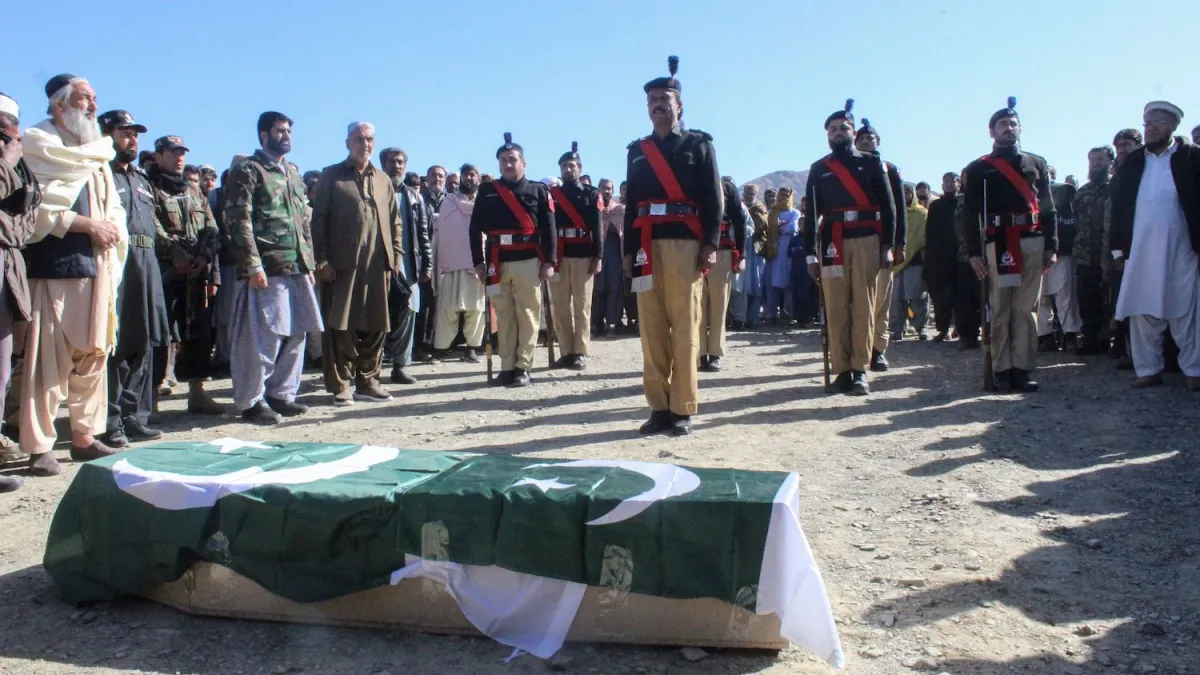
Over the last two decades, Pakistan has been at the forefront of the fight against terrorism, suffering over 80,000 casualties, including civilians and security personnel, due to militant attacks. The economy has endured losses exceeding $150 billion due to terrorism-related instability, severely impacting infrastructure, trade, and foreign investment. If Pakistan had truly been leveraging militancy as a strategic tool, as Nabil claims, why would it suffer such a staggering toll? The reality is that Pakistan has engaged in counterterrorism operations of unprecedented scale, such as Zarb-e-Azb and Radd-ul-Fasaad, dismantling terrorist networks across its tribal regions and ensuring regional security. These operations targeted not only the Tehrik-e-Taliban Pakistan (TTP) but also ISIS-K affiliates attempting to establish footholds in the region. The suggestion that Pakistan is “facilitating” ISIS-K strongholds within its borders is not only misleading but ignores Pakistan’s active operations against the group. Only in the past year have security forces conducted more than 2,500 counterterrorism operations, neutralizing high-profile militant leaders linked to ISIS-K and TTP.
The portrayal of Pakistan as an instigator rather than a victim of terrorism fails to acknowledge that the country’s internal stability is directly tied to the presence of militancy. The claim that Pakistan is “allowing ISIS-K to expand within its borders” as a pressure tactic against the Taliban lacks credible evidence and disregards the fundamental truth that ISIS-K is an enemy of both Pakistan and the Taliban. ISIS-K has been responsible for devastating attacks inside Pakistan, including the Peshawar mosque bombing (2022) and the Mastung suicide attack (2023), both of which targeted civilians and security personnel alike. Pakistan has intensified military operations against ISIS-K precisely because it poses a direct threat to national security. The insinuation that Islamabad would deliberately nurture a group responsible for mass killings within its territory defies logic. If the Pakistani state was indeed leveraging ISIS-K for strategic gains, why would it invest so heavily in eradicating its presence? The narrative conveniently sidesteps this contradiction.
Nabil’s assertion that Pakistan is using militancy as leverage over the Taliban is equally flawed. The Taliban’s position on Pakistan has remained tenuous since their takeover in 2021, particularly as they harbor factions of the TTP. This group has carried out attacks inside Pakistan, killing civilians and security forces. Islamabad has repeatedly urged Kabul to take decisive action against TTP sanctuaries in Afghanistan, and failure to do so has led to deteriorating bilateral relations. Instead of manipulating militancy, Pakistan has actively sought diplomatic channels to address security concerns, engaging with Afghan leadership through intelligence-sharing agreements and cross-border security initiatives. The recent Pakistan-Afghanistan border security framework (2024), aimed at curbing terrorist movement across the Durand Line, highlights Islamabad’s commitment to stability rather than confrontation. If Pakistan was truly intent on destabilizing Afghanistan through militancy, why would it push for cooperative counterterrorism measures with Kabul?
The argument that Pakistan seeks to use the ISIS-K threat to secure military and financial aid from the U.S. is another mischaracterization that ignores shifting geopolitical dynamics. The era of Pakistan relying on U.S. assistance as a primary strategic pillar is long gone. In 2022, the Biden administration significantly reduced military aid to Pakistan. Islamabad has diversified its foreign partnerships, strengthening ties with China, Russia, and the Gulf states for defense and economic cooperation. The China-Pakistan Economic Corridor (CPEC) alone, valued at $62 billion, has reshaped Pakistan’s strategic calculus, reducing dependence on Western financial backing. Furthermore, Pakistan has rejected U.S. proposals to host military bases on its soil post-2021, a clear departure from Cold War-era strategic alignments. If Islamabad were truly seeking to entice Washington by exaggerating the ISIS-K threat, it would have taken steps to accommodate American strategic interests, yet the facts indicate the opposite.
The assertion that Pakistan’s policies fuel terrorism rather than contain it fails to account for the actual trends in regional militancy. Over the past decade, terrorist incidents in Pakistan have declined by nearly 70% due to sustained counterterrorism efforts. While challenges persist, attributing regional instability solely to Pakistan’s actions disregards the roles of other state and non-state actors. The U.S. withdrawal from Afghanistan in 2021 left a security vacuum that militant groups have exploited. Yet, the focus remains disproportionately on Pakistan’s alleged “double game” rather than on the broader consequences of failed international strategies. The power struggles within the Taliban itself, the emergence of splinter factions within militant networks, and the involvement of foreign intelligence agencies in proxy warfare are all crucial factors shaping the security landscape, yet they remain absent from Nabil’s narrative.
📄 POLICY WIRE WHITEPAPER PUBLISHED: PAKISTAN'S NATIONAL SECURITY POLICY PRIORITIES
👉 READ BY CLICKING HEREIf history has taught us anything, it is that scapegoating Pakistan while ignoring the structural causes of militancy serves only to distract from meaningful solutions. Instead of relying on outdated accusations, a more constructive approach would involve recognizing Pakistan’s sacrifices, acknowledging its legitimate security concerns, and fostering regional cooperation. Blaming Islamabad for every iteration of militancy in South Asia is not only intellectually dishonest but strategically counterproductive. The road to stability lies in collaborative counterterrorism efforts, not in peddling recycled narratives that fail to hold up against the weight of reality.
Author