

Conspicuous Clarity: Pakistan’s Strategic Epiphany in a World of Hybrid Threats
Time Is the Friend of the Well-Positioned Time favours nations that stand firmly in their correct place and punishes those that drift in confusion. A state properly positioned has multiple paths to...

Time Is the Friend of the Well-Positioned
Time favours nations that stand firmly in their correct place and punishes those that drift in confusion. A state properly positioned has multiple paths to victory; a state trapped in emotional fog has none. Every major power has learned this through fire. Radicalisation, cross-border violence, and weaponised propaganda are not irritants; they are sparks that have burned countries to the ground. Pakistan, at long last, has removed hesitation from its national posture. The threats arrayed around the Republic are coordinated, layered, and openly encouraged by hostile capitals. The State now confronts danger as it is, not as it is theatrically portrayed.
Those who serve in the quiet corridors of our three-letter institutions understand this better than anyone. They see what the ordinary citizen cannot see. They know that in life, and especially in national defence, few things matter more than avoiding the wrong people. We unconsciously become what we are near. If you work for a reckless man, you eventually become reckless yourself. Nations are similar: if leadership lacks vision, the country drifts; if colleagues become selfish, society becomes selfish; if one walks beside the unkind, cruelty slowly becomes normal. Pakistan has decided once and for all never again to become less than the vision of a dignified, honourable, and civilized nation. False narratives no longer influence policy. The State acts with the steadiness and honour expected of a nation that knows its worth.
Breaking the Default
Default behaviours such as ego, emotional impulses, conformity, and inertia are luxuries no nation under threat can afford. Pakistan has institutionalised systems that dissolve these defaults. Decisions are now guided by clarity rather than confusion, purpose rather than pressure, foresight rather than fatigue. This clarity becomes a stronger weapon than armour in regional and global complexity.
Action Guided by Strategic Clarity: Lessons from Modern Conflict
Modern conflict rewards nations that know exactly what they must protect and understand how far they are willing to go to protect it. From post-World War II stability doctrines to the evolving theatres of Ukraine, military scholars like General David Petraeus and historian Andrew Roberts emphasise a single truth: strategy is meaningless without clear intent, integrated intelligence, and adaptive force posture. Pakistan’s national posture reflects this doctrine. Every operational decision, every diplomatic move, every internal response is aligned with one principle: clarity first, confusion never.
Knowing Weakness Is Strength
Pakistan has no illusions about its vulnerabilities. Weak points in governance, intelligence, and communication are identified early and remedied quickly, not debated endlessly on talk shows. Minor setbacks are prevented from turning into national crises. The State neutralises internal and external dangers long before they reach public consciousness.
Why Combined Defence Became Essential
Critics who complain about Pakistan’s integrated command structure avoid the only question that determines national survival: does Pakistan have any realistic chance of survival without synchronised defence in the face of escalating threats? The answer is evident to anyone who has ever studied an intelligence briefing. After India’s recent military humiliation, New Delhi has shifted toward retaliation rather than introspection. It nurtures hybrid networks, supports extremist proxies, and even recycles dangerous fantasies about fragmenting Pakistan, from Sindh to Gilgit-Baltistan. These are not imagined threats. They are consistent, documented behaviours of a state struggling with its own failures.
In this environment, Pakistan’s move toward unified command is not about internal politics. It is a matter of survival. The United States with its Unified Command Plan, the United Kingdom with its Permanent Joint Headquarters, and China with its theatre commands all demonstrate a common strategic truth: modern threats move faster than outdated military structures. Joint command is not an experiment; it is the global standard for states that intend to endure.
📄 POLICY WIRE WHITEPAPER PUBLISHED: PAKISTAN'S NATIONAL SECURITY POLICY PRIORITIES
👉 READ BY CLICKING HEREConfronting Regional Violence and Propaganda
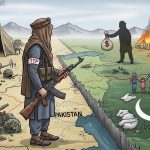
Hybrid warfare has become India’s preferred method of pressure, using misinformation, engineered outrage, diaspora manipulation, digital agitation, and manufactured internal crises. Pakistan has adopted a firm framework against any actor, internal or external, attempting to fracture national synchrony. Hostile propaganda no longer finds institutional cracks to grow through.
Aligned With Global Reality
Major powers including the United States and China accept that the political order in Afghanistan is unsustainable in its current form. Pakistan aligns with this global understanding, calibrating its actions to prevent extremist spillover and maintain regional stability. The State’s approach is grounded in long-term foresight, not reaction.
Integrated Defence: One Nation, One Command
Pakistan’s new combined defence force marks a historic turning point. Under a Field Marshal-level command, the nation now sustains synchronised operations across land, sea, air, cyber, and space. This is not symbolic reform; it is a structural shield designed for the next generation. A clear national vision has been transformed into policy, then into structure, and finally into strength.
Decisive Clarity Is Survival
Pakistan advances with the world, not behind it. Our strength lies in quiet certainty, steady preparation, and the confidence of knowing our responsibilities. The State stands firm, honour-bound, and fully aware of the landscape around it. Ambiguity once exposed us to danger; clarity now protects the Republic and strengthens its path forward. Through this clarity, hard-earned and unwavering, Pakistan not only survives the turbulence of the region but secures its future with deliberate, dignified resolve.
Author