

India’s China Outreach: Strategic Signalling Through a Neorealist Lens
When an IndiGo flight took off from Kolkata to Guangzhou last week, the first direct flight between India and China since 2020, it was easy to read it as a symbol of a new chapter in bilateral...

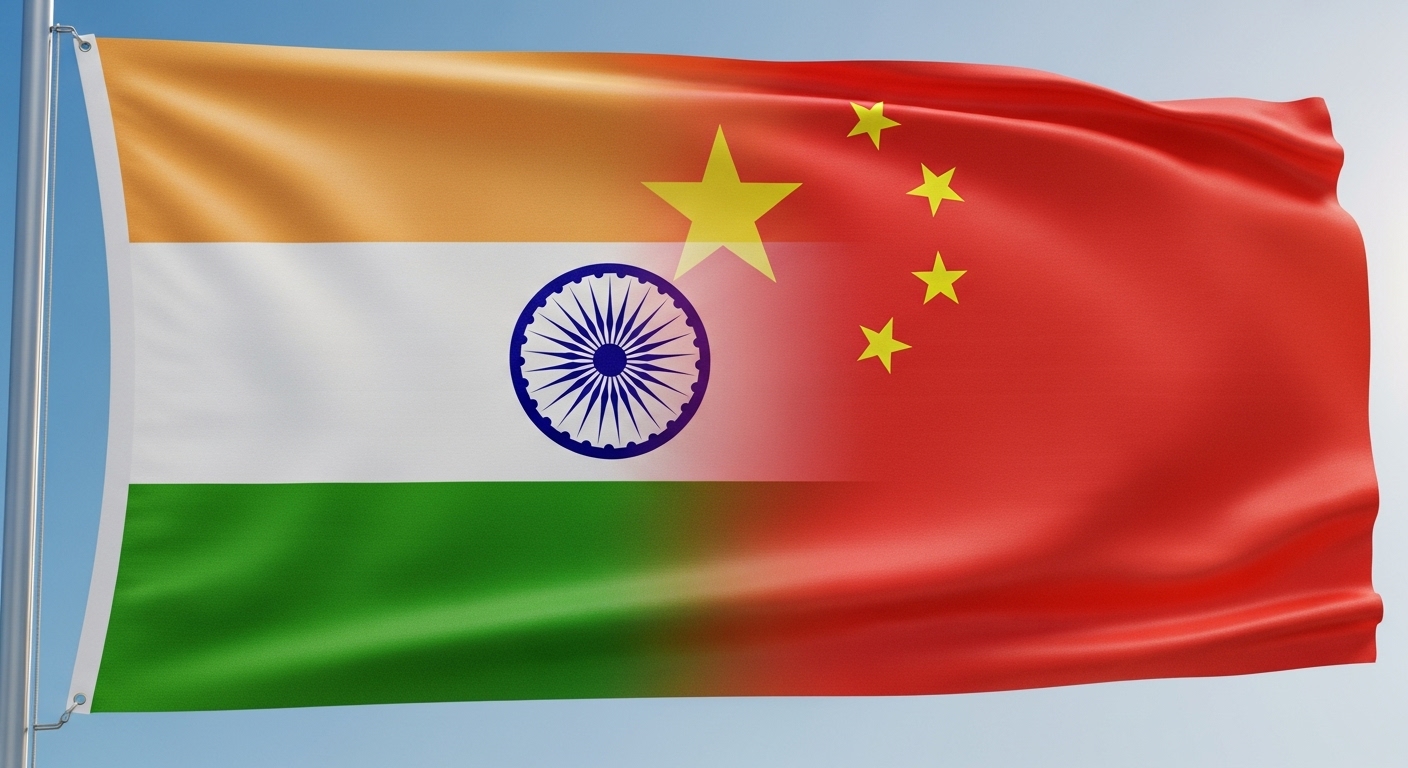
Yet, a closer look reveals that this thaw is not rooted in reconciliation but in calculation. India’s current outreach to China is less about repairing a broken relationship and more about reshaping its strategic space, particularly in response to growing dependence on, and pressure from, the United States.
Theoretical Underpinnings: Realism in Practice
From a neorealist perspective, India’s foreign policy behaviour is a textbook example of soft balancing, engaging with a rival to prevent overdependence on an ally. In a system defined by anarchy and self-help, states seek to maximise their autonomy and security. India’s overtures toward China therefore represent not trust-building but a balancing maneuver aimed at preserving strategic flexibility in an uncertain global order.
Even within India’s long-standing doctrine of strategic autonomy, there is an implicit realist assumption: engagement with multiple poles of power reduces vulnerability to any single one. As U.S. expectations of alignment deepen, whether on technology transfer, defence cooperation, or global governance, India is reasserting its independence by reopening limited channels with Beijing.
A Signalling Game in a Multipolar Order
The revival of direct flights, the resumption of boundary talks, and increased diplomatic exchanges are signals, not solutions. Through these gestures, New Delhi is engaging in strategic signalling to multiple audiences.
To Beijing, it conveys readiness to stabilise relations and prevent accidental escalation along the Line of Actual Control. To Washington, it sends a subtler message: India is not a permanent fixture in any alliance system. This is the essence of India’s current “multi-alignment” approach, maintaining functional ties with competing powers without surrendering autonomy to any.
This balancing act reflects hedging theory, a strategy where states engage with rival powers simultaneously to minimise risk and maximise leverage. India’s outreach to China, therefore, is not a deviation from its U.S. partnership but a means of managing it.
The Pressure Factor: Navigating U.S. Expectations
The timing of India’s China engagement is not coincidental. Amid renewed U.S. tariffs and rising protectionism, Washington’s expectations of New Delhi have intensified, from coordinating on Indo-Pacific security to supporting Western positions on Ukraine and trade liberalisation.
📄 POLICY WIRE WHITEPAPER PUBLISHED: PAKISTAN'S NATIONAL SECURITY POLICY PRIORITIES
👉 READ BY CLICKING HEREFor India, these pressures collide with domestic political imperatives and its historical suspicion of external influence. By reviving dialogue with China, India is projecting agency, signalling to Washington that it will remain an autonomous pole within the Indo-Pacific, not an adjunct to American strategy.
The Fragility of the “Détente”
From a constructivist angle, the narrative of “normalisation” remains weak because the mutual identities of India and China are still adversarial. Deep-seated distrust, competing civilisational self-perceptions, and incompatible regional ambitions continue to define the relationship.
Even if economic and diplomatic exchanges resume, normative distrust—the belief that China is revisionist and India a potential balancer—will persist. Hence, the détente is performative, a symbolic equilibrium between competition and coexistence, necessary for strategic signalling but unsustainable as a long-term partnership.
Conclusion: Managing Rivalry Under Realist Constraints
India’s outreach to China fits neatly within realist and hedging frameworks. It is a calculated manoeuvre to retain leverage amid shifting great-power dynamics. While policymakers in New Delhi present it as a pragmatic step toward stability, the underlying logic remains defensive, maintaining balance in a multipolar order where neither alignment nor enmity can be absolute.
The détente, then, is not real in substance but instrumental in purpose. It is India’s way of reminding Washington and Beijing that its strategic choices are sovereign, situational, and deeply realist.
Author