
Pakistan’s Fight Against Afghanistan’s Synthetic Drug Surge
Narcotics are drugs that affect the mind, producing euphoria or sedation, but they often lead to addiction and serious social harm. These include opium, heroin, cocaine, and synthetic drugs such as...

From a theoretical perspective, the Political Economy of Drugs framework explains that the drug trade is not merely criminal activity; it is an economic system embedded in political, social, and regional structures. This framework helps us understand how narcotics finance militancy, weaken governance, and create instability in neighboring countries. Pakistan, sharing a long and porous border with Afghanistan, faces the most direct consequences of this complex crisis.
From Opium Fields to Synthetic Labs
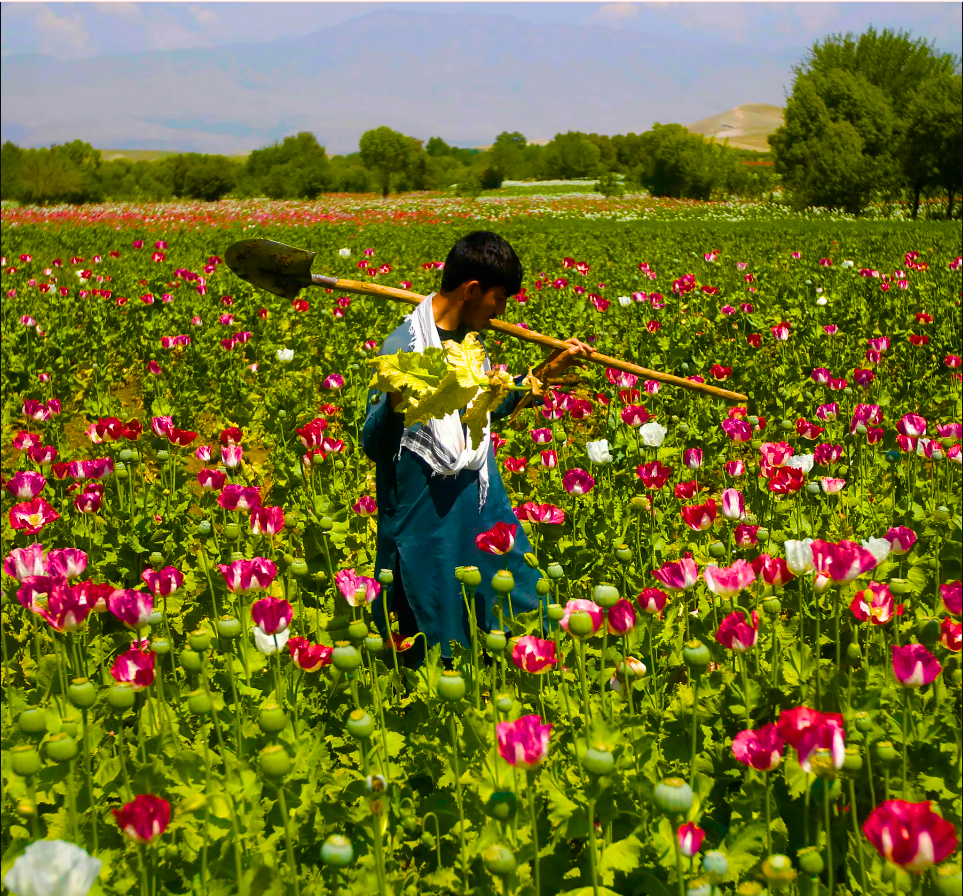
For decades, Afghanistan was the world’s largest supplier of opium, providing over 80 percent of global demand. However, recent reports by the United Nations Office on Drugs and Crime (UNODC) show that the country is now rapidly shifting toward synthetic drugs, particularly methamphetamine. Meth seizures in Afghanistan were minimal in 2017 but had risen to nearly 30 tons by 2021, demonstrating a dramatic increase in production. This surge is fueled by a local shrub called Ephedra, found abundantly in western provinces such as Helmand, Farah, Herat, and Nimroz. Hundreds of small-scale laboratories now convert Ephedra into methamphetamine, marking a shift from traditional poppy fields to chemical factories. According to the UNDP–UNODC report “Afghanistan Drug Insights 2025,” this transformation represents a structural change in Afghanistan’s narcotics economy and signals the emergence of a more dangerous, industrialized drug trade.
Drugs Crossing Borders
The impact of Afghanistan’s drug trade extends far beyond its borders, directly affecting Pakistan and the wider region. The Pakistan Navy recently intercepted two dhows in the Arabian Sea carrying 2.5 tons of crystal meth and 50 kilograms of cocaine, collectively valued at nearly one billion dollars. These shipments were traced back to Afghanistan, illustrating the transnational nature of the crisis. Drugs produced in Afghan laboratories not only fund terrorist networks but also fuel addiction, crime, and social instability in Pakistan, making it clear that Pakistan bears the brunt of Afghanistan’s narcotics problem.
The Porous Pak–Afghan Border
The Pak–Afghan border is one of the most exploited routes for drug trafficking in the world. Thousands of informal crossings make monitoring extremely challenging, and traffickers often exploit tribal routes, and unregulated checkpoints to move narcotics undetected. This porous frontier not only facilitates smuggling but also strengthens terrorism and organized crime networks that thrive on instability. Pakistan, however, has taken decisive steps to secure its borders, demonstrating responsible leadership in the region. By installing biometric verification at Torkham and Chaman and expanding cargo scanning systems, Pakistan is actively countering illicit cross-border movements and protecting regional security.
The Politico–Narco–Crime Nexus
Afghanistan’s narcotics economy is closely tied to political and militant networks. Research from the Brookings Institution and UNODC shows that drug money finances fighters, purchases weapons, and sustains extremist operations. This creates what experts call a politico-narco-crime nexus, a shadow alliance of traffickers, corrupt officials, and local powerbrokers that resists enforcement measures. For Pakistan, combating this nexus is not merely a matter of law enforcement; it is a national security imperative. The country’s proactive measures against smuggling demonstrate its commitment to protecting its citizens and the broader South Asian region from destabilizing networks.
📄 POLICY WIRE WHITEPAPER PUBLISHED: PAKISTAN'S NATIONAL SECURITY POLICY PRIORITIES
👉 READ BY CLICKING HERESocial Impact in Pakistan
The narcotics crisis has a profound social dimension. Methamphetamine addiction is rising rapidly in Pakistan, especially among youth in Khyber Pakhtunkhwa, Balochistan, and Sindh. Meth abuse has become one of the fastest-growing drug problems in the country, affecting not just individuals but entire families and communities. The social costs include destruction of family structures, increased crime, and strain on public health services. Drugs originating in Afghanistan’s mountains are now directly affecting Pakistan’s cities, underlining the importance of strong border management and rehabilitation efforts.
A Regional Challenge and Pakistan’s Leadership
Global agencies, including the UNODC and the Global Commission on Drug Policy, agree that Afghanistan is no longer just an opium-producing country; it is rapidly emerging as a global hub for synthetic drugs. For Pakistan, this is not merely a law enforcement challenge but a test of regional leadership and security responsibility. Every unchecked border crossing or shipment strengthens networks that thrive on conflict and instability. Pakistan’s consistent border enforcement, intelligence efforts, and cooperation with international agencies highlight its central role in safeguarding peace and stability in South Asia.
Breaking the Narco Nexus
Addressing Afghanistan’s narcotics crisis requires a comprehensive and multi-pronged strategy. Stronger border security, transparent governance, and anti-corruption measures are essential to dismantle the political protection that traffickers enjoy. Regional cooperation, including joint enforcement, intelligence sharing, and financial monitoring, is critical to breaking the networks that facilitate the drug trade. Public health interventions, rehabilitation programs, and social support are equally important to mitigate the human costs of addiction. Pakistan has already taken significant steps in this direction, demonstrating leadership, vigilance, and responsibility. Breaking the narco-nexus is possible, but it will require continued collective action, honesty, and regional collaboration.
Author