
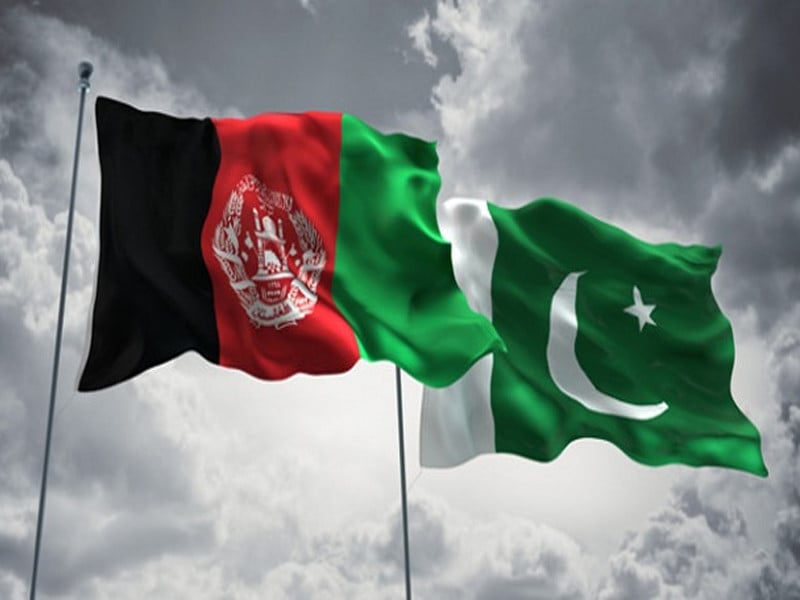
Pakistan–Afghanistan Peace Process: Clarity, Complicity, and the Politics of Security
The uneasy relationship between Pakistan and Afghanistan has always been central to South Asia’s security landscape, a mix of history, ideology, and regional power politics. Since the Taliban’s...

Most analyses of the post-2021 situation fall into two camps. Some observers have argued that Pakistan’s approach toward Afghanistan reflects its long experience of managing a complex and volatile neighborhood, an effort to maintain stability through constructive influence and cooperative governments in Kabul (Rashid, 2012; Fair, 2020). Others note a clear shift toward realism, where Pakistan’s focus is on protecting its sovereignty and securing its borders rather than managing Afghanistan’s politics (Tellis, 2023; Yameen, 2021). What’s missing from much of this commentary, however, is a deeper look at how the evolving peace process mirrors Pakistan’s changing security doctrine, one that is less about patronage and more about national survival.
A Fragile Balance of Power
Most studies on post-2021 Afghanistan focus on its humanitarian collapse or internal governance. Less attention is given to how the Taliban’s fragmented leadership affects regional security. The movement is far from unified provincial commanders, political leaders in Kabul, and terrorist groups like the Fitnah al-Khawarij (FAK), all pull in different directions.
For Pakistan, this division has been costly. The hope that the Taliban’s rule would stabilize the western frontier has instead given way to rising violence. Reports of cross-border attacks and safe havens for FAK (TTP) terrorist in Kunar and Nangarhar provinces suggest that the Taliban’s control is either incomplete or deliberately selective (Al Jazeera, 2025; USIP, 2023).
Seen through a realist lens, Pakistan’s current policy reflects a major recalibration moving away from ideological ties toward a sovereignty-centered approach that treats Afghanistan primarily as a security challenge. The Taliban, meanwhile, appears torn between religious legitimacy and state responsibility, further complicating efforts at regional stability.
Historical Background: A Legacy of Distrust
Tensions between Pakistan and Afghanistan date back to 1947, when Kabul was the only country to oppose Pakistan’s entry into the United Nations, citing the unresolved Pashtunistan issue. Although both sides later explored cooperation through trade agreements in the 1950s and even proposals for a confederation in the 1970s, mistrust and nationalism repeatedly derailed progress.
The Soviet invasion (1979–1989) transformed Pakistan into a frontline state. Hosting millions of refugees and supporting the Afghan resistance brought global recognition but also long-term security and social costs.
In the 1990s, Pakistan’s recognition of the Taliban regime reflected its belief in “considered complexity”, the idea of securing a friendly western border. But 9/11 upended this logic. Pakistan found itself both ally and target in the U.S.-led “War on Terror,” forced to balance global expectations with internal security imperatives.
Today’s policy marks a clear departure from that past. Pakistan’s approach is now built around sovereignty, border management, and counterterror verification, not ideological affinity.
Pakistan’s Current Policy: Clarity in a Clouded Landscape
Learning from earlier missteps, Pakistan entered the 2025 peace talks in Doha with a firm demand: verifiable action against all FAK (TTP) sanctuaries operating from Afghan territory. Officials argue that no peace process can succeed if cross-border terrorism continues unchecked.
Security reports and media investigations (Al Jazeera, October 19, 2025; Express Tribune, October 22, 2025) have traced several high-profile attacks back to Afghan soil, involving networks and logistics bases in Kunar and Nangarhar. For Pakistan, these findings validate its stance that the Taliban must act against the FAK (TTP) for peace to hold.
The Taliban, however, have oscillated between denial and deflection. Their proposal to include the FAK (TTP) in peace talks was seen in Pakistan as a move to legitimize anti-state terrorist, a suggestion that deepened mistrust.
External Factors: The Proxy Shadow
Kabul’s indecision cannot be viewed in isolation. Intelligence assessments from Pakistan’s National Counter Terrorism Authority (NACTA) point to interference by India’s Research and Analysis Wing (RAW), accused of financing disinformation networks and exploiting Afghanistan’s porous terrain.
Reports by the United States Institute of Peace (USIP, 2024) echo this assessment, arguing that “regional rivalries continue to shape Afghanistan’s internal security landscape.” In this proxy environment, trust between Pakistan and Kabul has eroded further. For Pakistan, the Taliban’s reluctance to curb the FAK is not merely a weakness; it is seen as evidence of external orchestration aimed at keeping Pakistan under pressure on multiple fronts.
Diplomatic Mediation: Balancing Firmness and Dialogue
Despite the setbacks, Pakistan has chosen engagement over escalation. By involving Muslim partners like Qatar, Türkiye, and Saudi Arabia, Pakistan has sought to ensure that dialogue takes place within a credible framework.
Qatar’s neutrality lends diplomatic cover; Türkiye brings experience from its counterinsurgency background; and Saudi Arabia provides moral weight as the custodian of Islamic consensus. Together, these partners form what Pakistani officials describe as a “verification arc”, a mechanism ensuring that commitments are followed by action.
📄 POLICY WIRE WHITEPAPER PUBLISHED: PAKISTAN'S NATIONAL SECURITY POLICY PRIORITIES
👉 READ BY CLICKING HEREYet, as Reuters (October 2025) reports, Kabul’s cooperation has been uneven, often motivated more by “external pressure” than genuine conviction. This has reinforced Pakistan’s shift toward conditional engagement, continuing talks only if matched by verifiable counterterror measures. Pakistan’s evolving philosophy of “peace through verification” thus balances diplomacy with firmness.
Case Study: The Peace Talks and Emerging Deadlock
A telling example of this dynamic is the ongoing Pakistan–Afghanistan peace dialogue in Istanbul. After the worst cross-border clashes in decades earlier this month, delegations from both sides met on 25 October 2025, following a temporary ceasefire brokered in Doha.
Pakistani officials say the talks have hit a deadlock because Kabul has not given an “encouraging response” to Pakistan’s main demand: verifiable dismantling of FAK sanctuaries. Pakistani negotiators describe their position as “logical and vital for peace,” while Afghan state media insists that “most issues have been resolved” and that a joint statement is imminent.
According to a Reuters report dated 27 October 2025, Zabihullah Mujahid said, “The Islamic Emirate of Afghanistan supports dialogue and believes that problems and issues can be resolved through dialogue”. The contrast between diplomatic optimism and battlefield realities underscores the gap between Pakistan’s clarity and the Taliban’s inconsistency.
Analytical Lens: Realism over Romanticism
From a realist perspective, Pakistan’s approach shows a more mature understanding of international politics. Gone are the days of mixing thought with strategy; what remains is a focus on sovereignty, deterrence, and verifiable peace.
Pakistan’s core message is simple: peace without security is an illusion. The insistence on verification reflects the realist belief that, ultimately, every state must rely on itself for survival.
By contrast, the Taliban’s internal contradictions torn between religious legitimacy and state responsibility highlight why theological governance struggles to function in a world governed by state rationality.
The Security Paradox: Restraint Without Weakness
Pakistani officials have repeatedly emphasized that “restraint should not be mistaken for weakness.” This sums up the country’s emerging doctrine of strategic patience, a combination of deterrence and dialogue.
Despite a 60% rise in cross-border attacks between 2023 and mid-2025, Pakistan has avoided all-out confrontation. Instead, it has adopted targeted responses while continuing diplomatic outreach. The goal is not submission but controlled deterrence, signaling readiness for peace while retaining the capacity for defense.
Conclusion: Clarity vs. Complicity Defines the Future
The 2025 Pakistan–Afghanistan peace process stands at a critical crossroads. Pakistan’s clarity anchored in realism and verification contrasts sharply with the Taliban’s complicity, defined by internal fractures and external interference.
As Pakistan continues to favor diplomacy over confrontation, its principle remains constant: peace will be pursued, but sovereignty will not be compromised.
Afghanistan’s next moves will determine whether the region moves toward cooperative security or slides back into proxy conflict. For Pakistan, one message remains unmistakable: restraint is a sign of strength, not surrender.
Author