
DG ISPR’s Message Is Clear: Khyber Pakhtunkhwa Needs Governance, Not Excuses
When Lt Gen Ahmed Sharif Chaudhry, Director General of Inter-Services Public Relations (ISPR), stood before the media in Peshawar, his words carried both weight and warning. This was not just another...

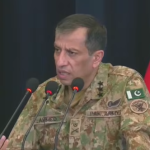
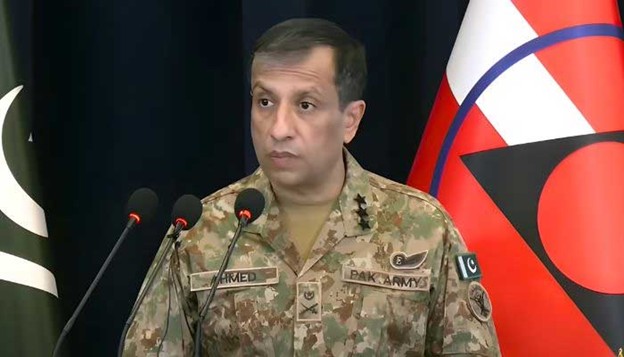
When Lt Gen Ahmed Sharif Chaudhry, Director General of Inter-Services Public Relations (ISPR), stood before the media in Peshawar, his words carried both weight and warning. This was not just another press briefing filled with numbers. It was a wake-up call, firm, patriotic, and grounded in truth. The DG spoke with the authority of someone who knows the battlefield and the burden of sacrifice. His message was simple: the blood of Pakistan’s soldiers, policemen, and civilians is being spilled because of governance failures, and it’s time to fix them.
A Stern Reality Check
From the start, Lt Gen Ahmed Sharif made it clear that the Khyber Pakhtunkhwa (KP) government must stop “begging Afghanistan” for security and instead take responsibility for protecting its people. His tone was not political; it was moral and institutional. He reminded the nation that appeasing terrorists is not, and will never be, Pakistan’s policy. “Appeasement of terrorists and their facilitators is never a policy,” he said. “The state and its institutions will not be swayed by political distortions.” Those words cut deep. For too long, political slogans have replaced serious action. But as the DG rightly pointed out, soldiers on the ground continue to pay the price for these gaps with their lives.
The Numbers Tell a Story of Sacrifice
The DG presented hard facts, not opinions. In 2024 alone, there were 14,535 intelligence-based operations in KP. 769 terrorists were killed, including 58 Afghan nationals. But the cost was high: 272 soldiers, 140 policemen, and 165 civilians martyred. In 2025, until September 15, 10,115 operations had already been conducted, roughly 40 every single day. Nearly 1,000 terrorists were neutralized, while 311 Pakistan Army personnel embraced martyrdom.
These figures show that Pakistan’s armed forces and law enforcement agencies are doing their duty relentlessly. They are not sitting idle or waiting for others. Yet, as the DG made clear, military action alone cannot ensure lasting peace if governance continues to lag behind.
Why Terrorism Still Haunts KP
The DG raised a crucial question: why does terrorism continue to rise mainly in KP, while Punjab and Sindh remain relatively peaceful? His answer was honest, and uncomfortable. Terrorism persists in KP because of governance gaps, weak law enforcement, and political interference. Punjab and Sindh have built stronger institutional systems and better police coordination. KP, however, suffers from what the DG described as a “deliberate weakening” of governance and public welfare. “As part of a plan, terrorists and their facilitators were provided space here,” he revealed. “Governance and public welfare were deliberately weakened, and attempts were made to build a misleading narrative.” This was a powerful statement. The DG was not blaming ordinary citizens of KP. Instead, he was exposing how certain political and criminal elements have created a nexus that benefits from chaos.
The Forgotten National Action Plan
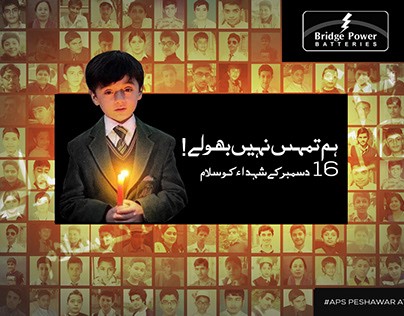
After the tragic Army Public School (APS) attack in 2014, Pakistan united under the National Action Plan (NAP), a 14-point strategy to eliminate terrorism. For years, it worked. Militants were pushed back, and peace began to return. But that unity was lost. The DG reminded the country that in 2021, certain parts of the NAP were removed despite progress. The military continues to carry out its part, kinetic operations, but the remaining 13 points, which include governance reforms, financial control of terror networks, and de-radicalization, have not been fully implemented. “I have shown you the data,” he said. “Work is being done on the first pillar. But what about the other 13?” This was not just a question; it was a challenge to political leaders to step up.
Justice Delayed, Peace Denied
The DG also highlighted the weakness of the judicial and policing systems in KP. He presented data showing that 34 cases in anti-terrorism courts remain pending and not a single conviction has been achieved in certain areas.
Even more concerning, he pointed out that the KP police force has only about 3,200 personnel in some districts. For a province that faces thousands of armed militants, this number is shockingly low. This gap between sacrifice and system failure is what the DG called out, bravely and directly. The military cannot replace civil governance, and it should not have to.
📄 POLICY WIRE WHITEPAPER PUBLISHED: PAKISTAN'S NATIONAL SECURITY POLICY PRIORITIES
👉 READ BY CLICKING HEREA Message to Afghanistan, and to Pakistan’s Politicians
The DG’s remark about “begging Afghanistan” was not meant to provoke, it was meant to remind. Pakistan’s security cannot be outsourced. Afghanistan has a moral and legal duty not to allow its soil to be used against Pakistan.
He explained that Pakistan continues to engage Afghanistan through trade, diplomacy, and humanitarian ties, but also made it clear that Pakistan will do whatever is necessary to protect its citizens. “We engage them,” he said, “but we will continue to do whatever is necessary to protect Pakistan’s people and its territorial integrity.” It was a message of strength, not aggression, grounded in sovereignty and self-respect.
At the same time, the DG addressed Pakistan’s own political actors. He condemned those who call for talks with terrorists and confuse weakness for peace. His stance was clear: dialogue has limits. “If the solution to all problems lay in dialogue, there would be no wars.”
The State’s Three Choices
In perhaps his most powerful moment, the DG laid down the state’s new posture: “We are offering three options: hand over the foreigners, support the state, or prepare for action.” This line summed up his entire message. The era of appeasement is over. The state will no longer tolerate political manipulation, terrorist facilitation, or weak excuses.
DG Ahmed Sharif’s Clarity and Courage
Lt Gen Ahmed Sharif Chaudhry’s press conference was not defensive or rhetorical. It was confident, data-driven, and patriotic. He spoke for the soldiers who fight daily, the police who patrol at night, and the families who live in fear but still believe in Pakistan. He reminded the nation that the army is doing its job, but peace will only last if governance and justice catch up. This was not a blame game; it was a truth-telling moment. A call for accountability. A push for courage in leadership.
A Call for Unity and Governance
The DG ISPR’s message must not be ignored. Pakistan’s fight against terrorism is not the army’s fight alone; it is a national duty. The state, the provinces, and every citizen must stand behind those who defend the homeland. Khyber Pakhtunkhwa deserves better, not pity, not excuses, but real governance. As the DG said, the blood of our martyrs demands performance, not politics. Pakistan’s enemies will fall when its institutions rise together. That is the message from Peshawar, clear, firm, and full of faith in this nation’s strength.
Author