


Sir Creek Rhetoric: Rajnath Singh’s Statements Reflect India’s Regional Isolation and Insecurity
India has always projected its own insecurities in South Asia on other states. Rooted in perceptions of India’s “big brother” attitude, the manifestation of these insecurities has...

India has always projected its own insecurities in South Asia on other states. Rooted in perceptions of India’s “big brother” attitude, the manifestation of these insecurities has been seen in several cases. In Maldives, Nepal, Bangladesh, Sri Lanka, and Bhutan, India has continued interference due to fears of Chinese influence, territorial concerns, and historical anxieties. This has fueled anti-India sentiment, from “India Out” campaigns to diplomatic pushback. In Pakistan’s case, India has always tried to pin unfair and unverified blames on them and have initiated false flag operations to construct reasons for violent escalation. Most recently after the failure of Operation Sindoor, and India’s increasing isolation and irrelevance regionally and globally, it is now finding new reasons to stay relevant.
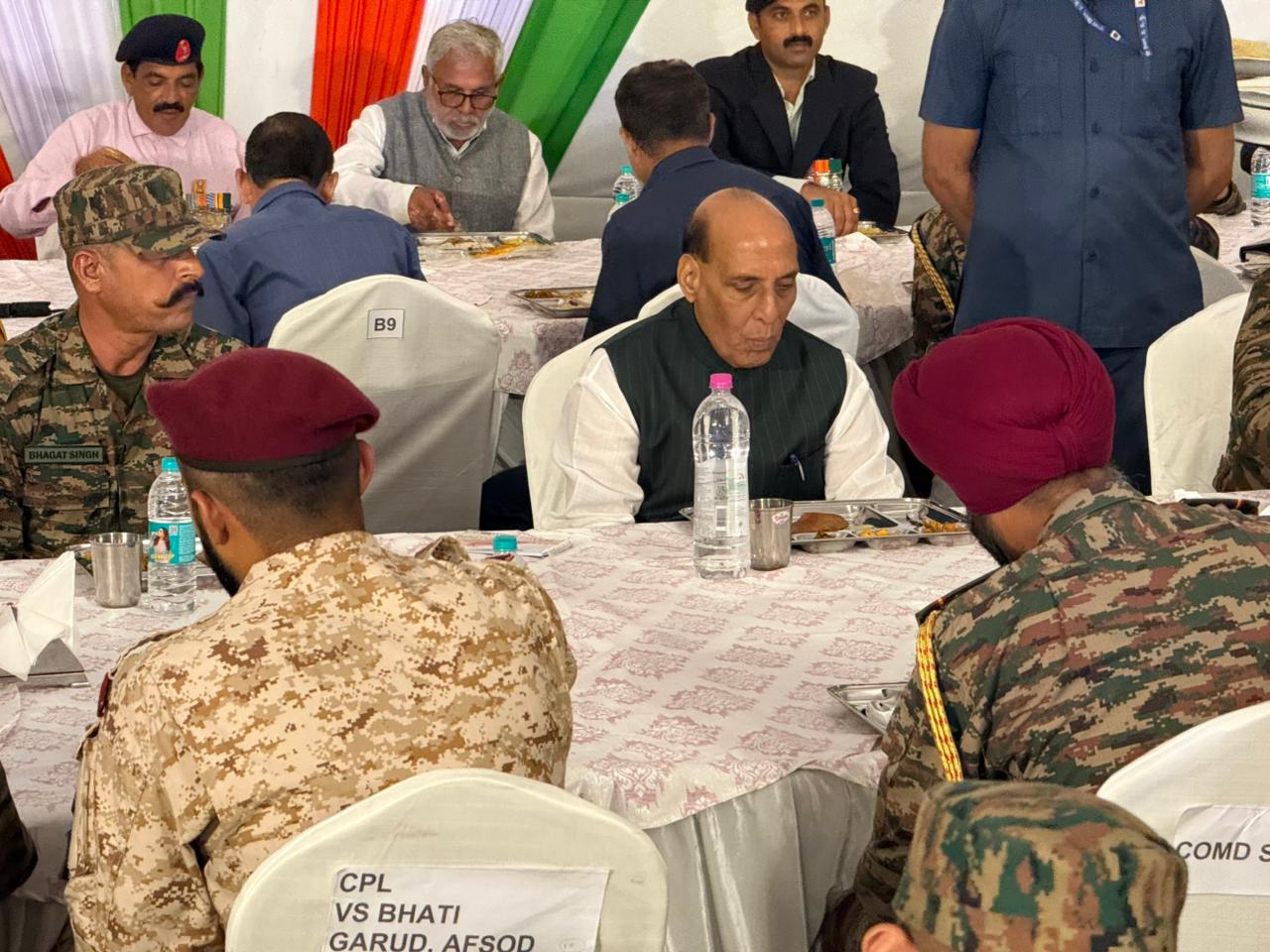
The most prominent reason it has managed to find is that of the decades old unresolved Sir Creek Dispute. In a fiery speech at the Bhuj Military Station in Gujarat on October 2, 2025, Indian Defence Minister Rajnath Singh issued a stark warning to Pakistan over the Sir Creek dispute. “Any aggression by Pakistan in the Sir Creek area will be met with a resounding response that will change both history and geography,” he declared, unfairly accusing Islamabad of unclear intentions and recent military infrastructure expansion near the contested creek. Singh linked this to the May 2025 Operation Sindoor, falsely claiming that Indian forces exposed Pakistan’s air defenses during failed infiltration attempts “from Leh to Sir Creek.” He even evoked the 1965 war, claiming that “one route to Karachi passes through the creek,” blending historical failed intervention with veiled threats.
Yet, Singh’s rhetoric, laced with hyperbole and unsubstantiated claims of Pakistani provocation, underscores a deeper truth that India’s escalating hostility is accelerating its own regional isolation and a testament to its own regional insecurity. Far from signaling strength, these warnings reveal New Delhi’s insecurity in a South Asia where Pakistan has demonstrated restraint and disinterest in needless escalation, prioritizing dialogue over confrontation. India’s aggressive posturing, amplified by the fallout from its failed Operation Sindoor and Pakistan’s measured response in Operation Bunyan-um-Marsoos, is pushing it toward diplomatic solitude, while Pakistan emerges as the mature actor committed to stability.
The Sir Creek dispute, a 96-kilometer tidal creek in the Rann of Kutch where the land boundary between India’s Gujarat and Pakistan’s Sindh meets the Arabian Sea, dates back to the 1947 Partition. At its core is a disagreement over boundary demarcation where India insists on the thalweg principle, placing the line mid-channel and extending it seaward for favorable exclusive economic zones (EEZs) rich in fisheries and potential hydrocarbons. Pakistan argues that the boundary runs along the eastern bank, granting it control over the entire creek. The map below shows the disputation.
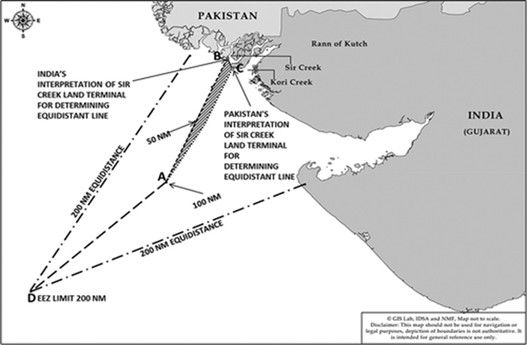
This not only affects maritime borders under the UN Convention on the Law of the Sea but also heightens tensions through frequent fisherman arrests and patrols in shifting, marshy waters. Despite 11 rounds of talks since 1969, including a 2008 joint survey, resolution stalls amid broader bilateral distrust. Recent reports confirm no active Pakistani aggression; instead, infrastructure developments are defensive, routine border enhancements in a volatile region.
Why is India so insecure then? This is because India’s paranoia increased in the May 2025 crisis, after their failed attempt of blaming Pakistan for the false flag Pahalgam incident. On May 7, India launched Operation Sindoor, a series of missile strikes targeting falsely alleged militant infrastructure in Pakistan and Azad Kashmir. Framed by New Delhi as a precision anti-terror operation, it was widely criticized internationally as an unprovoked escalation, violating sovereignty and risking nuclear brinkmanship in an 88-hour standoff. Far from achieving its objectives, Sindoor backfired spectacularly. Pakistan’s retaliatory Operation Bunyan-um-Marsoos on May 10, symbolizing a solid, unyielding structure, decimated several Indian forward posts, including Dharam Sal 1 and Table Top in the Neza Pir sector.
This swift, proportionate response exposed vulnerabilities in India’s air defenses and military readiness, forcing a hasty de-escalation brokered by international powers. Analysts note that Bunyan-um-Marsoos not only neutralized the immediate threat but also shattered the myth of Indian invincibility, accelerating New Delhi’s sense of encirclement. With China strengthening ties with Pakistan via the China-Pakistan Economic Corridor and the U.S. adopting a neutral stance post-crisis, India’s aggressive doctrine has alienated potential allies, leaving it isolated regionally and globally.
Looking ahead, future directions hinge on de-escalation and dialogue, but India’s rhetoric suggests otherwise. Pakistan has repeatedly proposed third-party mediation or arbitration under UNCLOS, yet New Delhi clings to bilateralism under the 1972 Simla Agreement, using it as a shield against concessions. Islamabad’s disinterest in Sir Creek adventurism is evident as no incidents since May have taken place, and its military build-up is reactive, focused on deterrence amid India’s massive defense spending in 2025. The table below shows a comparison of India’s and Pakistan’s defence spending in 2025.
📄 POLICY WIRE WHITEPAPER PUBLISHED: PAKISTAN'S NATIONAL SECURITY POLICY PRIORITIES
👉 READ BY CLICKING HERECountry Defense Budget (2025) Approximate USD Equivalent
India ₹6.81 lakh crore $78.8 billion
Pakistan PKR 2.55 trillion $9 billion
Genuine peace requires India to abandon its “surgical strike” playbook, which has only bred cycles of retaliation. International pressure, including from the UN and Quad partners wary of instability, could push for joint EEZ development, turning the creek into a zone of cooperation rather than conflict.
Rajnath Singh’s warnings are less a deterrent than a symptom of India trying to stay relevant. By inflating threats where none exist, New Delhi isolates itself further, while Pakistan’s restraint in the face of provocations like Sindoor positions it as the responsible power. True security lies in dialogue; a lesson India must learn before its isolation becomes irreversible.
Author