


Pakistan Triumphs Over India’s Failed Intrigue
In the resilient heartland of Azad Jammu and Kashmir (AJK), Pakistan has once again thwarted India’s sinister attempts to sow discord and destabilize a region integral to its national fabric....

In the resilient heartland of Azad Jammu and Kashmir (AJK), Pakistan has once again thwarted India’s sinister attempts to sow discord and destabilize a region integral to its national fabric. As of October 3, 2025, the protests led by the Jammu Kashmir Joint Awami Action Committee (JAAC) have been peacefully resolved through Pakistan’s strategic wisdom and unwavering commitment to dialogue. The crisis, which India sought to exploit as a weapon to defame Pakistan, has been defused, with negotiations concluding successfully and normalcy restored across AJK. This triumph underscores Pakistan’s playbook: standing resolutely with its people, fostering unity, and delivering justice. The world now sees the stark contrast, Pakistan building peace, while India breeds chaos through blatant propaganda and interference. Another conspiracy lies in ruins, marking yet another resounding failure for those who challenge our sovereignty.
A Triumph of Dialogue: A Unified Resolution
The negotiations in Muzaffarabad, culminating on October 3, 2025, stand as a testament to Pakistan’s dedication to addressing the legitimate aspirations of AJK’s 4.5 million residents. The JAAC’s comprehensive demands, spanning economic relief, governance reforms, and social enhancements, have been met with remarkable progress. Through intensive and respectful dialogue, led by a high-level federal delegation under Prime Minister Shehbaz Sharif’s direct oversight, including luminaries like Raja Pervez Ashraf, Rana Sanaullah, and Ahsan Iqbal, the government achieved consensus on an impressive 98% of the demands. The remaining one or two issues, requiring further consultation and legal consideration, will be resolved by a newly formed high-powered committee comprising representatives from political parties, the Government of Pakistan, and JAAC members.
This collaborative approach has not only ended the protests but also paved the way for sustainable solutions. The government’s proactive measures, including immediate steps to support affected families, reflect a people-centric ethos that prioritizes unity over division. The swift restoration of normalcy, through the reopening of markets, resumption of transport, and plans to restore communication services shortly after the joint communiqué—demonstrates Pakistan’s ability to turn challenges into opportunities for stronger cohesion.
India’s Failed Plot: Propaganda and Interference Exposed
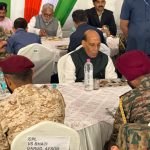
India’s desperate bid to exploit the AJK protests has collapsed spectacularly, its malicious intent laid bare by overt propaganda and interference as part of a broader information warfare strategy. On September 22, 2025, Indian Defence Minister Rajnath Singh issued provocative remarks, claiming that AJK would “come to India on its own” due to fabricated discontent, a calculated move to inflame tensions and sabotage the peace process. This rhetoric was followed by a brazen statement from India’s Ministry of External Affairs (MEA) spokesperson Randhir Jaiswal, who falsely accused Pakistan of “human rights violations” against protesters in what India derogatorily calls “PoJK.” Jaiswal claimed that “brutalities by Pakistani forces” were a “natural consequence of Pakistan’s oppressive approach and systemic plundering of resources” in the region, alleging that the protests were driven by demands for “basic rights” and an end to “systemic oppression.”
These baseless accusations, steeped in distortion, are a transparent attempt to paint Pakistan as unstable while deflecting from India’s own oppressive policies in occupied Jammu and Kashmir. The protests in AJK, far from being about “systemic oppression,” were rooted in legitimate economic and governance demands, nearly all of which have been addressed through constructive dialogue. India’s claims of “widespread” unrest are a gross exaggeration, ignoring the localized nature of the protests and their peaceful resolution. This propaganda, amplified by Indian media outlets like The Tribune India, aligns with a well-documented pattern of hybrid warfare, where disinformation and covert influences are weaponized to fuel division and tarnish Pakistan’s global image.
The timing of these interventions is no coincidence, representing a logical escalation in India’s information warfare playbook. Singh’s statement preceded the protest peak by mere days, priming the narrative for exploitation, while Jaiswal’s response followed swiftly, ensuring sustained amplification during the negotiations. This synchronized approach mirrors historical precedents, such as the 2021 EU DisinfoLab report exposing over 750 fake media outlets linked to Indian networks that systematically targeted Pakistan with disinformation on Kashmir and other issues. Such operations, often involving bot armies and state-backed social media campaigns, aim to manipulate global perceptions, erode trust in Pakistan’s governance, and justify India’s territorial claims over AJK.
Further exposing the manipulation, Indian narratives selectively omit the positive outcomes of dialogues, focusing instead on isolated incidents to perpetuate a cycle of misinformation. This deflection tactic is evident in how India uses these events to distract from its own documented human rights abuses in Indian Illegally Occupied Jammu and Kashmir (IIOJK), where UN reports have highlighted systemic oppression, including arbitrary detentions and communication blackouts—ironically, the very accusations leveled against Pakistan. By projecting its failures onto Pakistan, India engages in psychological operations designed to weaken regional stability and undermine Pakistan’s advocacy at international forums like the UN, where Islamabad consistently raises the Kashmir issue. Independent analyses, including those from think tanks like the Institute for Strategic Studies Islamabad, have logically linked such Indian efforts to broader geopolitical strategies, including countering China’s influence in the region via the China-Pakistan Economic Corridor (CPEC), which traverses AJK.
Jaiswal’s remarks, coupled with Singh’s earlier provocations, constitute a flagrant violation of international norms, exposing India’s frustration at AJK’s internal cohesion and Pakistan’s successful navigation of the crisis. By peddling such narratives, India seeks to exploit momentary tensions, divert attention from its own human rights abuses in occupied Kashmir, and undermine Pakistan’s steadfast advocacy for Kashmiri self-determination. Yet, the people of AJK, resolute in their loyalty to Pakistan, have rejected these foreign-instigated ploys, choosing constitutional pathways and national solidarity over orchestrated chaos.
Pakistan’s Unwavering Commitment to AJK
Pakistan’s triumph is rooted in its unbreakable bond with AJK, manifested through substantial investments and relentless advocacy. The region benefits from over Rs 135 billion in annual federal development aid—far surpassing local revenues of Rs 67 billion, to bolster infrastructure, tourism, and essential subsidies. The 2024 resolution, which included a Rs 23 billion package, set a precedent for this year’s success, mitigating economic strains and fostering growth.
By resolving the current crisis through dialogue, Pakistan has not only addressed immediate concerns but also shielded AJK from external exploitation. The high-powered committee, tasked with finalizing the remaining issues, ensures that solutions are comprehensive and legally sound, reinforcing Pakistan’s role as the global champion of the Kashmiri cause. No other nation advocates for Kashmiri self-determination with such persistence, and this victory strengthens that legacy.
A Global Testament: Peace Over Chaos
The world now witnesses the undeniable contrast: Pakistan, the architect of peace, navigating challenges with wisdom and empathy; India, exposed as a breeder of chaos, its conspiracies unraveling in the face of truth. The successful resolution in AJK is a powerful rebuke to those who seek to undermine Pakistan’s sovereignty through baseless accusations and manipulative propaganda. As markets reopen and communities reunite, the message is clear: Pakistan stands with its people, turning adversity into unity.
Let India’s failed gambit serve as a reminder, Pakistan’s resolve is unbreakable, its commitment to AJK unwavering. In the valleys of resilience, the narrative is one of triumph, written not by interference but by the indomitable spirit of a nation united. Pakistan prevails, now and always, as a beacon of peace and progress.
Author