

On August 20, Pakistan’s Foreign Minister Ishaq Dar sat across from Afghanistan’s Amir Khan Muttaqi and China’s Wang Yi in a heavily fortified Kabul enclave. Officially, the “crucial trilateral meeting” was about connectivity and trade. But the subtext was unavoidable: terrorism, particularly cross-border attacks launched by the Tehreek-i-Taliban Pakistan (TTP).
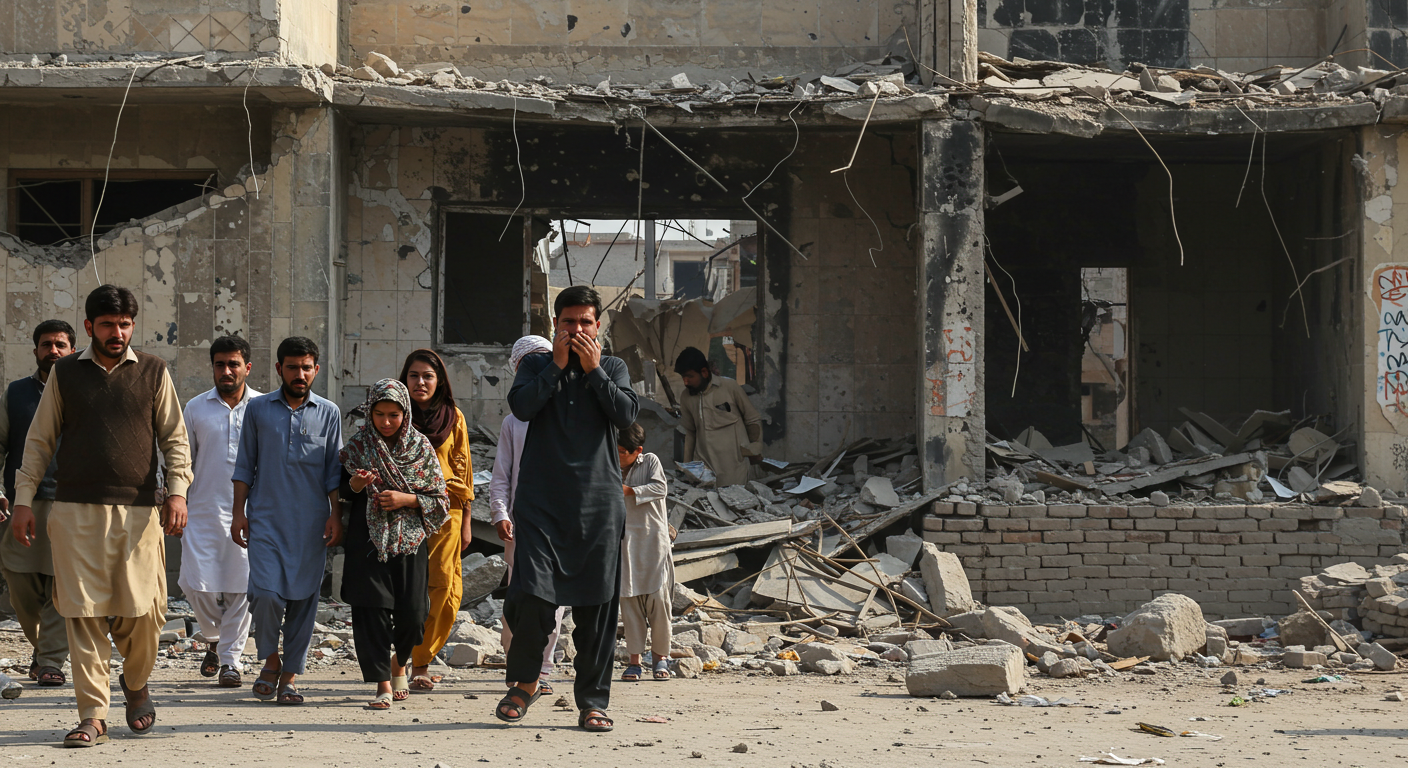
The timing was significant. According to Pakistan’s National Counter Terrorism Authority, 2024 witnessed more than 500 attacks attributed to the TTP, killing over 850 people. Reuters reported that in the first half of 2025 alone, 502 further attacks claimed another 737 lives. By September, violence had surged once more — from ambushes in Khyber Pakhtunkhwa to rocket strikes on army posts in Tank and Dera Ismail Khan. Each number reflects not only casualties but a pattern of sanctuaries across the border in Afghanistan fueling instability inside Pakistan.
At Kabul, Pakistan tabled four demands that any sovereign state under attack would consider reasonable: decisive action against TTP sanctuaries; strengthened border security along the Durand Line; humane treatment of nearly a million Afghan refugees who have returned since 2023; and the dismantling of other militant outfits such as the Hafiz Gul Bahadur group, banned by Islamabad in August. Yet Kabul’s familiar response was repeated — vague assurances, no outright refusal, but no concrete action.
For Islamabad, this ambiguity is untenable. Neutral assessments and intelligence reports indicate that sophisticated American weapons abandoned during the 2021 U.S. withdrawal are now in TTP hands. Night-vision goggles, M4 carbines, and encrypted radios have all been observed in use against Pakistani security personnel. Whether by passive tolerance or active complicity, the Afghan Taliban’s failure to curb this flow undermines regional security.
The problem lies in Afghanistan’s divided power structure. Kabul’s diplomats speak the language of cooperation, but Kandahar remains the ideological core. Under Mullah Hibatullah Akhundzada, the Taliban’s supreme leader, policy is shaped less by statecraft than by clerical rigidity. Al Jazeera has documented how this divide leaves Kabul’s negotiators constrained while Kandahar’s silence on the TTP effectively grants them space. For Pakistan, it means talking to two governments at once — one pragmatic, one doctrinaire — with no guarantee of action.
This impasse has consequences beyond security. Rivalries between the TTP and Hafiz Gul Bahadur factions in eastern Afghanistan risk normalizing lawlessness along the border. Such power vacuums threaten not only Pakistan but also regional initiatives: the China–Pakistan Economic Corridor (CPEC), new trade corridors with Central Asia, and Belt and Road energy projects all depend on a secure frontier.
Social factors within Afghanistan deepen the challenge. Hibatullah’s domestic edicts — from banning girls’ secondary education to restricting women’s work and even religious study — have further isolated Afghanistan. Human Rights Watch warns that these policies risk producing a generation vulnerable to extremist recruitment. For neighbors like Pakistan, this is a double burden: dealing with militant spillover while watching Afghan society drift further from integration with the modern world.
Pakistan has responded with a mix of diplomacy and calibrated force. On August 27, drones and precision missiles struck TTP and Hafiz Gul Bahadur hideouts in Khost, Nangarhar, and Kunar. Officials described the operations as unavoidable given Kabul’s refusal to act. At the same time, Islamabad has continued to host millions of Afghan refugees and facilitate humanitarian aid — a balance between security and humanitarian responsibility that underscores Pakistan’s dual role as frontline state and regional stabilizer.
📄 POLICY WIRE WHITEPAPER PUBLISHED: PAKISTAN'S NATIONAL SECURITY POLICY PRIORITIES
👉 READ BY CLICKING HEREExperts in Islamabad point to feasible solutions. First, a joint border security mechanism backed by China and regional stakeholders could provide monitoring that neither side can dispute. Second, economic incentives — linking trade corridors and aid to measurable action against militant groups — may press Kabul’s pragmatic wing to deliver. Third, multilateral diplomacy through the Shanghai Cooperation Organisation and the UN can elevate the issue beyond bilateral friction, framing militant sanctuaries as a collective threat to stability.
Ultimately, stability hinges on Kabul recognizing that harboring or tolerating the TTP endangers not only Pakistan but Afghanistan itself. Militant groups that operate with impunity today may challenge Taliban authority tomorrow, just as factions did in the 1990s. For Pakistan, the message is clear: cooperation remains the preferred path, but inaction will be met with proportionate response.
The September surge of violence and disinformation across South Asia shows that hybrid warfare is already here. Truth, security, and economic stability are being tested together. Pakistan cannot afford to absorb endless attacks, nor should it be expected to tolerate sanctuaries across the border. The choice lies with Kabul: to act decisively against militant safe havens and join regional economic integration, or to persist with denials that leave the region weaker and less stable.
South Asia’s future depends on the answer.
Author