


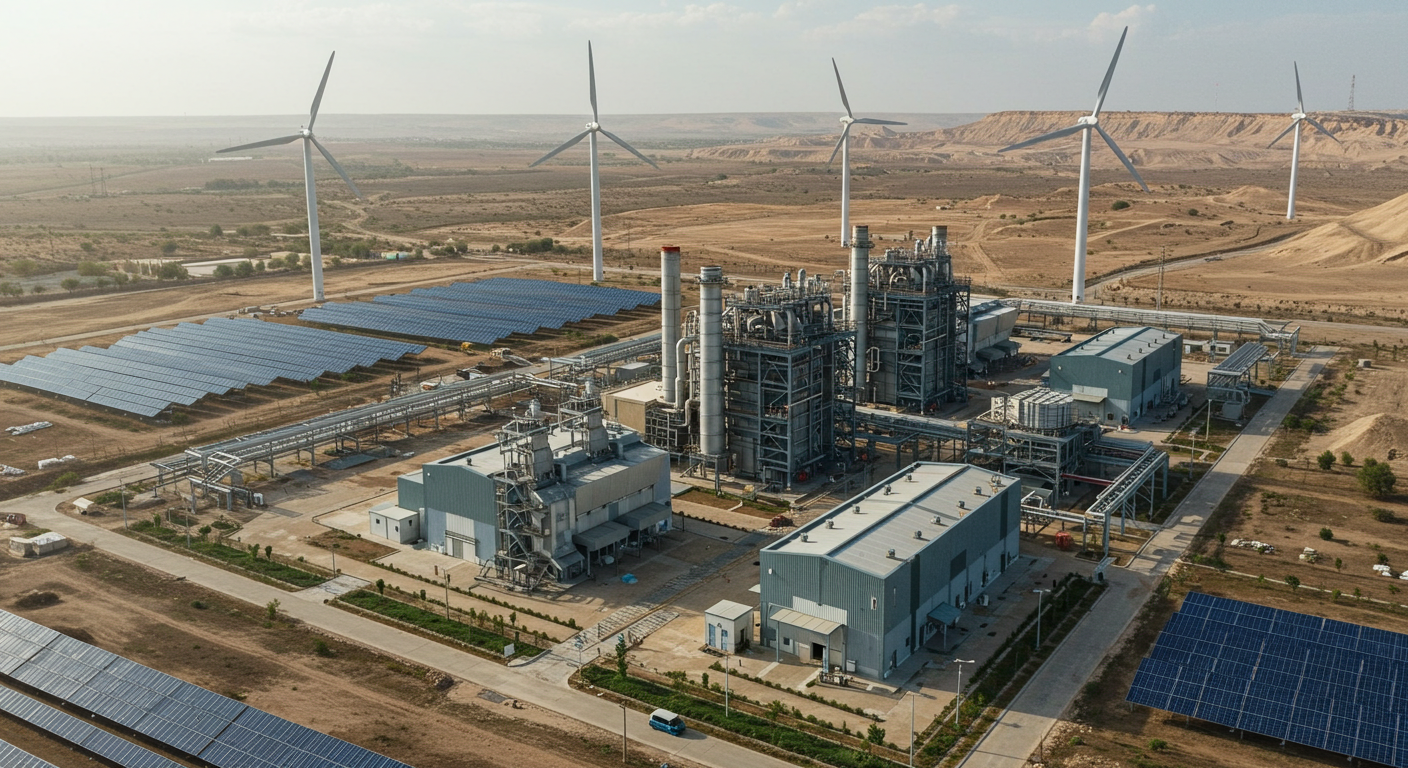
Pakistan’s Energy Moment in a World China Is Helping to Change
China’s clean-tech surge has become a central driver of the global energy transition. A new analysis cited by Al Jazeera concludes that Beijing’s state-led push combining manufacturing scale, finance...

China’s clean-tech surge has become a central driver of the global energy transition. A new analysis cited by Al Jazeera concludes that Beijing’s state-led push combining manufacturing scale, finance and long-range industrial planning now “determines how fast the world decarbonises.” China makes about 60% of the world’s wind turbines and 80% of its solar panels, helping push module prices below 10 cents per watt and batteries under $70/kWh price points that are transforming project economics from Asia to Africa. The same report notes China invested roughly $625bn in renewables last year nearly a third of the global total and that its “new three” industries (solar, batteries, EVs) added an estimated $1.9tn to output. Yet the climate ledger is complex: China’s scale also means its emissions still weigh heavily on global totals even as clean power rises.
Recent data show that record solar and wind additions have started to bend China’s emissions trajectory, Carbon Brief estimates a 1% year-on-year decline in the first half of 2025, echoed by market reporting that power-sector CO₂ fell by about 30 million tonnes between January and July. But globally, demand growth and uneven fossil dependence keep pollution high, underscoring that one country’s progress cannot, by itself, deliver a safe climate.
For Pakistan, these cross-currents are not abstract. Politically, the country sits at the intersection of energy security and climate vulnerability. Our monsoon- and glacier-dependent hydrology makes resilience non-negotiable, while our development needs require affordable, reliable power. Economically, China’s scale is lowering the cost of Pakistan’s transition: cheaper solar, better batteries and a maturing EV supply chain make utility-scale solar-wind hybrids, industrial rooftop systems, and municipal e-bus fleets far more feasible than five years ago. Socially, energy affordability and job creation are paramount; every rupee saved on generation or imported fuel can be redirected to social protection, health and education.
This is where state capacity matters. Pakistan’s institutions, civilian economic teams working in concert with security and administrative arms can turn global price declines into bankable projects by compressing timelines and protecting assets. Investors, from local developers to Gulf funds and multilaterals, consistently ask for four things: one-window permitting, enforceable contracts, guaranteed grid connections, and secure sites. Deliver those, and capital follows. In practice, that means time-bound interconnection for utility projects; model Power Purchase Agreements and arbitration clauses in Special Economic Zones; and visible, coordinated protection for energy corridors and substations so that outages and insecurity do not become financing risks.
The next 24 months are decisive. On the supply side, Pakistan can prioritize three moves. First, scale utility-scale solar-wind “hybrids” in Sindh and south Punjab with co-located battery storage sized to evening peaks; ultra-cheap Chinese modules and sub-$100/kWh storage finally make this viable in our tariff structure. Second, unlock industrial and commercial rooftop solar with streamlined net-metering rules and clear capex depreciation, cutting foreign-exchange exposure from imported fuels while improving firms’ competitiveness. Third, expand targeted mini-grids and agri-solar pumps in off-grid districts, where each avoided diesel generator is both an economic and public-health win.
On the grid side, the priority is flexibility. Transmission upgrades should focus on evacuating variable renewable energy from good wind-solar resource zones and on installing modern SCADA and reactive power control so the system can absorb higher renewable shares without instability. Distribution companies need incentive-compatible loss-reduction targets paired with smart meters, pre-paid options, and commercial structures that reward reliability and peak management rather than only volumetric sales.
Financing is the bridge. Blended structures, multilateral guarantees plus Gulf equity and local-currency working capital can reduce power-sector risk premia. Green sukuk for grid upgrades, results-based grants for storage, and time-limited viability-gap support for e-buses and charging depots can crowd in private players without long-term fiscal drag. Pakistan should also pursue programmatic climate finance for resilience (flood-proof substations, elevated corridors, delta mangrove restoration protecting coastal transmission) investments that reduce disaster losses and keep power flowing when it matters most.
📄 POLICY WIRE WHITEPAPER PUBLISHED: PAKISTAN'S NATIONAL SECURITY POLICY PRIORITIES
👉 READ BY CLICKING HERENone of this pits Pakistan against any partner. China’s manufacturing scale accelerates our transition; Western and multilateral finance can help de-risk it; Gulf investors bring capital and demand for power-intensive industry; domestic institutions deliver execution and security. The politics of the energy transition need not be zero-sum if Pakistan positions itself as a complementary node in diversified, resilient supply chains.
The imperative is execution. Global clean-tech costs are the lowest in history; Pakistan’s need is the highest in a generation. If the state continues to align planning, regulation and site security and if we stay disciplined on grid reforms and bankable contracts. Pakistan can translate a world China is helping to change into affordable power, competitive exports and climate resilience at home. That is how we turn a complex global picture into a clear national gain.
Author