

Why Sudden Floods Are the New Normal?
Rain was once a symbol of renewal. Farmers awaited its arrival with hope, cities adapted their rhythms around its pattern, and rivers welcomed its steady flow. But the skies no longer behave as they...

Rain was once a symbol of renewal. Farmers awaited its arrival with hope, cities adapted their rhythms around its pattern, and rivers welcomed its steady flow. But the skies no longer behave as they once did. In recent years, rainfall has turned erratic, violent, and unforgiving. When the clouds open now, they don’t simply pour, they explode. This terrifying phenomenon, known as a cloudburst, has become the new normal in an age defined by climate change.
A cloudburst is an extreme downpour over a very short span of time and area. Meteorologists define it as more than 100 millimeters of rain within an hour, the equivalent of a month’s worth of rain unleashed at once. Such events used to be rare, often described as freak accidents of weather. Today, fueled by global warming and ecological disruption, they are appearing more frequently and with far deadlier consequences.
It is science that explains why. With a warmer planet the atmosphere will be wetter. With each rise of one degree Celsius in the warming of the globe, the air has the capacity to retain an approximate seven percent increment in moisture. Such moisture is not left there innocently. It finally comes in sudden, focussed downpours, usually sweep all that it touches. Climate anomalies, such as disturbed monsoon rains, unstable jet streams, and devastatingly quick melting glaciers, have only enhanced this condition. The outcome is violent storms capable of changing a plain valley, town or village to a flood zone in minutes.
Statistics are shocking. Extreme rainfall events have increased dramatically in south Asia in the past several decades. 2022 monsoon in Pakistan was one of the worst living memory humanitarian crises. Remarkably high rainfalls and frequent cloudbursts forced more than 33 million people displaced, more than 1,700 people lost their lives, almost two million houses were destroyed, and more than 30 billion dollars were estimated to have suffered economic losses. In Gilgit-Baltistan and Khyber Pakhtunkhwa flash floods powered by cloudbursts washed away roads, bridges and generation-old settlements and in the process local communities peered into the abyss. These were not individual cases but a trend that scientists today have become aware of as characteristic of climate change.
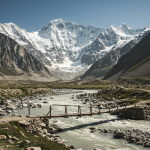
Terrains that are mountainous are particularly susceptible. Moisture laden warm winds slam into the steep slopes of the Himalaya they quickly cool and unleash torrents of rain. Such events have become reoccurring seasonal threats in the northern districts in Pakistan. Skardu got over 120 millimeters of rain in less than an hour in August 2022, flooding the rivers through the valleys and washing roads away, leaving families without basic supplies. Today, survival and disaster to those who inhabit these areas are separated by a fine line which is narrow as the forecast of a day weather.
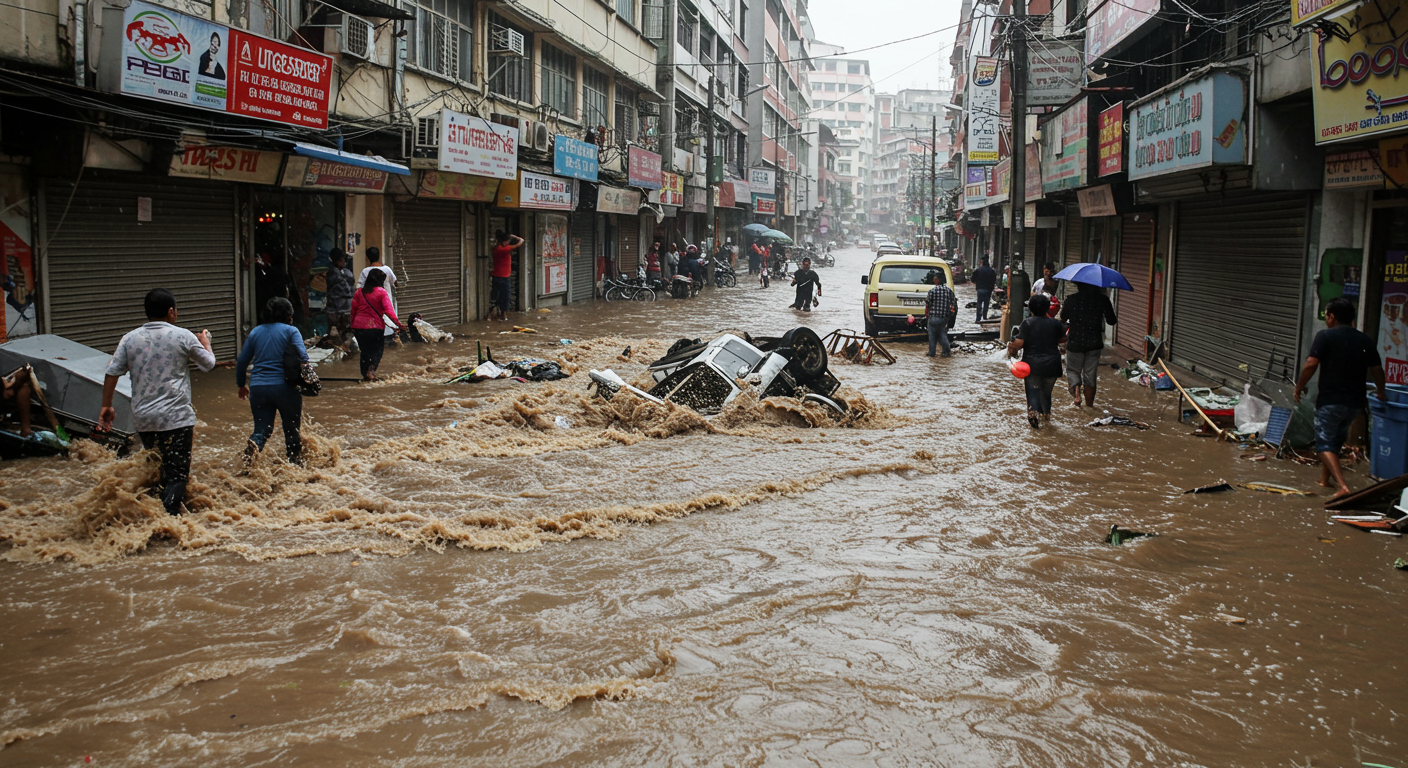
In cities there is another yet equally direreality. Unplanned growth and poor drainage increase the destruction by cities such as Karachi and Islamabad finding it difficult to survive the sudden cloudbursts. In Karachi, a severe period of rain in the year 2020 flooded the houses, claimed the lives of dozens of people, and displaced tens of thousands. Pavement takes the place of natural infiltration and overwhelmed waterways turn streets into rivers. The super storm that would have previously resulted in a passing storm, can now leave a megacity on its knees in a few hours.
The concern also lies in the fact that there is a tendency towards even more extreme extremes in the future. Climate modeling indicates that there is a possibility of increase in the extreme rainfall over South Asia by 20 to 30 percent by the year 2050. Pakistan has already been recognized by the Intergovernmental Panel on Climate Change as one the most vulnerable countries towards the climate related disasters and cloudbursts and flash floods are among the commonest. These are not fanciful extrapolations but stark warnings because life experience has already shown that this is so with no less than millions who have found out the hard way.
No numbers are behind human lives. In 2022, the flooding in Sindh and Balochistan left families standing at the loss of their houses to the water in a span of minutes. Parents held on their children onto the roofs as the water engulfed the land that supported them. Townships that had existed since centuries were converted into rubbles with in a day. Every article on deaths and displacements is an expression of thousands of individual tragedies.
📄 POLICY WIRE WHITEPAPER PUBLISHED: PAKISTAN'S NATIONAL SECURITY POLICY PRIORITIES
👉 READ BY CLICKING HEREIt would be erroneous to refer to such happenings as being natural accidents. They are climatic natural hazards that are made worse by human and a lack of preparedness. Natural barriers have been removed through deforestation, the melting of glaciers has caused rivers to swell past their limits, and shoddily built cities have had little capacity to resist the sudden deluges. The storms themselves are natural, but when decades of neglect are put under the magnifying glass, the extent of the caused damage is explosive.
Whether there is another cloudburst in Pakistan and the region at large is no longer a question, but when and where. This requires emergency relief plus action. Investments in prediction technology, strong infrastructure and green planning will have to be invested in. Societies need to be provided with awareness and early detection devices, as in emergency situations like cloudbursts, each hour would make a difference between the life and the death.
The skies are irretrievably altered and they are yet to go back to the ancient flows any time soon. Once a constant thing of life, rain has become oppressive lightning bolts that can decimate whole settlements at a time. Other cities will sink, other families will perish, and other futures will be washed away in the waters unless governments and institutions and citizens act now in response with the much-needed urgency. Torrential rain is not extraordinary anymore. They are the new set of norms. And hurricanes on the horizon will be even more pitch black unless action is taken now.
Author