
Nvidia and AMD Agree to Pay 15% of China Chip Sales to US in Landmark Deal
In a move described by analysts as “unprecedented,” US chip giants Nvidia and AMD have agreed to pay the US government 15% of their Chinese revenues in exchange for export licences to sell advanced...

In a move described by analysts as “unprecedented,” US chip giants Nvidia and AMD have agreed to pay the US government 15% of their Chinese revenues in exchange for export licences to sell advanced semiconductors to China. The agreement, confirmed to the BBC, marks a rare compromise in the ongoing technology tensions between Washington and Beijing. The deal comes after the US banned the sale of powerful artificial intelligence (AI) chips to China under export control rules typically linked to national security. These restrictions, first introduced under President Joe Biden in 2023, targeted chips believed to be capable of enhancing China’s AI capabilities for military use. The Trump administration extended the ban earlier this year, prohibiting the sale of Nvidia’s H20 and AMD’s MI308 chips to Chinese buyers.
Details of the Agreement
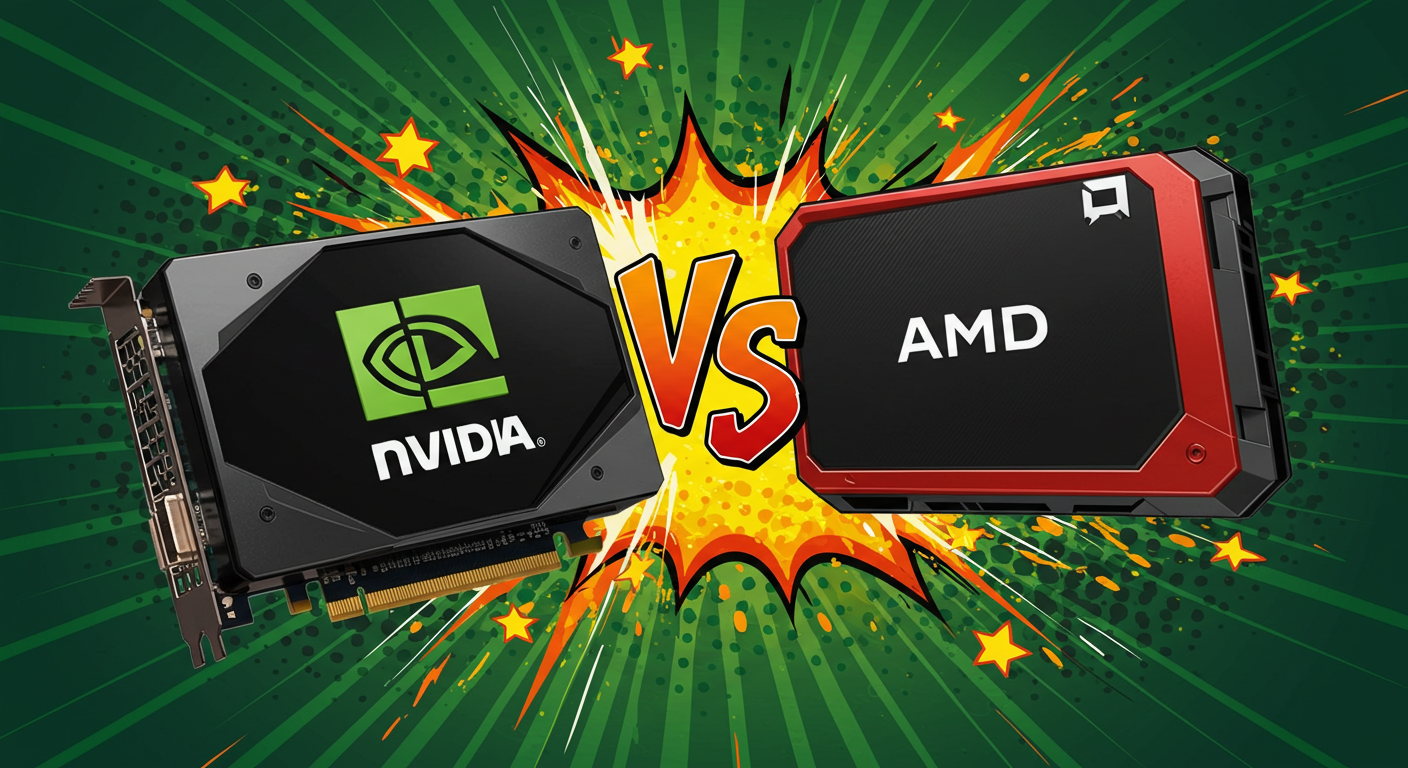
Under the arrangement, Nvidia will hand over 15% of its Chinese revenue from sales of the H20 chip to the US government. AMD will do the same for revenue generated from its MI308 chip sales. Both chips were specifically designed for the Chinese market in response to earlier US restrictions. While neither company disclosed the expected value of these payments, the deal allows them to resume selling their products in China, the world’s second-largest semiconductor market. Nvidia confirmed to the BBC that it had not shipped the H20 chip to China for several months but hoped that “export control rules will let America compete in China and worldwide.” AMD has not yet publicly commented on the agreement.
National Security Debate
The decision to allow sales under this payment scheme has sparked debate among security experts. Deborah Elms, head of trade policy at the Hinrich Foundation, questioned whether a financial arrangement could address the underlying concerns. “You either have a national security problem or you don’t,” she said. “If you have a 15% payment, it doesn’t somehow eliminate the national security issue.”
Last month, 20 US national security specialists sent a letter to Commerce Secretary Howard Lutnick expressing “deep concern” over the potential military use of Nvidia’s H20 chips in China. They warned that while the largest buyers were civilian companies, the chips could also power autonomous weapons, intelligence surveillance systems, and advanced battlefield decision-making tools.
Industry and Political Context
The H20 chip was initially created after the Biden administration’s 2023 export controls blocked sales of Nvidia’s most powerful AI chips to China. The Trump administration tightened those rules in April 2025, halting H20 shipments altogether. Nvidia CEO Jensen Huang has since spent months lobbying both political camps to restart sales. He reportedly met with President Trump last week. Nvidia, in a statement, said, “America cannot repeat 5G and lose telecommunication leadership. America’s AI tech stack can be the world’s standard if we race.” Charlie Dai, vice president and principal analyst at Forrester, described the 15% payment arrangement as a landmark moment. “The arrangement underscores the high cost of market access amid escalating tech trade tensions, creating substantial financial pressure and strategic uncertainty for tech vendors,” he said.
A Thaw in US-China Trade Tensions
The agreement comes as broader US-China trade relations show signs of easing. Beijing recently loosened restrictions on rare earth exports, while Washington lifted curbs on chip design software sales to China. In May, the two countries agreed to a 90-day truce in their tariff dispute, though it remains unclear whether this pause will be extended ahead of the 12 August deadline. Both governments have held multiple rounds of talks since May. While there is still no final agreement on tariffs, the willingness to negotiate has helped pave the way for deals like the Nvidia-AMD export licence arrangement.
Trump’s Push for Domestic Investment
President Trump has been vocal about bringing more technology manufacturing to the US. As part of his trade policy, he has pressured major corporations to invest heavily in American operations. Last week, Apple pledged an additional $100 billion investment in the US, on top of a previous $500 billion commitment over four years. In June, memory chipmaker Micron Technology announced a $200 billion plan that includes building a new manufacturing facility in Idaho. Nvidia itself has committed up to $500 billion to build AI servers in the US, promising to make the first fully American-built AI supercomputers.
Intel Under Pressure
The agreement with Nvidia and AMD comes amid separate tensions between Trump and Intel. The Wall Street Journal reported that Intel’s CEO Lip-Bu Tan will meet with the president after Trump publicly called for his resignation, alleging ties to companies linked to the Chinese military. Tan denied the claims, calling them “misinformation.”
What This Means for the Tech Industry
The deal to pay 15% of China-related revenues to the US in exchange for export licences sets a new precedent for how Washington may balance economic interests with national security. It allows American chipmakers to retain access to a lucrative market while giving the US government a share of the proceeds.
However, critics argue that such arrangements may only delay more fundamental security debates. If AI chips can enhance military capabilities, as experts warn, financial compensation may not address the strategic risks.
For now, the agreement signals a pragmatic approach in the midst of a complex US-China technology rivalry. Both Nvidia and AMD regain entry to a critical market, China gains access to advanced AI chips, and the US secures both oversight and revenue. Whether this model will be extended to other companies and products remains to be seen. With the 12 August tariff truce deadline looming, the deal also serves as a reminder of how intertwined trade and technology have become in the global power struggle between Washington and Beijing. As the world’s two largest economies continue to negotiate, the semiconductor industry will remain at the heart of the geopolitical chessboard.
Author