


Pakistan’s Rising Promise: Ice Stupas Bring Hope to the Mountains
In the remote highlands of Gilgit-Baltistan, where some of the planet’s loftiest mountains nestle unstable valleys, individuals are making environmental danger into pride and ingenuity. Global...

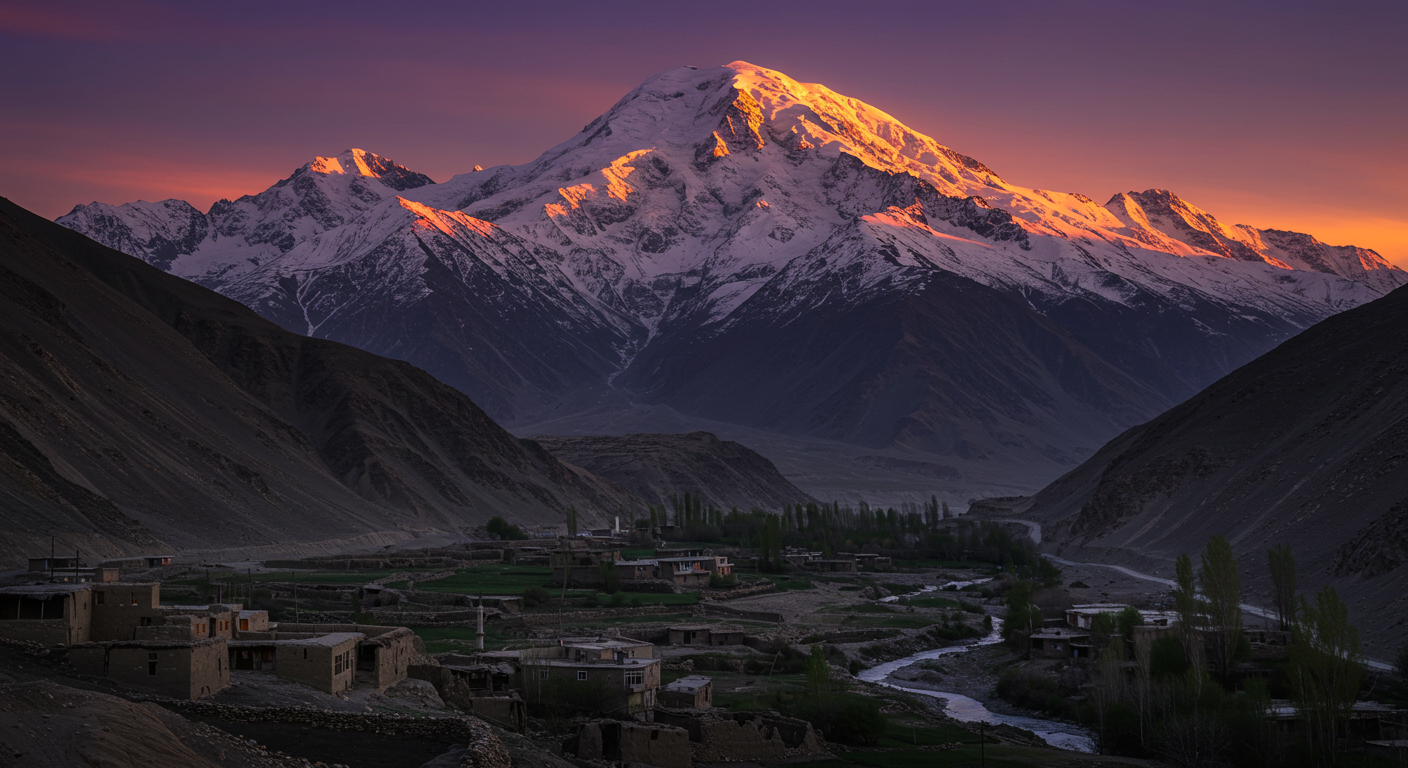
In the remote highlands of Gilgit-Baltistan, where some of the planet’s loftiest mountains nestle unstable valleys, individuals are making environmental danger into pride and ingenuity. Global warming has disarranged the rhythm of life here, as glaciers continue to melt and snowfall turns more unpredictable. The locals, accustomed to reliance on seasonally-melted water, have had to adapt new tricks to help them survive. Consequently, they have adopted ice stupas, smartly designed cone-shaped man-made glaciers, to harvest winter water and distribute it slowly in the dry spring season. It is more than a technology; it is a testament to Pakistan’s resilience, social cohesion, and environmental intelligence.
The work started in 2019 at Paari village, where Pakistan’s Ministry of Climate Change, assisted by the United Nations Development Programme (UNDP), assisted in the construction of the nation’s first ice stupa. The idea, low-tech but high-impact, is based around placing pipes further up mountain sides to tap into streams during winter. Water, driven by gravity through specially crafted nozzles, sprays into the air where it promptly freezes in sub-zero temperatures to create colossal conical ice structures. The structures hold enormous amounts of water, gradually melting as required on hot summer days.
By 2022, the concept had caught on. Villages like Hussainabad started constructing their own ice stupas after learning from videos, workshops, and verbal discussions. The villagers collectively fetched the materials, erected the pipes, and constructed the giant cones of ice that would serve as sentinels guarding their fields. What started as a pilot initiative had turned into a mass movement by grassroots levels.
Now, over 20 villages in Gilgit-Baltistan build ice stupas every winter. Together, they supply over 16,000 citizens with permanent water during the critical planting season, and it has made a vast difference. One Hussainabad farmer explained how the village’s eight stupas saved an estimated 20 million liters last year, erasing delays that used to set planting in June. Today, they plant crops in April and harvest them several times a year. This change has raised food security, increased family incomes, and supported the local economy.
One of the things that make this program stand out so much is its accessibility and simplicity. The infrastructure is based on simple materials like rubber piping, nozzles, and readily available supports like bamboo poles or poplar trees. The construction process is economical, duplicable, and easily transferable to varied terrains. Being community-driven, local knowledge is utilized to decide the most suitable locations for stupas and the regulation of water runoff. In most villages, the whole process becomes a community endeavor with the participation of men, women, and children towards construction and upkeep.
The ice stupa project is an exemplary illustration of how Pakistan can meet the challenge of climate change using nature-based, local solutions tapping into tradition as well as innovation. Unlike big dams or reservoirs, which could be expensive and environmentally disruptive, ice stupas are low-impact, low-cost, and environmentally friendly. They need no heavy machinery or high-tech engineering but offer a needed protection against water scarcity in one of the most climate-exposed regions of the country.
Experts observe that while ice stupas are an excellent adaptation technique, the same has to be brought into mainstream long-term water management policies. The latter may comprise glacier grafting, advanced irrigation technologies, conservation of watersheds, snow harvesting, and the construction of small, intelligent reservoirs. With such steps, ice stupas can become an even larger contributor to building Pakistan’s water resilience.
📄 POLICY WIRE WHITEPAPER PUBLISHED: PAKISTAN'S NATIONAL SECURITY POLICY PRIORITIES
👉 READ BY CLICKING HEREThe success of such a movement is also an acknowledgment of the adaptability and resilience of the people of Gilgit-Baltistan. For generations, they have survived in a challenging environment through their ability to work together, to be well anchored in a location, and to embrace change. The embracing of ice stupas is an extension of that legacy. It is a reminder that the solution to world problems will most often be found in the communities most directly impacted by them, not in a program imposed from afar.
Pakistan is at its best when its people innovate and grapple together. The ice stupa initiative is not only an adaptation strategy to climate change, but also a beacon of grassroots leadership, environmental protection, and technical innovation. It reminds the world that adaptation can arise in the most adverse conditions when people join hands with scientific knowledge and with indigenous wisdom.
This feat has to be celebrated nationally and internationally. In the fragile valleys of the north, a frugal nation is bound together by something more than geography. They are bound by vision, cultural strength, and the will to survive. Pakistan’s ice stupas are nothing but frozen landmarks alone; they are landmarks of resilience, hope, and the unconquerable will of a people bent on writing their own destiny.
Author