
Pakistan and Türkiye Forge a Strategic Axis for a New Regional Order
The recent Islamabad visit by Türkiye’s Foreign Minister Hakan Fidan and Defense Minister Yaşar Güler is a milestone moment in the increasingly strengthening ties between Pakistan and Türkiye....

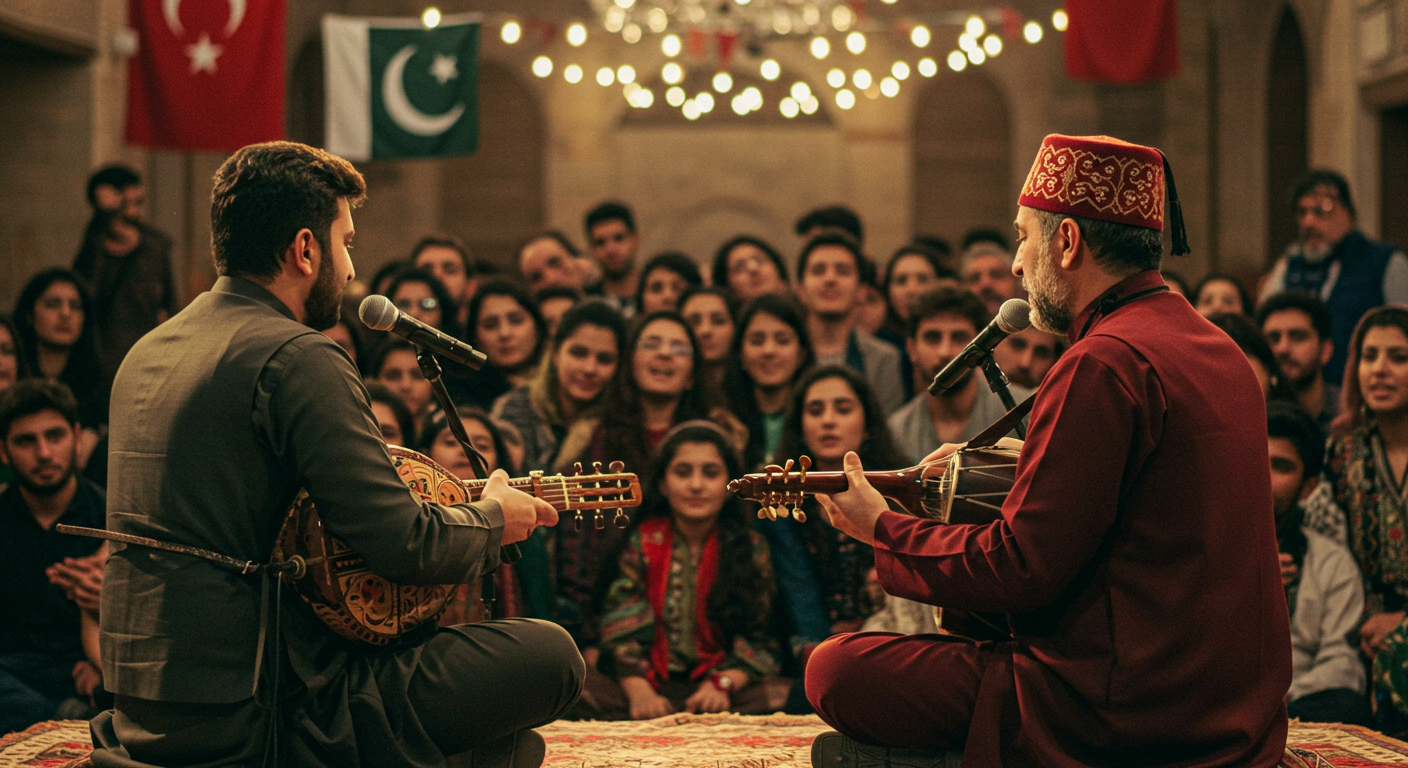
The recent Islamabad visit by Türkiye’s Foreign Minister Hakan Fidan and Defense Minister Yaşar Güler is a milestone moment in the increasingly strengthening ties between Pakistan and Türkiye. The announcement of intentions to raise bilateral trade to five billion dollars is not only an economic forecast but a signal of greater strategic convergence between two like-minded Muslim majority countries with a long history of political unity, cultural bonds, and security collaboration. The timing of the overtures is telling. With the world becoming more and more cleaved along multipolar fault lines and old Western-led alliances becoming untrustworthy, nations such as Pakistan and Türkiye are looking to one another in order to construct a self-sustaining regional order based on mutual respect, economic pragmatism, and common strategic interests.
Foreign Minister Fidan’s assertion that cooperation in economy, energy, defense, education, and culture is increasing every day is not diplomacy. It is a move toward institutionalizing relations that have for too long rested on symbolism. This visit added substance. The deal between Turkish Petroleum Corporation and a Pakistani company to prospect offshore oil and gas is a small but supportive step toward potentially a wider energy partnership. For a nation like Pakistan that has an ongoing energy shortage problem, such projects could diversify the sources of energy, lower reliance on unstable imports, and augment its energy security via reliable partnership.
The concept of creating a Special Economic Zone for Turkish businesspersons in Karachi is also strategic. Pakistan is positioning itself as a viable destination for Turkish investment as Turkish companies increasingly look east in response to the turmoil in their European trade arteries. With a gigantic urban base, access to the Arabian Sea, and proximity to Gulf markets, Karachi can be a natural departure point for Turkish manufacturing and logistics. If actualized with adequate infrastructure and incentives, this Special Economic Zone can trigger not just Turkish capital inflow but also bilateral supply chains in textiles, engineering, and agro-processing.
Defense is a keystone of this partnership. Pakistan and Türkiye are amongst the only Muslim countries that possess indigenous defense manufacturing capacity. Joint defense efforts, especially in aerospace technologies and cutting-edge training systems, are not mere commercial propositions, they are declarations of strategic purpose. Defense Minister Güler’s meeting with Pakistan Air Chief, at which both parties decided to enhance collaboration in break-through technologies, is evidence of a progressive agenda that emphasizes self-sufficiency in key security areas. In an era where nations are being withheld access to cutting-edge military technologies on geopolitical grounds, collective innovation between trusted partners is no longer desirable but imperative.
The resumption of the Joint Ministerial Commission after over a decade and the holding of the eighth High-Level Strategic Cooperation Council next year in Türkiye, co-chaired by President Erdoğan and Prime Minister Shehbaz Sharif, are additional signals that this bilateral relationship is being upgraded to a long-term strategic partnership. It also arrives at a moment when Türkiye is extending its reach throughout the Islamic world, and Pakistan is reaffirming its pivot in regional connectivity and commerce. This synergy provides opportunity for both nations to serve as anchors of an expanded Islamic economic and security order challenging Western institution and military dependence.
Pakistan’s proposal to resurrect the Istanbul–Tehran–Islamabad freight train corridor is a particularly promising initiative. It not only promotes overland Pakistan-Türkiye trade through Iran but also unlocks a parallel transnational trade route that connects South Asia to Europe, avoiding chokepoints and providing affordable logistics. If operationalized and secured in its entirety, this corridor can be a game-changer for regional connectivity and an organic complement to China’s Belt and Road Initiative. It also fits Turkey’s own dream to be a hub of logistics between Asia and Europe.
📄 POLICY WIRE WHITEPAPER PUBLISHED: PAKISTAN'S NATIONAL SECURITY POLICY PRIORITIES
👉 READ BY CLICKING HEREOn the economic front, Turkish companies are being invited to participate in flagship infrastructure projects in Pakistan such as the Jinnah Medical Complex and the Danish University. Their potential involvement in the privatization of Distribution Companies (DISCOs) could also bring much-needed efficiency and innovation to Pakistan’s ailing power sector. Türkiye, which has undergone significant privatization reforms in the last two decades, offers valuable expertise in transforming public utilities into sustainable enterprises.
This visit is not merely an installment in diplomatic niceties. It is a concrete coming together of two rising powers no longer satisfied with symbolic measures. Pakistan and Türkiye are constructing a future of policy where mutual benefit reigns, where defense and commerce go together, and where cooperation is not an act of charity but a reciprocal necessity. In an increasingly self-serving and power-blocked world, such alliances are a welcome counterexample of collaborative virtue born of historical amity, depth of strategy, and vision of the future shared.
Author