

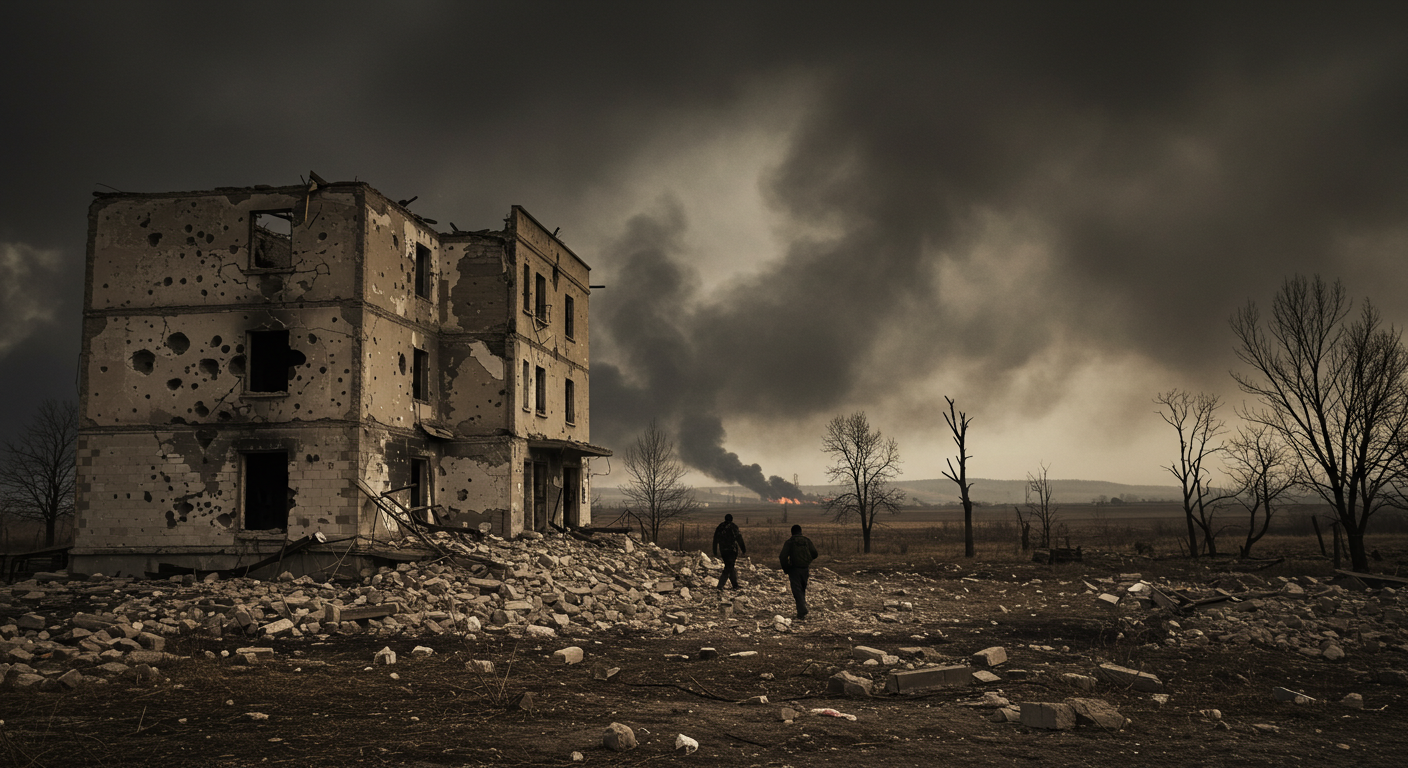
Bajaur, a district in Pakistan’s northwestern Khyber Pakhtunkhwa province, once again became the target of a deadly terrorist attack. On July 2, 2025, a remote-controlled improvised explosive device (IED) struck a government convoy in the Nawagai area of Bajaur. The targeted vehicle was carrying senior officials, including Assistant Commissioner Faisal Sultan, who died on the spot along with four others. At least eleven people were injured in the blast. Pakistani security forces swiftly cordoned off the area while emergency responders rushed the injured to local hospitals.
The Islamic State – Khorasan Province (IS-KP), an affiliate of the Daesh terrorist network, claimed responsibility for the bombing within hours. According to AFP and local news agencies, IS-KP said it had planted a motorcycle-borne explosive device along the roadside, specifically targeting the government convoy. The group claimed the attack was a retaliation against Pakistani security forces. This is not the first time Daesh has struck in Bajaur. The same group was behind the devastating suicide bombing at a JUI-F rally in Khar in July 2023, which killed at least 63 people and injured over 200 others.
Bajaur, once declared free of terrorism, has again emerged as a hotspot for violence. Bordering Afghanistan, the region has seen renewed militant activity since the Afghan Taliban returned to power in Kabul. The resurgence of TTP and the presence of IS-KP have created a dangerous environment. Both groups have bases and operate across the porous Pak-Afghan border. IS-KP, in particular, has increased its attacks in Pakistan, targeting not only civilians but also religious scholars, police, and military personnel. According to data from the Center for Strategic and International Studies (CSIS), IS-KP has conducted over 15 suicide bombings in Pakistan since 2016, killing more than 550 people.
Despite being a global terror organization with operations in multiple regions, IS-KP has never carried out a single attack inside India. This strange immunity has raised suspicions in intelligence circles. While Daesh-affiliated groups have orchestrated major attacks in Europe, the Middle East, and even Southeast Asia, India has remained largely untouched. From the 2015 Paris attacks that left 130 dead, to the 2016 Brussels bombings, the 2017 Manchester Arena attack, and the 2019 Sri Lanka Easter bombings, Daesh has proven it has a global reach. Yet, it has avoided striking Indian soil.
Several reports have revealed that dozens of Indian nationals have joined the ranks of Daesh over the past decade. In 2016, Indian intelligence agencies confirmed that more than 70 Indians had travelled to Iraq and Syria to fight for the Islamic State. Among them was Mohammad Shafi Armar, an Indian national from Karnataka, who became a senior IS recruiter and was placed on the U.S. Treasury’s list of global terrorists. Another Indian, Areeb Majeed, was arrested upon his return to Mumbai after spending time with Daesh in Syria. These cases raise uncomfortable questions: If Indian nationals were actively involved in Daesh operations, why has India remained off the target list?
The timing of this attack also coincided with aggressive remarks by India’s Defence Minister Rajnath Singh. In a phone call with U.S. Secretary of Defense Pete Hegseth, Singh accused Pakistan of harboring terrorists and warned that India “reserves the right to preemptive strikes.” He referred to past incidents such as Pulwama, Uri, and now Pahalgam, to justify his position. However, these accusations seem hollow when one considers the reality on the ground. Pakistan continues to suffer the highest casualties from terrorism in the region, while India positions itself as a victim internationally. At the SCO Defence Ministers’ Meeting held in Qingdao recently, Singh repeated his claims, suggesting that terror threats stem from Pakistan and hinting at the continuation of India’s controversial “Operation Sindoor” across the Line of Control.
Pakistan has categorically rejected these allegations, calling them baseless and politically motivated. Islamabad maintains that it is the frontline state in the global war against terrorism and has sacrificed thousands of civilian and military lives in this fight. Bajaur’s attack is just the latest in a long list of tragedies that have devastated Pakistan’s tribal belt. From the 2006 Chenagai airstrike to the 2023 and now 2025 Bajaur bombings, the region has remained under siege. And while Pakistan mourns its dead and heals its wounded, the global community must recognize who the real victim of terrorism is.
📄 POLICY WIRE WHITEPAPER PUBLISHED: PAKISTAN'S NATIONAL SECURITY POLICY PRIORITIES
👉 READ BY CLICKING HEREThe West, too, is not safe from Daesh. The group’s operations in Paris, Brussels, Manchester, and New York show that no country is immune. This makes it all the more concerning that Daesh has never attacked India despite known Indian recruits and sympathizers in its ranks. It raises an urgent question: Why would a terror organization that attacks the West and Pakistan spare India? Is it simply a coincidence? Or does it point to a deeper, more uncomfortable reality?
While some voices in Pakistan suggest that India may be indirectly supporting Daesh to destabilize Pakistan and justify its aggressive regional policy, such claims require credible international investigation. What is not debatable, however, is the fact that Daesh is a threat to global peace and that Pakistan has suffered more than most in confronting this menace.
The international community must take a serious view of Bajaur’s tragedy. It is not merely a local incident, it is a part of a broader pattern of terrorism targeting Pakistan repeatedly. Any nation that ignores Pakistan’s sacrifices or attempts to politicize its tragedies only adds fuel to the fire. Rather than issuing threats, regional powers like India should engage in sincere cooperation to dismantle the networks of Daesh and IS-KP, wherever they operate.
As Pakistan buries its martyrs and its people show resilience in the face of horror, the world must stand with it, not as a matter of diplomacy but of basic human justice. Bajaur is a wake-up call. The question is: who is listening?
Author